
 AI photo
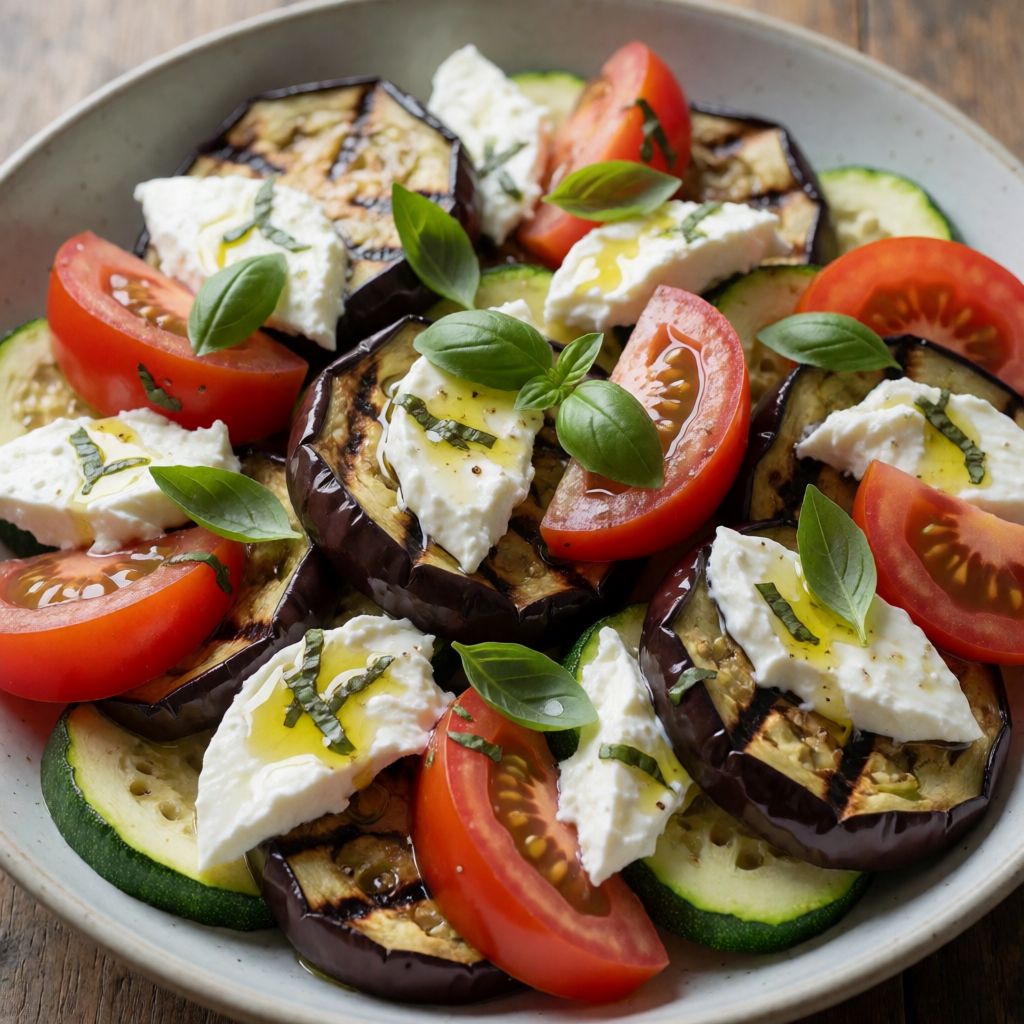
Grilled Aubergine and Tomato Salad
A fresh grilled aubergine and tomato salad with mozzarella, basil and balsamic glaze.
Labels are worked out automatically from the ingredients and can be wrong. Check the packaging if it matters to you.
Ingredients
- 1 pcs Aubergine sliced
- 1 pcs Courgette sliced
- 2 tbsp Olive oil
- 4 pcs Tomato sliced
- 1 bunch Basil leaves
- 75 g Mozzarella fresh
- 2 tbsp Balsamic glaze
- Salt
- Black pepper freshly ground







Steps
Brush the aubergine and courgette slices with olive oil.
Grill the slices on both sides on a griddle or grill pan.
8 minArrange the salad, alternating slices of tomato, aubergine and courgette.
Tear the mozzarella into smaller pieces and scatter over the salad.
Slice the basil leaves into strips and sprinkle the salad with a little salt, pepper and balsamic glaze.
2 min
This is not a cooked dish so much as an assembly of two cooked things and three raw ones, stacked so the hot ones cool down next to the cold ones and everyone meets in the middle. The whole thing stands or falls on what happens to the aubergine and courgette on the griddle — everything after that is just arranging.
Aubergine flesh is a sponge, full of air pockets. Put it on a pan that isn't properly hot and it won't char, it'll steam — and a steaming sponge drinks oil and water both, and you get grey, slippery, greasy slices instead of ones with a dry, almost smoky edge. The test isn't a clock, it's the sound: a slice should hiss the second it touches the metal, not sit there sweating in silence. If it doesn't hiss, wait — a cold pan ruins more vegetables than a cold fridge.
Some say you must salt aubergine first and let it weep for half an hour to pull out the bitterness. No — that bitterness was bred out of most shop aubergines decades ago, back when it still mattered economically to sell a vegetable people would actually buy twice. What salting does today is draw out water, which only helps if your real problem is a watery slice steaming instead of browning. Fix the heat and you've fixed the thing salting was trying to fix anyway.
Aubergine, choose one that feels heavy for its size and has tight, glossy skin — a light one is mostly air and old seeds, and it'll collapse to mush before it chars. Courgette the same logic, firm all the way along, no soft give at the stem end. Slice both on the thicker side of what you'd think — thin slices burn on the outside before the inside softens, and you end up with charcoal wrapped around something raw.
The oil on the brush is there for one job only: contact. A griddle works by direct metal-to-food heat, and a dry vegetable surface doesn't transfer that heat evenly, it scorches in patches. Any oil with no smell of its own does the work — olive oil is traditional here because it's what's in the bottle in most Mediterranean kitchens, not because sunflower oil would betray the dish. Don't drown the slices; a brushed film, not a puddle, or you're back to steaming.
Tomatoes do no cooking at all — they're there raw, which means their quality is not negotiable the way the aubergine's slightly is. A tomato that's spent its life in a fridge in transit will be watery and flavourless; if that's what your shop has, a ripe vine tomato left out on the counter overnight is worth more than any amount of balsamic glaze poured on top to compensate. Glaze can season, it can't resurrect.
Mozzarella wants to be fresh — the kind sitting in its own whey, not the dry block meant for grating onto a pizza. Tear it, don't cut it: torn edges are rough and catch the oil and glaze, cut edges are slick and shed everything that touches them. If you only have the harder ball type, slice it thin and bring it to room temperature first — cold mozzarella straight from the fridge sits on the plate like a small, sad stone and tastes of nothing because cold mutes flavour, that's just physics, not a flaw in the cheese.
Basil loses its whole reason for being the moment it's dried — what you're after is the oil in the fresh leaf, released when you tear or slice it just before it goes on, not ten minutes before while you finish something else. Balsamic glaze is reduced balsamic vinegar with sugar, thick enough to sit on a slice instead of running off it; if you don't have it, a good balsamic vinegar reduced for a few minutes in a small pan until it coats a spoon does exactly the same job, just with your own patience standing in for the bottle's.
This feeds four as a starter or a side to something off the grill, not as the main event — it's bright and sharp and it wants a Sunday roast's quiet, heavier company, not another vegetable dish competing for attention.