
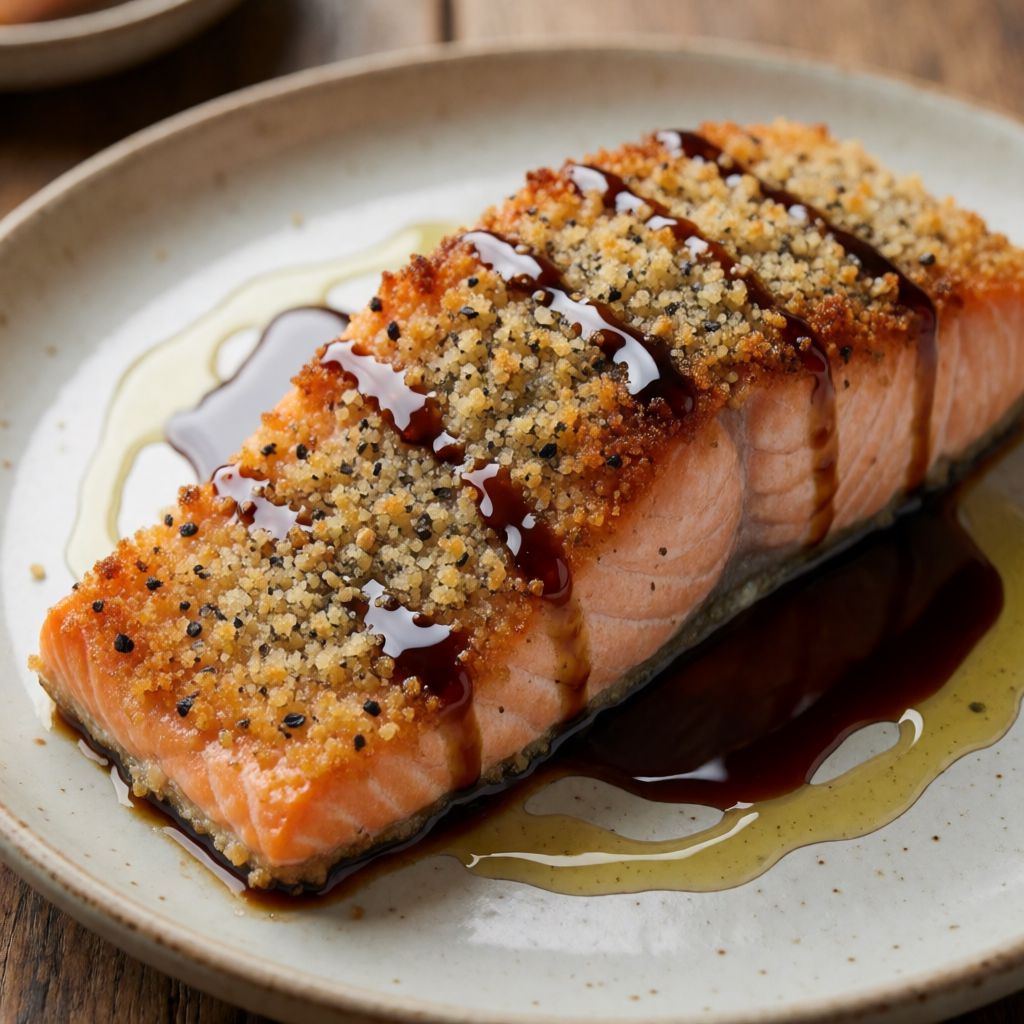
 AI photo
Grilled Salmon with Black Pepper
A quick grilled salmon fillet finished with a cracked pepper crust and a sharp balsamic vinaigrette.
Labels are worked out automatically from the ingredients and can be wrong. Check the packaging if it matters to you.
Ingredients
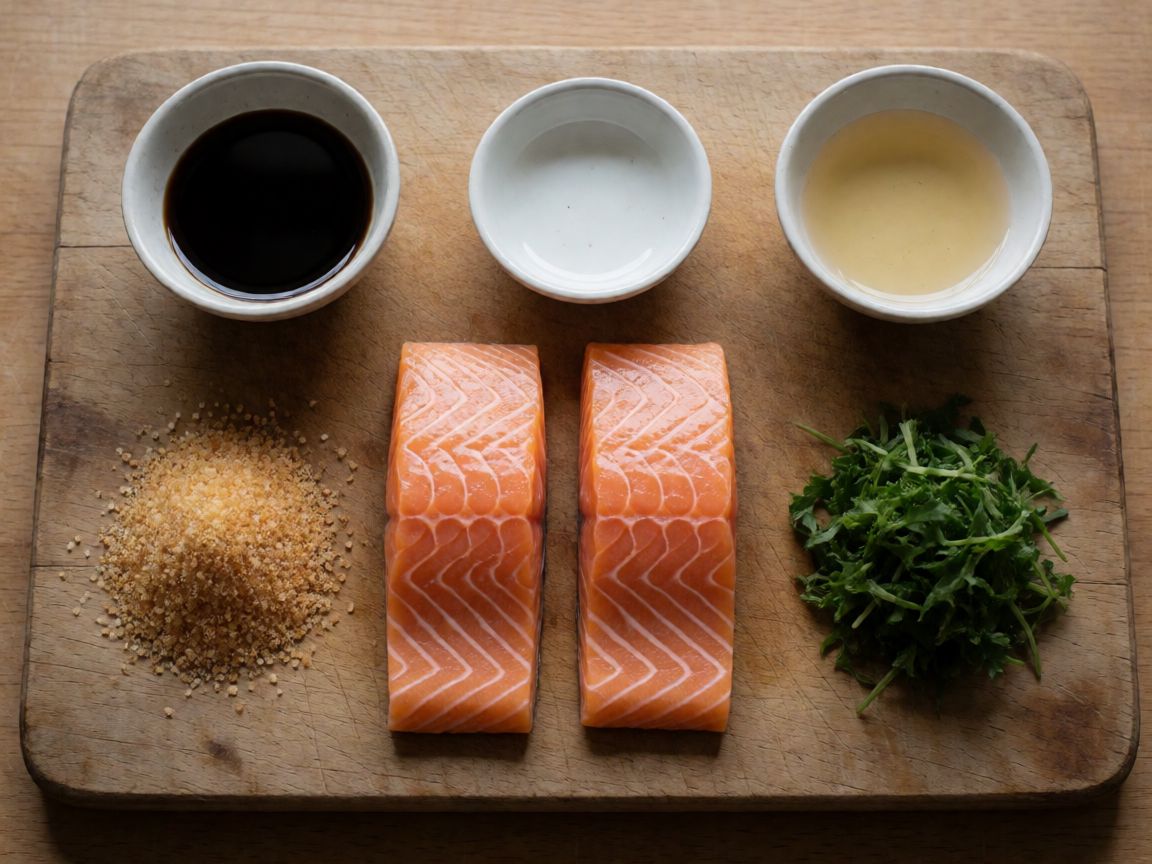
- 2 pcs Salmon 150 g each
- Black pepper to taste
- Breadcrumbs to taste
- Salt to taste
- Olive oil to taste
- Balsamic vinegar to taste
- White vinegar to taste
- Mixed salad leaves to taste








Steps
Season the breadcrumbs with black pepper, add a pinch of salt and a little olive oil, and mix well.
Sear the two salmon pieces in a griddle pan with a little oil, season with salt and cook on both sides.
Sprinkle the salmon pieces with the flavoured breadcrumbs and drizzle with a little more olive oil.
Finish the salmon in the oven at 180°C until the internal temperature reaches 63°C.
5 minMake the vinaigrette: whisk together salt, pepper, balsamic vinegar, white vinegar and olive oil until smooth.
Arrange the mixed salad leaves on a plate, place a piece of salmon on top and drizzle with the vinaigrette.
This is a two-stage cook disguised as a simple grill: sear first, for colour and crust, then let the oven finish the job gently. That split is the whole point. A pan hot enough to brown salmon fast would burn breadcrumbs before the fish is even warm through — so the crumb only goes on after the sear, and the oven, being a slower, more even heat, toasts it without scorching while the inside of the fish catches up.
What actually decides whether this works is not colour, not minutes — it's a ceiling. Salmon's proteins start to seize and push moisture out once they pass a certain point; the recipe gives you that point, 63°C in the centre. Below it the fish is translucent and loose, above it the fibres clench and weep white beads of albumin onto the surface — that chalky film you sometimes see on overcooked salmon is exactly this, not a sign of "well done", but a sign of too far.
Some say cook the fish until it flakes apart easily with a fork. No — by the time it flakes that easily, it has usually sailed past 63°C and dried out. The better cue, if you have no probe thermometer (most kitchens don't), is touch and colour together: gentle give under a light push, the centre gone from deep translucent pink to a paler, opaque pink, not grey. Five minutes in the oven is a starting point, not a verdict — check it, don't trust the clock alone.
Salmon: buy it thick rather than thin, skin on if you can get it, because a thin tail-end piece will hit 63°C almost the moment it touches a hot pan and leave you no room to build a crust first. Before it goes in, pat it properly dry with paper towel. Wet fish on a hot pan doesn't sear, it steams — the surface stays pale and grey instead of browning, because the water sitting on the surface has to boil off before the pan can do any browning work at all. That drying step is what prevents the grey, flabby crust that people then blame on "bad salmon".
Breadcrumbs: their job is dry crunch against oily, soft fish — contrast, not flavour on its own. Dried, bought breadcrumbs work fine here because they stay crumbly and toast evenly in the oven's gentler heat; very fresh breadcrumbs have more moisture in them and can go soft rather than crisp. No breadcrumbs in the cupboard — crush stale bread or plain crackers, as long as what you end up with is dry and loose, not already oily or sweet. The oil mixed into them isn't for taste, it's glue: without it the crumb sits on top like dust and falls off the first time the fish is moved.
Olive oil appears twice in this recipe doing two different jobs, and it's worth telling them apart. In the pan, you want an oil with no character of its own — it's there to conduct heat and stop sticking, nothing more, so a light olive oil or any flavourless vegetable oil does the same work for less money. In the vinaigrette and the final drizzle, the oil is tasted directly, so that's where a good extra virgin earns its place — fruity, a bit bitter, something you'd actually notice.
The two vinegars aren't a typo or indecision: balsamic brings sweetness and body, white vinegar brings sharp, clean acid, and together they balance each other the way a squeeze of lemon balances a rich sauce. Salmon is a fatty fish, and that fat needs something sour to cut through it or the dish tastes flat and heavy. If you only have one vinegar in the house, use it, but balsamic alone can sit a touch sweet, so add a few more drops of anything sharp — lemon juice, cider vinegar — to bring it back into balance.
For the leaves, anything with a bit of bitterness or pepper to it — rocket, watercress, a few bitter chicory leaves mixed through — does more work than a bowl of plain lettuce, because it's standing up to rich fish and a tangy dressing, not just filling space on the plate. And give the fish a breath once it comes out of the oven before you plate it; a minute off the heat lets the juices settle back through the flesh instead of running out onto the leaves the second you cut it. That minute of waiting is also an ingredient — it just doesn't go on the shopping list.