
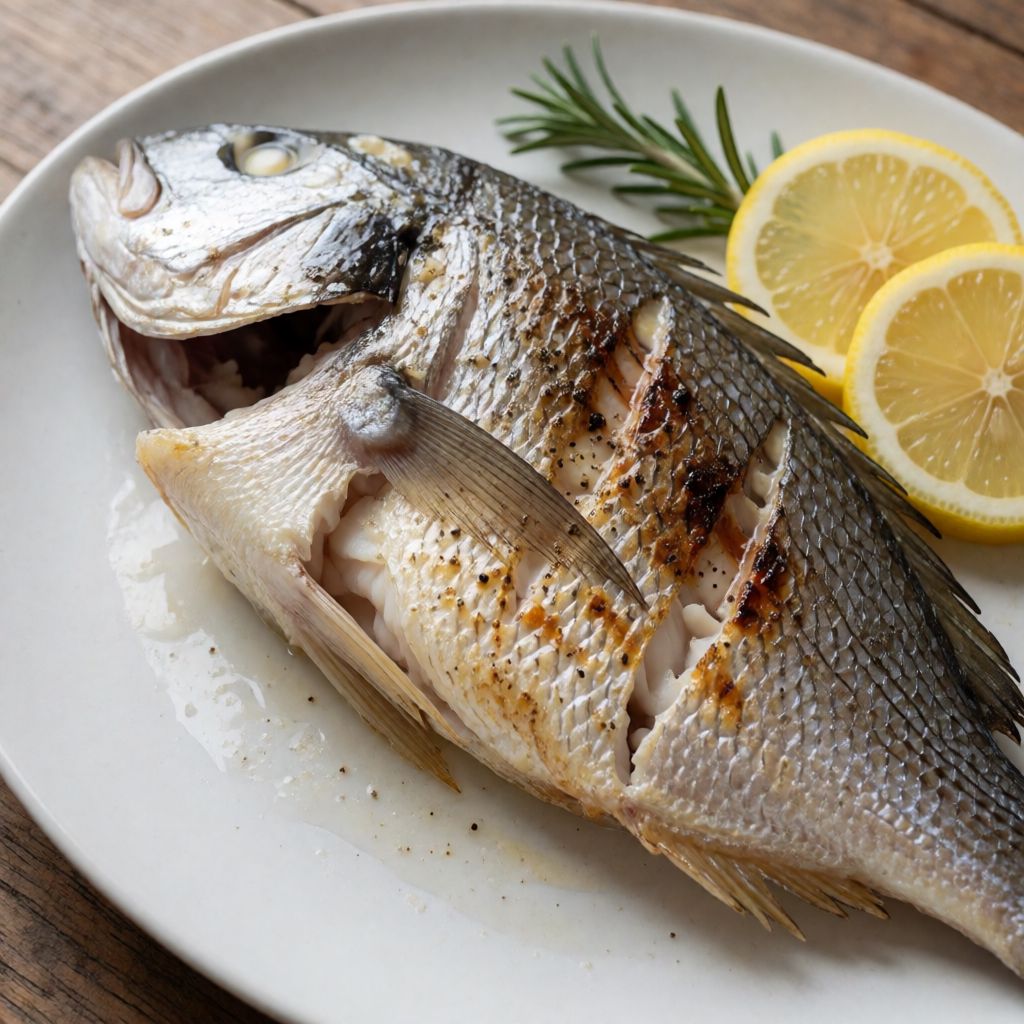
 AI photo
Grilled Sea Bream
A simple grilled sea bream with lemon, rosemary and black pepper.
Labels are worked out automatically from the ingredients and can be wrong. Check the packaging if it matters to you.
Ingredients
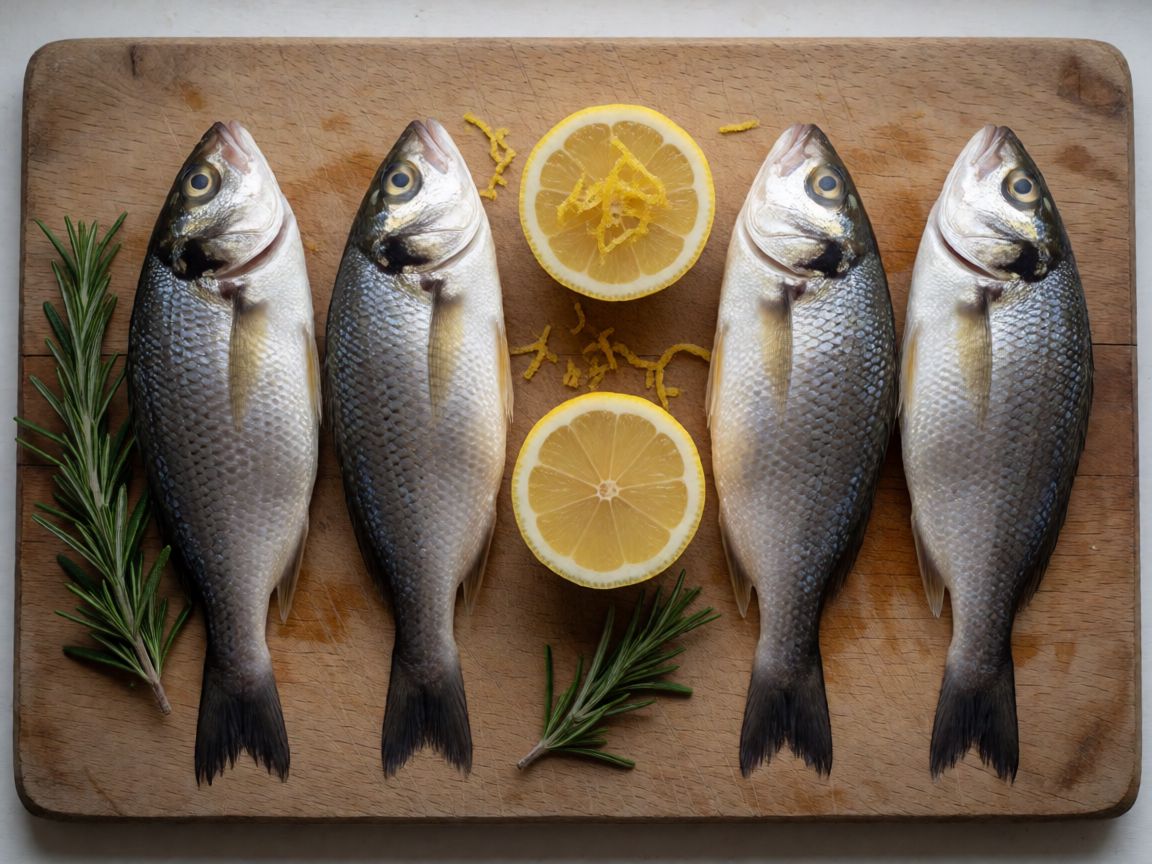
- 4 pcs Sea Bream
- 1 pcs Lemon finely grated zest, plus cut into wedges
- 2 pcs Rosemary fresh sprigs
- Salt to taste
- Black Pepper freshly ground, to taste





Steps
Ask the fishmonger to gut the sea bream, or clean the fish thoroughly yourself.
Make shallow cuts in the skin of the fish with a sharp knife.
Rub the sea bream with salt, pepper and the finely grated lemon zest.
Tuck lemon wedges and rosemary sprigs into the cuts in the skin, then place the fish on a hot grill.
Grill for about 5-7 minutes on each side.
6 min
A whole fish on live heat, that's the whole idea here — no sauce to hide behind, no long cooking to break down toughness, because sea bream doesn't have any to break down. What you're managing is one thing: get a hot surface to seal the skin into a crust fast, before the heat finishes cooking the flesh all the way through and the fish goes from moist to sawdust. Everything else — the zest, the rosemary, the cuts — is there to help that one job, not to distract from it.
The cuts are the real mechanism, not a decorative flourish. Fish skin shrinks faster than the flesh underneath once it meets heat — that's why an unscored fish often curls into a bow on the grill, skin pulling tight on one side like a drawn string. Score it two or three times down each side and you break that tension; the fish lies flat, heat reaches the thick part near the spine at the same rate as the thin belly, and you've opened little pockets where the rosemary and lemon sit against hot flesh instead of just perfuming the air above it.
Some say turn the fish often so it cooks evenly on both sides — no, because every turn tears a little more skin off a grill bar or a pan, and bream skin is thin enough already. Put it down, leave it, flip once. The crust and the grill marks need that stillness to form; fidget with it and you peel skin off the bars instead of off the fish.
Sea bream is the name on the ticket, but the criterion underneath is a whole round fish with firm white flesh and skin that can crisp — bass, trout, red mullet, even small mackerel will all behave the same way on a grill. What won't work is anything flat and delicate like plaice, because the cuts and the handling assume a fish with some structure to hold its shape.
Zest, not juice, goes on before cooking, and that's not fussiness, it's chemistry. The oils in lemon zest are fat-soluble, they cling to the flesh and survive the heat as perfume. Raw lemon juice rubbed into fish starts denaturing the surface proteins the way it does in ceviche — fine if that's your dish, wrong here, because on a hot grill that same acid just scorches and turns bitter before it does anything useful. The wedges go in as pockets, there to warm through and release their juice at the table, under your own hand, when you actually want it.
Rosemary works the same logic. Tucked into the cuts, close to hot flesh, it releases its oil slowly into the fish instead of sitting on top where direct heat would just burn it to ash in the first minute. Any firm, resinous herb that can take heat without wilting to nothing does the same job — thyme, a bay leaf or two, even a lighter hand with dill if that's what's in the fridge.
Salt and pepper go on as soon as the fish is cleaned, not at the last second, because salt pulls a little surface moisture out as it sits — and a dry surface browns, while a wet one just steams. That's your patience ingredient here: fifteen minutes with the salt on, while the grill comes up to heat, is doing real work, not wasting time.
Be honest about the kitchen you've got. Nobody's cooking this over coals in a London flat. The nearest thing to a kazan here is the oven's broiler on its highest setting with the tray pulled close to the element, or a ridged cast-iron griddle on the hob — either gives you the same scorch-and-crust cue the recipe is actually asking for. Use a tray, not a lid of any kind: you want the moisture the fish gives off escaping into the air, not trapped and turning the skin soft.
Four fish for four people is the arithmetic here, one each, which if you're buying by weight at the counter is roughly 300–400g a fish, whole and ungutted — the fishmonger takes that weight down once it's cleaned. It's a simple dish because that's what a fresh catch asks for: the less you do to good fish, the more of it you actually taste, which is as much an economic fact as a culinary one — nobody needed a long recipe for fish eaten the day it was caught.