
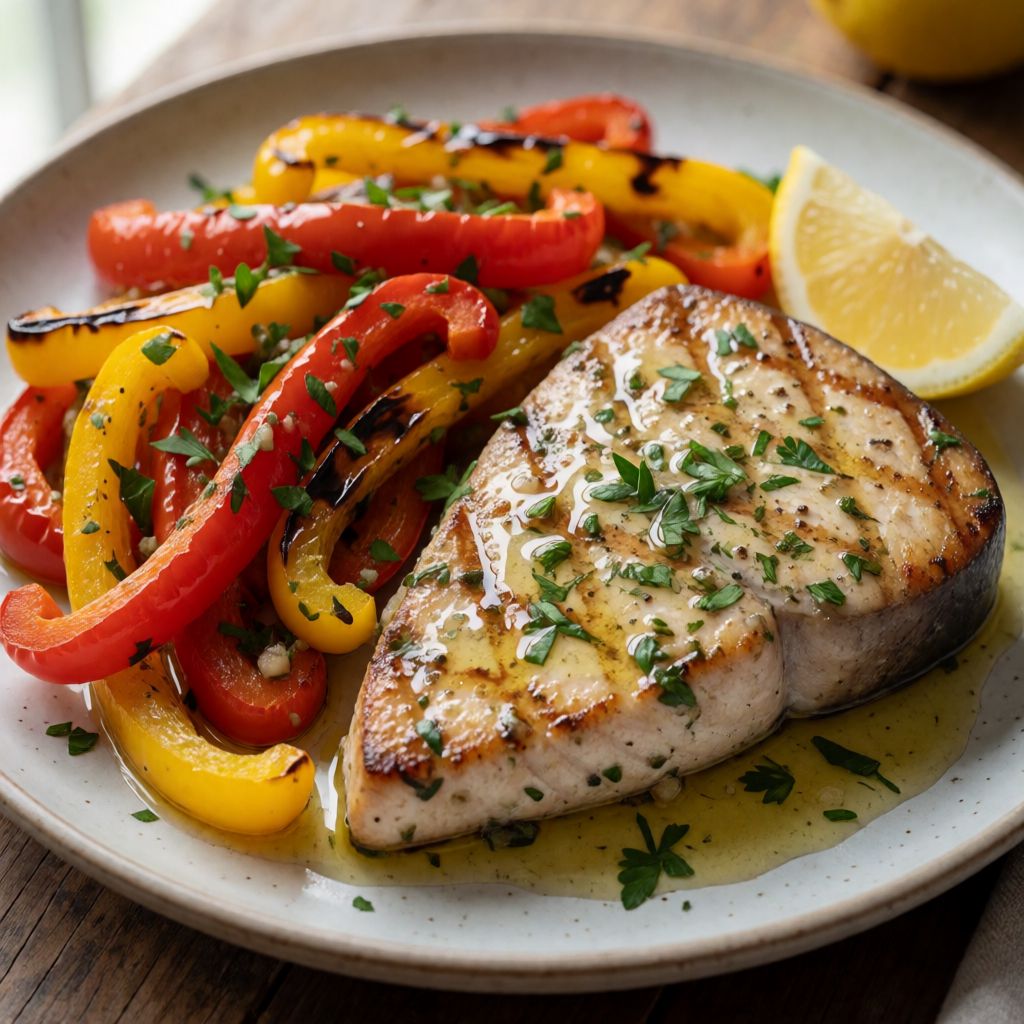
 AI photo
Swordfish with Grilled Vegetables
A simple grilled swordfish dish served with yellow pepper and courgette, finished with lemon, garlic and parsley.
Labels are worked out automatically from the ingredients and can be wrong. Check the packaging if it matters to you.
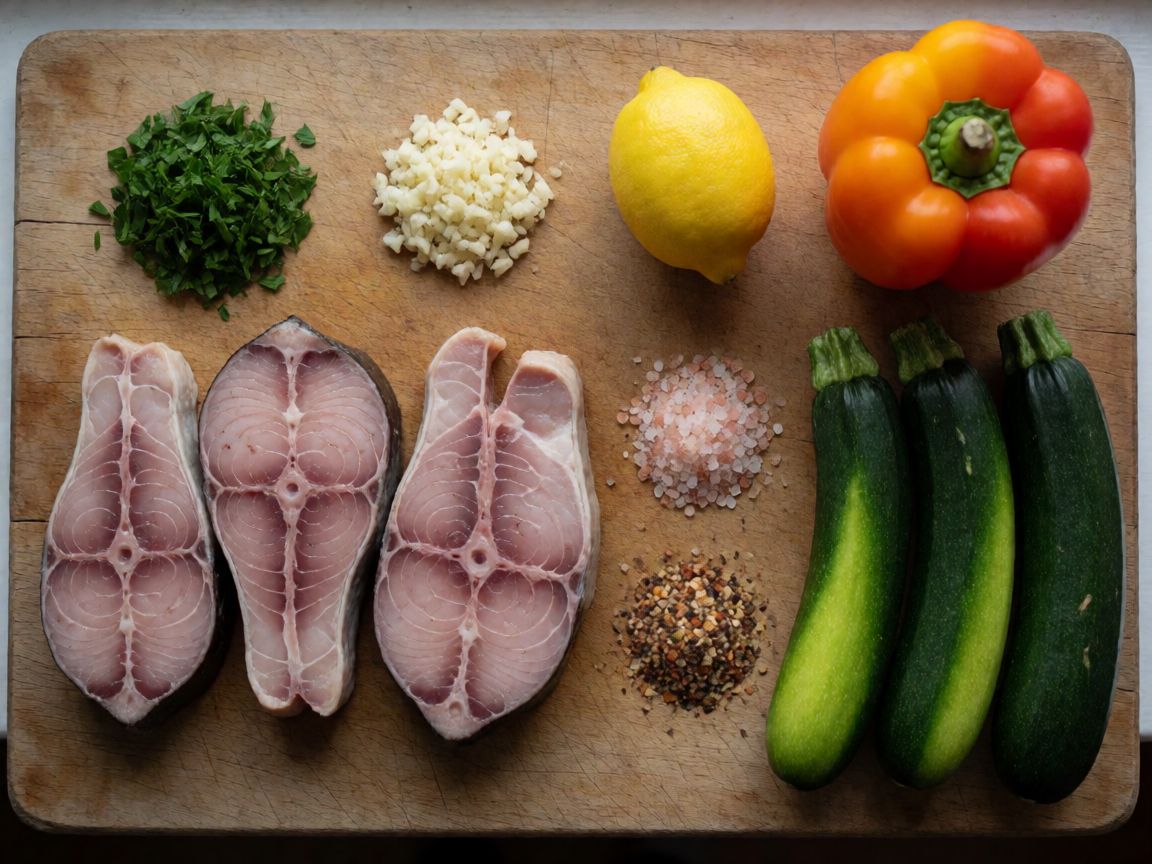
Ingredients









Steps
Marinate the swordfish steaks for 20 minutes in olive oil and lemon juice.
20 minPreheat a grill, griddle or non-stick grill pan.
Place the yellow pepper and courgette on the grill and cook until tender.
Transfer the vegetables to a serving dish.
Place the swordfish on the grill and cook, basting with the marinade, until the internal temperature reaches 63°C.
Combine the fish with the vegetables, season with Himalayan pink salt, sprinkle with Creole pepper mix, garlic and parsley.
Drizzle with a thin stream of olive oil and serve.
This is not a delicate fish dish — it's a steak dish that happens to be fish. Swordfish is dense, almost fat-free muscle, cut crosswise like a cutlet of veal, and that's the whole point: it holds its shape on a hot grate the way a fillet of cod never would. Treat it gently like a flaky white fish and you'll undercook the middle out of fear; treat it like a chop and it behaves.
What decides whether this works is one number: 63°C in the centre. Because there's almost no fat running through the flesh to protect it, the margin between juicy and dry is narrow — maybe two minutes narrow on a hot pan. Past that line, the muscle fibres squeeze out their water and you're chewing rope. A thermometer earns its keep here far more than it does on a ribeye, where fat buys you forgiveness.
Some say marinate it for a few hours so it "takes in more flavour" — no, because lemon juice doesn't soak inward, it works on the surface proteins it touches. Leave a dense fish like this in acid too long and the outer few millimetres go from firm to mealy before the inside has changed at all. Twenty minutes is enough to season the surface and loosen it slightly for the crust; longer is not more flavour, it's damage.
Start with the fish itself. Four steaks, figure 150–180g each so the whole dish feeds four without anyone eyeing a second helping guiltily. If swordfish isn't in the fishmonger's that week — it's a big, migratory, somewhat seasonal catch, which is also why it isn't cheap: a whole fish can run two, three metres, and a shop sells it pre-portioned because almost nobody's kitchen or oven could take it whole — look for the same criterion rather than the same name: firm, low-fat, steak-cut flesh that won't flake apart on contact with heat. Fresh tuna works. So does marlin or a thick mahi-mahi loin. What you're after is muscle, not fillet.
The marinade is two ingredients doing two separate jobs, not one magic mixture. Lemon juice is there for acid and brightness, nothing more mystical — zest if you want the oil of the peel too, but the juice is the active part. Olive oil's job in the marinade is to coat and to carry flavour into the pan when you baste, so choose one without much personality: a plain, press olive oil, not the grassy extra virgin you'd put on a salad raw, because that one's finer aromatics are wasted and sometimes bitter once they've sat near a hot grate. Any oil with no strong smell of its own will baste just as honestly — sunflower, a mild rapeseed — the extra virgin is for the finishing drizzle at the end, where its smell actually reaches your nose.
The vegetables want cutting with the grill in mind, not the eye. Courgette sliced lengthwise into reasonably thick planks, pepper opened out flat — both so they lie with maximum surface touching the hot ridges rather than rocking on a curve. Courgette is mostly water held in a cellular sponge; too thin a slice and it collapses to mush before it's browned, too thick and the middle stays raw while the outside chars. You're watching for the flesh turning translucent at the edges and loose grill stripes forming, the pepper's skin blistering and going slightly soft to the touch — that's doneness you can see, no clock needed, though fifteen or so minutes total for both vegetables together is roughly what to expect while the pan holds its heat.
Himalayan pink salt is, mechanically, salt — sodium chloride with a few trace minerals in amounts far too small to season anything. The colour and the story sell it; any coarse salt you trust will do the same chemical job of seasoning the surface and drawing a little moisture to help the crust. Save the pink salt, if you like it, for the visual contrast on the plate — that's a legitimate reason, just don't expect a flavour difference.
Creole pepper mix is a stand-in for an idea, not a specific brand: chilli heat plus a herby, slightly smoky back note. If you don't have it, build the same shape yourself — smoked paprika, a pinch of cayenne, dried oregano, a little garlic powder — and you've matched the criterion rather than the label.
Last thing, and it's the one people skip because it costs nothing and looks like doing nothing: let the fish sit a minute once it's off the heat before it meets the vegetables. The centre is still climbing those last couple of degrees and settling its juices. Patience here is not decoration, it's the difference between a steak that stays moist on the plate and one that bleeds its moment of success straight into the serving dish.