
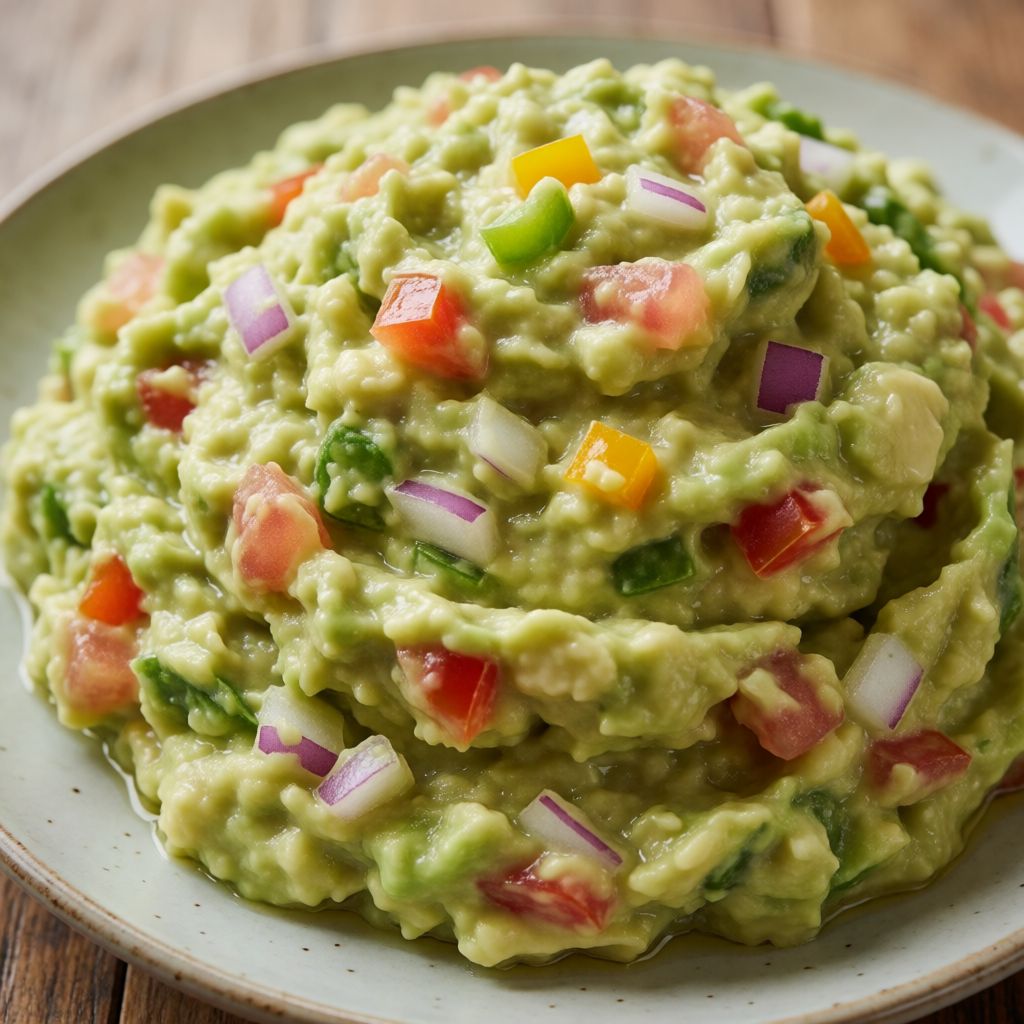
 AI photo
Guacamole
A simple, fresh guacamole mashed by hand with tomato, shallot and green pepper.
Labels are worked out automatically from the ingredients and can be wrong. Check the packaging if it matters to you.
Ingredients
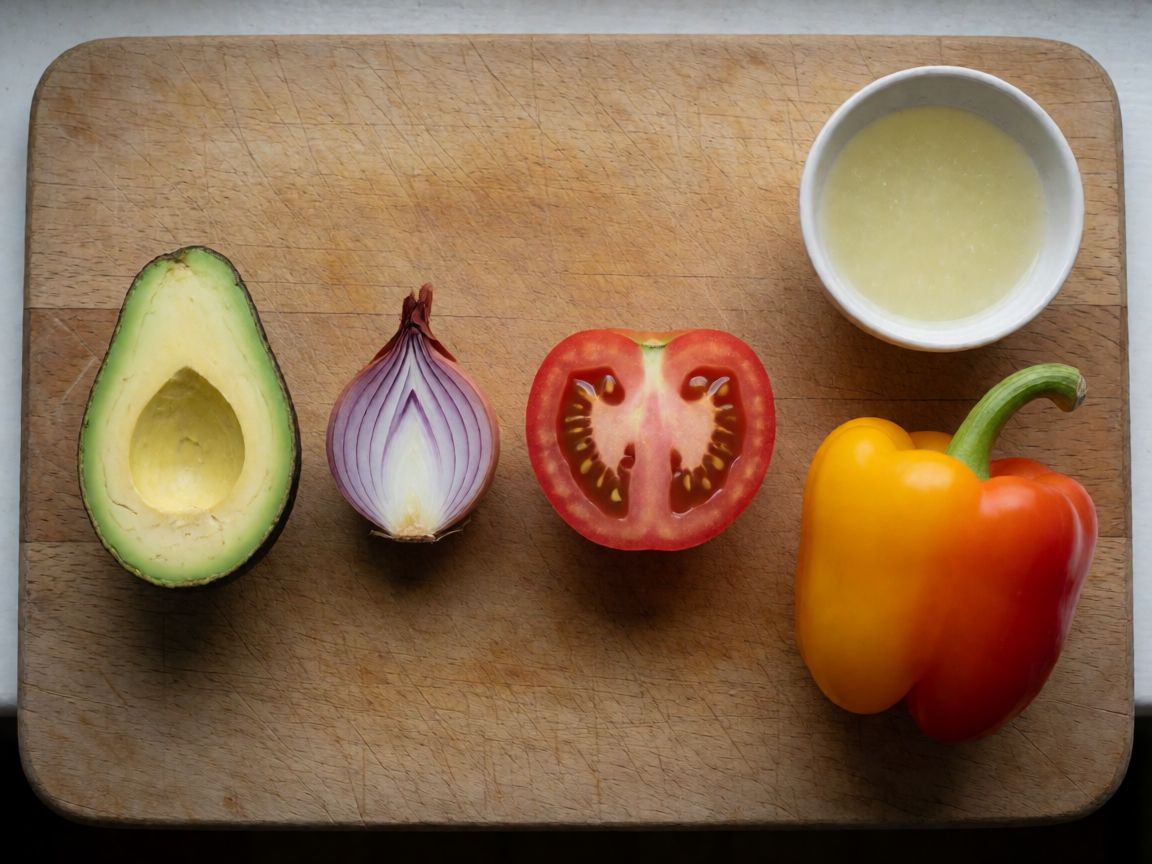
- 1 pcs Avocado
- 1/2 pcs Shallot
- 1/2 pcs Tomato
- 1 pcs Green bell pepper
- 1/2 pcs Lime juice juice of half a lime
- 1 tbsp Olive oil
- Salt to taste
- Black pepper to taste






Steps
Cut the avocado in half, remove the stone and peel it. Dice the flesh.
Transfer the flesh to a large bowl.
Add the lime juice, olive oil, salt and black pepper. Mix well.
Mash the avocado with a fork until smooth.
Add the finely chopped tomato and shallot.
Add the green bell pepper, cut into small pieces.
Put the guacamole in the fridge to chill.
Guacamole isn't cooked, it's managed. There is no pan, no heat, so the whole dish lives or dies on two things: how ripe the avocado was when you cut it, and how fast you keep the air off it once it's open. Everything else — the shallot, the tomato, the pepper — is there to carry texture and a bit of sharpness against the fat. That's the real shape of this recipe: a race against oxidation, run with a fork.
Ripeness first, because a hard avocado won't mash, it'll crumble into lumps, and an overripe one turns to grey paste that tastes of nothing but itself going off. The test isn't colour, skin colour lies. Press your thumb gently near the stem end — it should give, like the flesh of your own cheek, not spring back like a green apple and not collapse like a bruise. If it resists, it needs another day on the counter, not the fridge; cold stops ripening dead.
Some say leave the stone sitting in the bowl of mashed avocado and it'll stay green. It won't, not really — the stone only shields the half-inch of flesh it happens to touch, and the rest goes brown exactly on schedule. What actually slows browning is acid meeting the cut surface before oxygen does, which is why the lime juice goes in while the avocado is still in rough dice, before you start mashing it to nothing. Mash first and add lime after, and you've already let air do its work on a wide-open surface.
Avocado: in a UK supermarket this usually means Hass, the dark, pebbled-skin one, and it's the right choice — high fat, low fibre, mashes clean. If you only find the smooth green-skinned kind, fine, just lean harder on the thumb test since the skin gives you no colour clue at all. One avocado for two people is a fair ratio here because this is a starter portion with bread or crisps alongside, not a meal.
Lime: the acid does two jobs, not one. It slows the browning enzyme, and it cuts the richness of the fat so the dish doesn't sit heavy on the tongue. Lemon works the same way chemically and is the sensible swap if limes look sad in the shop — just taste as you go, lemon can run slightly more bitter at the pith.
Shallot over onion: the point of a shallot is less sulphurous bite for the same crunch, because it's going in raw and uncooked, with no time or heat to mellow it. Any mild onion will do as a substitute — the criterion is an onion you'd happily eat raw without your eyes watering or your breath carrying it for an hour. A spring onion, white part only, is a fair stand-in.
Tomato: finely chopped and in modest amount, it's there for a clean, slightly sweet-sour note and a bit of juice, not to turn this into salsa. If your tomato is watery, that water just thins the guacamole, so a firmer, less juicy tomato behaves better here than a soft summer one.
Green bell pepper is the odd one in this version — most guacamole reaches for a chili, for heat against the fat. Swapping in bell pepper trades that heat for plain crunch, which is a reasonable thing to do in a kitchen where not everyone at the table wants chili, and it's not a betrayal of anything, just a different choice with a different result. If you want the original balance back, add a few slices of fresh chili alongside it, or instead of it.
Olive oil: here it's doing texture work, smoothing the mash and carrying the salt and pepper through it, not frying anything. Any oil with no smell of its own will do the job — a light olive oil, a neutral vegetable oil — just avoid anything with a strong character of its own that would sit on top of the avocado rather than inside it.
Patience, finally, is the one ingredient not on the list. The whole dish is quick to assemble and slow to go wrong — the only real risk is rushing the mash before the lime's in, or chopping the shallot and tomato too far ahead so they sit out and sweat. Do the knife work last, mix it in last, and let the short rest in the fridge be the only waiting you do.