
 AI photo
Ham and Mozzarella Crêpes
Thin crêpes filled with melted mozzarella and ham, a quick savoury antipasto.
Labels are worked out automatically from the ingredients and can be wrong. Check the packaging if it matters to you.
Ingredients
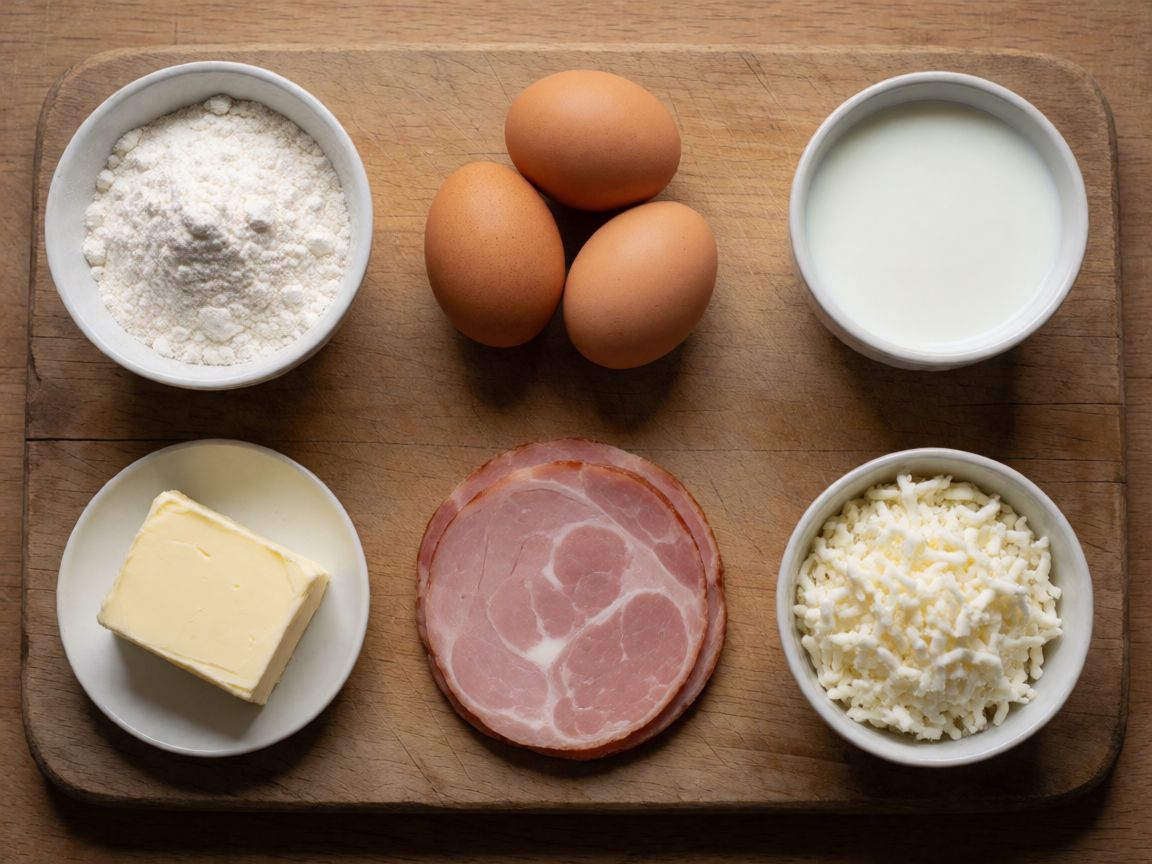
- 250 g Plain flour
- 4 pcs Eggs
- 1 pinch Salt
- 500 ml Milk
- 10 g Butter cooled and melted
- Butter to taste, for greasing
- Ham to taste
- Mozzarella to taste







Steps
Sift the flour into a bowl and add the salt. Crack in the eggs and whisk until smooth.
Gradually pour in the milk, stirring constantly so no lumps form.
Add the cooled, melted butter and mix thoroughly.
Grease a non-stick frying pan with butter and place it over the heat.
Pour in a little batter and spread it evenly over the whole surface of the pan.
Fry the crêpe for a few minutes on each side, turning it once or twice, until golden.
Lay the still-warm crêpes on a clean surface. On one half place sliced mozzarella, then ham on top, then fold into a triangle.
Warm the filled crêpes in a hot oven for a few minutes until the mozzarella melts.
This is a French crêpe doing a second job: instead of lemon and sugar, it wraps ham and mozzarella and gets a quick turn under heat so the cheese gives in. Call it antipasti and you understand its size — two folded triangles per plate, something to eat before the real food, not instead of it.
Two moments decide whether it works, and neither of them is listed as a number of minutes. The first is in the bowl: the batter has to pour like single cream, not sit like porridge. Too thick, and the crêpe cooks into something closer to a pancake — spongy, pale in the middle, refusing to fold without cracking. The second moment is the pan: it has to be hot enough that the batter sets the instant it touches metal, a thin skin forming before it has time to spread lazily and thicken at the edges.
Some say you need a proper crêpe pan, flat and wide with almost no sides. No — what you need is a surface the batter won't grip, and a heat you can see working: pour a spoonful in, and it should hiss gently and go from shiny wet to matte and lacy within the time it takes you to tilt the pan once around. A good non-stick frying pan does this job in any British kitchen; the shape of the pan matters far less than whether anything sticks to it.
Flour, eggs, milk, a little butter — that's the whole batter, and the proportions here (250 g flour to 500 ml milk, four eggs) sit close to the classic French ratio, which is why it behaves predictably: whisked properly, it thins out smooth with no need for tricks. Use plain flour, not a strong bread flour — bread flour builds more gluten, and gluten is exactly what you don't want much of here, because it's what makes a crêpe chewy and resistant to folding instead of tender and pliant.
The milk goes in gradually and the stirring doesn't stop, and this is the one line in the method that prevents the one real defect you're fighting: lumps. They don't come from bad flour — they come from liquid hitting dry flour unevenly, so pockets of it clump together and seal themselves off from the rest. Pour slowly, keep the whisk moving, and there's nothing for a lump to form around.
The butter melted into the batter is small in quantity but doing real work: it coats the inside of every crêpe as it cooks, which is part of why the finished thing peels off the pan cleanly and folds without tearing. The butter you grease the pan with is separate and should stay thin — a film, not a pool. Too much, and you're frying the crêpe's underside rather than setting it, and the edges go lacy and brittle instead of flexible.
Ham here is any thin-sliced cooked ham — the kind you'd put in a sandwich, not a cured, salt-heavy one that would fight the mild cheese for attention. If what's in your fridge is a leftover slice from the Sunday roast, carved thin, that works too; the point is thinness, so it warms through in the few minutes under the oven rather than sitting there raw-tasting and cold in the middle.
Mozzarella is chosen for one property: it melts without weeping much water or separating into oily puddles, because it's a fresh, low-acid cheese with the right moisture balance for heat. The everyday cow's-milk mozzarella sold for cooking (fior di latte, usually) is exactly right and cheaper than the buffalo kind, which is really a table cheese best eaten cold and is wasted here. If you have none, a mild, melting cheese — a young Gouda, a Gruyère used lightly — will do the same job, though you lose that particular milky mildness mozzarella brings and gain a stronger flavour instead.
Four people, a handful of crêpes each depending on how thin you spread them — this isn't a dish that rewards rushing. Give the batter its minute to rest in the bowl before the first crêpe goes in, give each one its proper turn in the pan rather than flipping too soon because you're impatient to see it done. Patience here isn't sentiment; it's the difference between a crêpe that folds and one that splits down the middle the moment the ham goes in.