
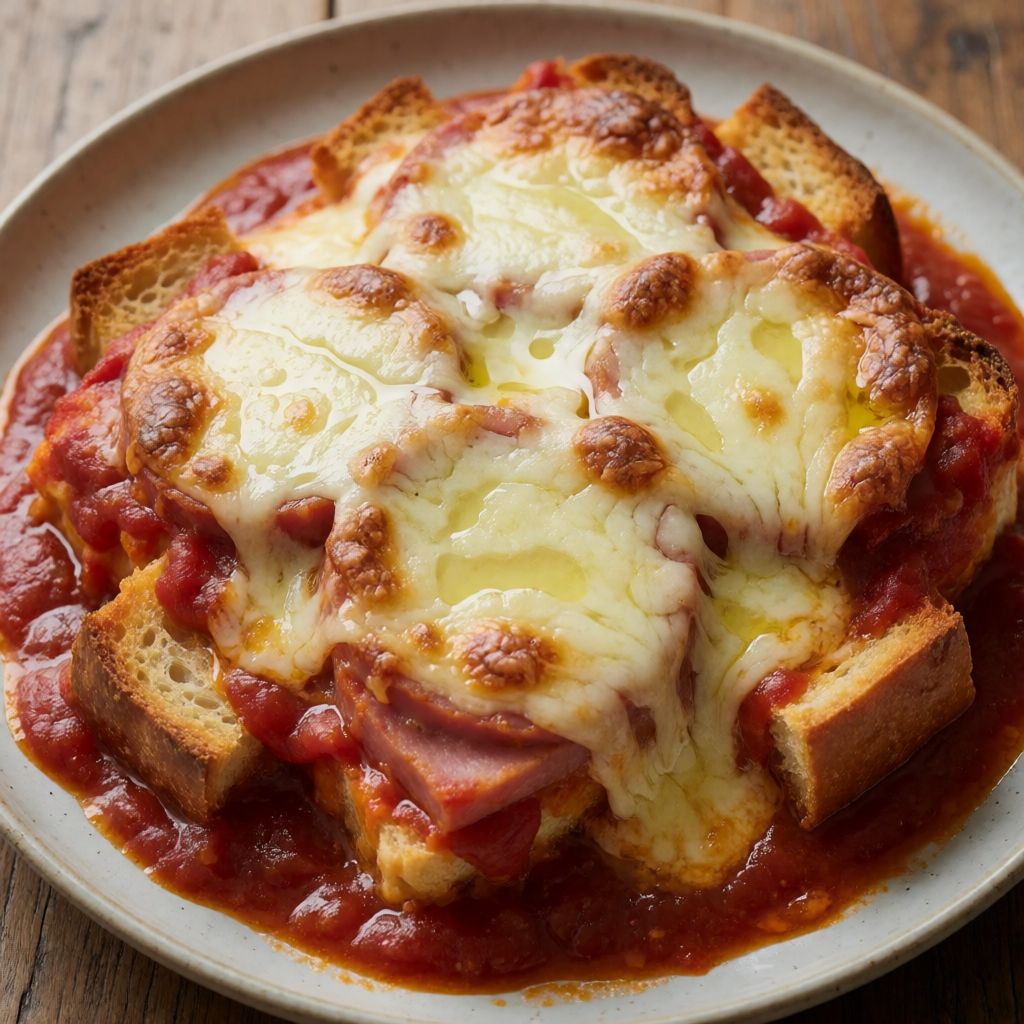
 AI photo
Ham and Mozzarella Bake in Tomato Sauce
Layers of ham and mozzarella baked in tomato sauce, served with toasted bread.
Labels are worked out automatically from the ingredients and can be wrong. Check the packaging if it matters to you.
Ingredients
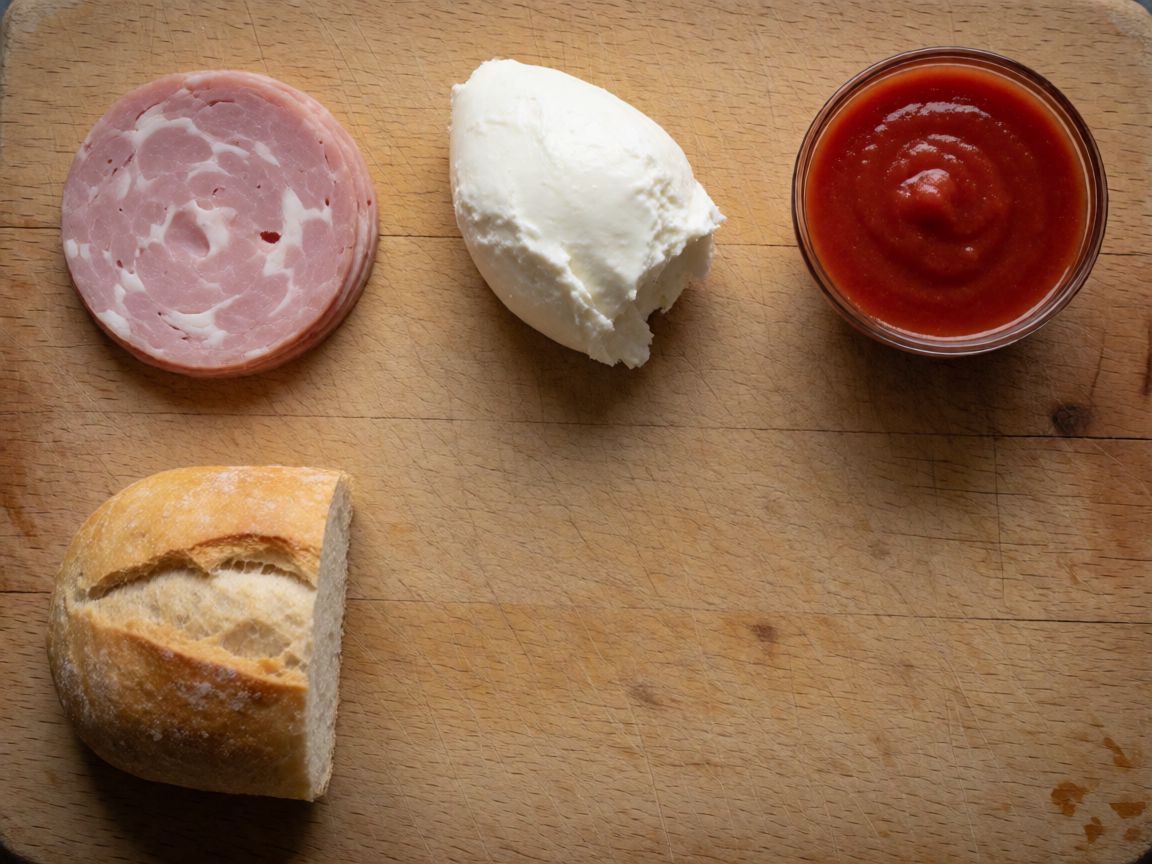
- 200 g Ham
- 200 g Mozzarella
- 400 ml Tomato Passata
- 8 pcs Bread sliced, for toasting
- 2 tbsp Olive Oil




Steps
Pour the olive oil into the bottom of a non-stick baking dish and spread a little tomato passata over it.
Arrange 3–4 slices of ham, a little mozzarella, then a layer of tomato passata — repeat the layers.
Cover the top with tomato passata and bake in a preheated fan oven at 200°C.
15 minMeanwhile, toast the bread in the oven or on the stove.
Serve hot together with the bread.
This is not a bake in the oven's slow, patient sense — it's a reheat with ambition. The ham is already cooked, the mozzarella only wants to collapse, the tomato passata needs no cooking at all, just warming till it stops tasting raw. So the fifteen minutes in a hot oven is really three things happening at different speeds at once: cheese melting, sauce tightening at the edges, ham losing its chill without losing its texture. What decides whether it works is knowing which of those finishes first, and stopping there.
The thing that goes wrong most often is leaving it in because the top still looks pale. Some say wait until it browns properly, like a pizza — no, because by the time the cheese has taken real colour, the ham underneath has already gone past tender and turned to rubber; it's been cooked once by the butcher and you don't want to cook it hard a second time. Cheese tells you when it's ready: it bubbles, it blisters a little at the rim of the dish. Ham tells you nothing until it's too late. So the bubbling sauce is your real clock. Fifteen minutes is the oven's estimate, not a promise — and the patience this dish asks for is small but real: let the cheese decide, don't pull it early out of hunger or late out of doubt.
The oil at the bottom isn't there to fry anything. It's a slick between the dish and the first thin smear of passata, so that layer doesn't dry out and catch on hot metal before the cheese stacked above has even begun to soften. Tomato passata on its own is lean, watery pulp with nothing to carry flavour in fat — a little oil underneath gives it something to borrow from, so the base of the dish doesn't taste thin against the richer ham and cheese on top. Any oil with no smell of its own does the job — a light olive oil, or sunflower if that's what's open. Save the loud, peppery extra virgin for drizzling at the table; under heat, fighting the tomato, it just gets in the way.
Mozzarella is where the real choice sits. Some say the fresher the ball, the better — no, because fresh buffalo mozzarella sits in brine full of its own whey, and under oven heat it lets that water go. You end up with a thin soup under your ham instead of a sauce holding its layers. What you want is a firmer, lower-moisture mozzarella — the shrink-wrapped kind sold here as "pizza mozzarella" — already drained, which melts by pressing up rather than running off. Any mild, low-moisture melting cheese stands in: young gouda, Edam, even a mild cheddar in a pinch, though that last one will tell everyone at the table it isn't Italian.
The ham has to be the cooked kind — prosciutto cotto, the sort sliced for sandwiches — not a raw cured ham like Parma or Serrano. Cured ham is salted and air-dried precisely so it can keep without ever meeting heat; put it through fifteen minutes at 200°C and its fat hardens, the slice curls and turns leathery, because it was never built to be cooked at all, let alone twice. Cooked ham has already made its peace with heat, gently, once — here it just wants warming through, not another cooking.
For the passata, plain is better than seasoned — no onion, no basil, no added salt if you can find it that way, because the ham and the cheese are already salting the dish twice over on their own. That's the usual defect in any layered bake like this: three salty things stacked without anyone checking the sum. If passata isn't to hand, tinned tomatoes blitzed smooth do the same work; skip a jarred pasta sauce, which is usually already seasoned and sometimes sweetened, and you'll have given away control of the salt before you've even started layering.
The bread is there to mop, not to sit politely on the side. There's a bit of Sunday roast logic in it — you make Yorkshire pudding to catch the gravy, you toast bread here to catch the sauce that pools once the cheese has pulled away from the edges of the dish. A firm-crumbed white loaf toasts up properly for this; a soft sliced sandwich loaf goes soggy under wet sauce before it's finished its job.
On the oven itself: a fan setting circulates heat faster and more evenly than a conventional one, which is why 200°C fan is enough here just to melt and warm, not to brown or crisp anything. Without a fan, watch the cheese rather than the clock — it may want a few extra minutes, or a touch more heat, to get there. Any ovenproof dish that takes 200°C will stand in for the specified non-stick one — glass, ceramic, enamel — just be a little more generous with the oil underneath if yours grips rather than releases, because that's the whole reason a non-stick dish gets specified in the first place: to keep that first layer of sauce from catching before the top has had its chance.