
 AI photo
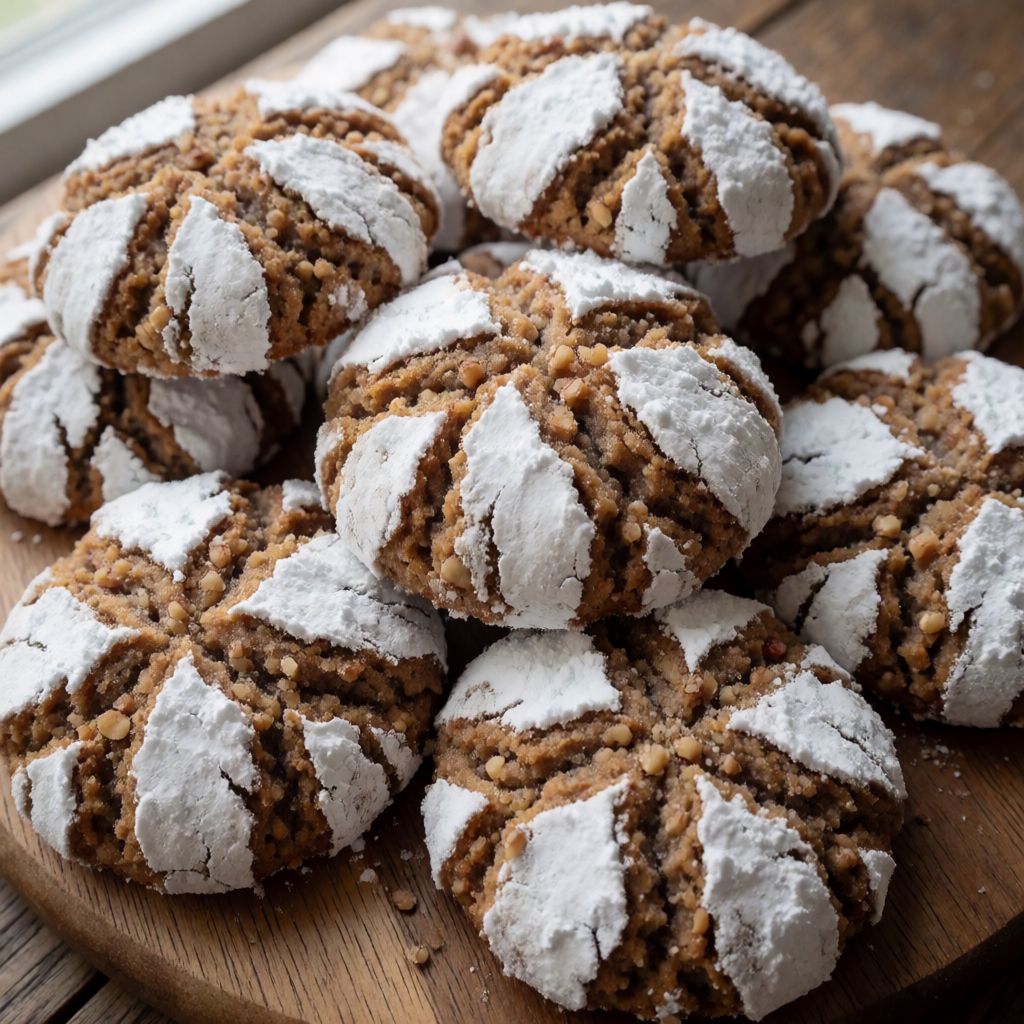
Hazelnut Crinkle Cookies
Soft hazelnut cookies with a cracked, snowy sugar coating, ready in under an hour.
Labels are worked out automatically from the ingredients and can be wrong. Check the packaging if it matters to you.
Ingredients
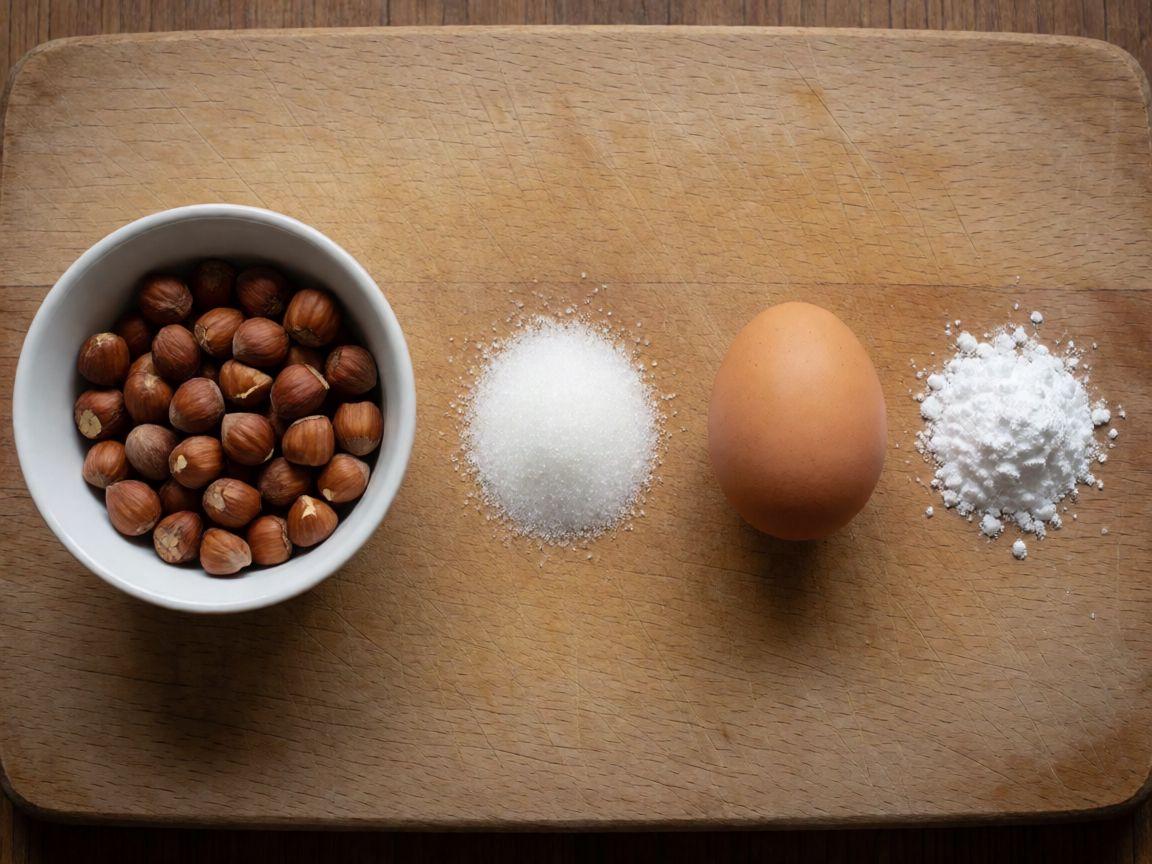
- 240 g Hazelnuts
- 100 g Sugar
- 1 pcs Egg
- 50 g Icing sugar for coating




Steps
Blitz the hazelnuts in a food processor until fairly fine.
Tip the ground hazelnuts into a bowl, add the egg and sugar, and mix well until you have a smooth paste.
Chill the dough in the fridge.
25 minTake small portions of the dough and roll into balls about the size of a walnut, then roll each one in icing sugar.
Place the cookies on a baking tray lined with parchment paper and bake in a fan oven preheated to 180°C.
12 minLet the cookies cool before serving.
These aren't cookies in the flour-and-butter sense at all. There's no flour in the bowl. It's ground hazelnuts, sugar and one egg, held together by the egg's protein and the nut's own oil once the oven fixes it in place. Because the structure is this minimal, everything that decides whether it works happens before the tray goes in.
What decides it is how far you push the nuts in the processor. Fine enough to bind into a paste, not so far that the oil weeps out and you've accidentally made hazelnut butter — then the dough won't hold a ball shape, it slumps on the tray, and no amount of chilling rescues it afterwards.
The crackle on top — white fissures over gold — isn't a rising trick, it's plain physics: a dry coat of icing sugar sitting over a dough that puffs just slightly as the egg sets. The coat can't stretch, so it tears. Some say crinkle cookies need baking soda or baking powder to get that crack — no, there's none here and none needed; the crack is cosmetic, not structural, and chemistry has nothing to do with it.
Chilling isn't dead time you can skip to save twenty-five minutes. It's the step that turns a sticky nut paste into something you can actually roll without it welding itself to your palms. Skip it and you'll be tempted to add flour to fix the stickiness — at which point it's a different, lesser biscuit, not this one.
Start with the hazelnuts. Whole, with skins on, are cheaper and work fine — the skin only adds a faint bitterness, which most people never notice once sugar's in the mix, so don't go hunting for blanched ones specially. The real criterion for a substitute isn't "nut" in general, it's an oily nut that grinds down toward a paste and can bind a dough without flour. Almonds work. Walnuts work but bring more oil, so expect a softer dough — chill it a touch longer, or dust your hands with a bit more icing sugar while rolling.
The sugar mixed into the dough does two jobs. It sweetens, obviously, but its crystals also nick and tear the nut flesh as you work it, which helps release just enough oil to bind the paste — and the sugar coats the nut fragments as it does, which is part of why the dough doesn't turn to pure nut butter the moment you overdo the processor. Caster or ordinary granulated both do this; don't reach for icing sugar here, it's too fine to do the abrading.
The egg is the one true structural ingredient in this whole recipe. There's no flour to carry starch, no butter to carry fat in a stable lattice — it's the egg's protein, uncoiling and then setting firm in the oven's heat, that is the only thing holding the shape once baked. A standard UK large egg, around 60g, is what the one-egg ratio here assumes; if you're working with something smaller, the dough will feel looser, and the fix is more chilling time, not more nuts.
The icing sugar for coating is doing something different from the sugar inside the dough, and it matters that you don't swap them. UK icing sugar usually carries a small amount of cornflour as an anti-caking agent, which is exactly why it stays a dry powder on the surface rather than dissolving into syrup the moment it meets a slightly damp dough — that dryness is what lets it crack rather than melt. Roll in granulated sugar instead and you get a shiny wet glaze with no crinkle at all. And don't over-coat thinking it'll sweeten things further — too thick a shell just goes chalky and refuses to crack, because the dough underneath can't push through it.
On the oven: a fan setting moves hot air around, which dries that sugar shell quickly — good, that's what you want for the crack to form before the inside is cooked through and dry. But a domestic fan oven has its hot corners, so a tray at the back may crinkle nicely while the front stays smooth and sugary; look at the tray partway through rather than trusting the dial alone, and turn it if one side's lagging. For the tray lining, any nonstick surface with no flavour of its own does the job — baking parchment, a silicone mat, lightly greased foil if that's what's in the drawer.
Let them sit once out of the oven. They're still soft-set in the middle straight from the heat and firm up as they cool, so judging them hot tells you nothing useful. From 240g of nuts you get roughly a dozen walnut-sized cookies — two each for six, which is about right as something small with tea after a Sunday roast rather than a pudding in its own right.