
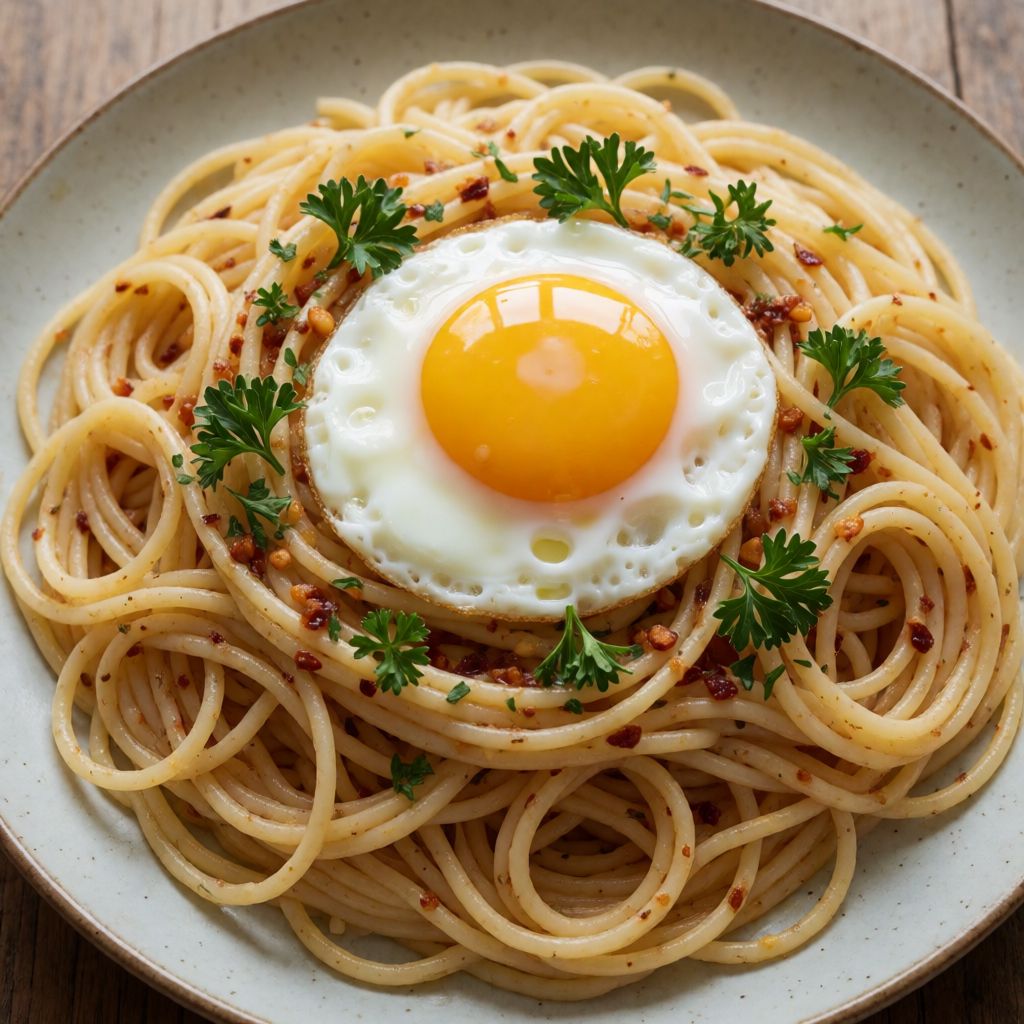
 AI photo
Spicy Spaghetti alla Poverello
A quick, spicy spaghetti with garlic, chilli and parsley, finished with egg and pecorino romano.
Labels are worked out automatically from the ingredients and can be wrong. Check the packaging if it matters to you.
Ingredients








Steps
In a frying pan, fry the finely chopped garlic, chilli flakes and parsley in the olive oil.
Cook the spaghetti until al dente.
Add the eggs to the pan and cook as you would a simple fried egg.
Season with salt, then toss the spaghetti in a bowl with some pasta cooking water and the egg, sprinkle with pecorino romano and serve.
This is a poor man's plate - the name says it outright, poverello, the little pauper. No meat, no stock, no cream. What it runs on is a pan of oil carrying flavour from garlic and chilli into eggs, and eggs carrying that flavour onto pasta. Fifteen minutes, four plates, built from things that sit in any cupboard. It's the opposite of a Sunday roast - no basting, no waiting for a joint to rest, you eat it the night you make it.
What decides whether it works is the first thirty seconds: the heat under the garlic. Oil is what moves garlic's and chilli's flavour around - their aromatics are fat-soluble, they need the oil as a carrier. But garlic has one short window where it goes from raw-sharp to nutty-gold, and right after that window it goes bitter and stays bitter. There's no walking that back. So you're not frying garlic until it's "done" by the clock - you're watching it turn colour, pulling the pan off the second it does, maybe lifting it clear of the heat entirely if your hob runs hot. The chilli flakes should tint the oil faintly red as this happens; that's your proof the oil's doing its job as a carrier, not just sitting there.
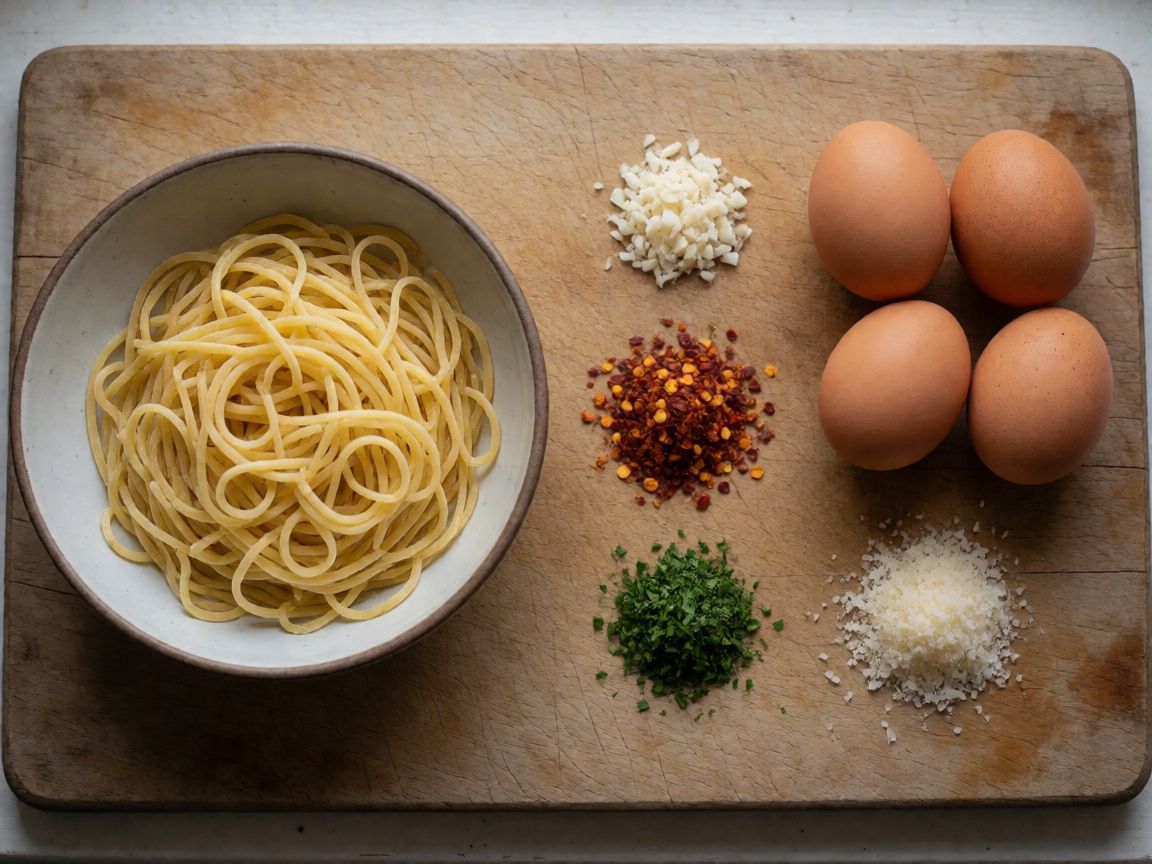
Spaghetti: 400g feeds four honestly, not generously - this is a quick dish, not a feast, so don't expect leftovers. Any dried wheat spaghetti works; what matters is that you pull it before it's fully soft, a minute or so shy, because it keeps cooking in the time it takes you to toss it with the egg. Test by bite, not by the packet's number - a strand should still have a bit of spring in the middle, not go limp.
Garlic, two cloves, chopped fine rather than crushed to a paste - fine chopping gives you more surface for the oil to pull flavour from without any one bit sitting too long in the heat and tipping into bitter. If you've only got garlic that's started sprouting green in the middle, pull the green shoot out before you chop - it's the part that turns acrid first.
Chilli flakes, a teaspoon, are there for heat you can dial - more if your flakes are mild, less if they're fierce; there's no fixed number that works for every jar, because chilli flake heat varies more than almost anything else in a kitchen cupboard. If you don't have flakes, a finely sliced fresh chilli does the same carrying-in-oil job, just slower to release.
Parsley, a bunch, chopped and fried briefly with the garlic - this trades some of its raw grassiness for a toastier, rounder flavour that sits better fried than sprinkled on cold. Flat-leaf has more flavour per gram than curly, which is mostly water and texture; use curly if that's what's in the shop, just use a bit more of it.
Olive oil, two tablespoons, is doing a specific job here - carrying fat-soluble flavour from garlic and chilli into the eggs, nothing more mystical than that. Any oil with no smell of its own and a reasonably high smoke point for a quick fry will do the same job; a flavourless vegetable oil works, you'd just be adding the olive taste back in some other way if you wanted it, maybe a finishing drizzle at the end.
Three eggs for four people sounds thin until you remember they're a sauce base, not a main event - the starch and fat from the pasta water and oil are stretching them. Fresher eggs hold their shape better in the pan, which matters here because you want distinct curds of white and soft-set yolk to break into the pasta, not a flat spreading film.
Pecorino Romano, 50g, grated at the end and off the heat, for the same reason you don't put raw egg over flame - hard cheese and residual heat is enough to melt it into the sauce; actual heat under the pan would just make it grab and clump. Pecorino's sharpness comes from being sheep's milk and from a shorter age than parmesan usually gets - if you've only got parmesan, use it, it'll be milder and you may want an extra pinch of salt to make up the difference. Salt itself is just a pinch here because the cheese and the pasta water are both already carrying salt into the dish - taste before you add more, don't assume the recipe's pinch is the final word, your pasta water's saltiness will vary with how much salt you put in the pot.