
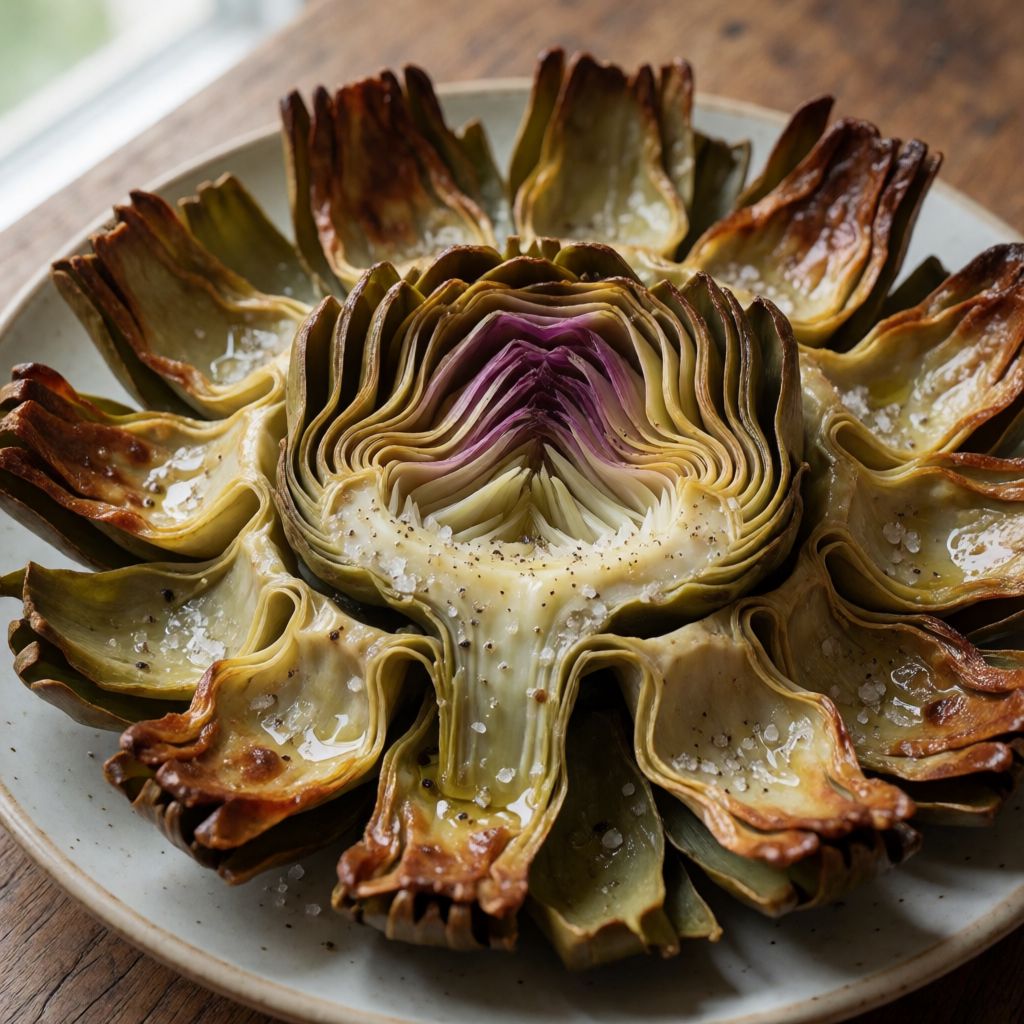
 AI photo
Carciofi alla Giudia
A classic Roman-Jewish dish of whole artichokes deep-fried until crisp and golden.
Labels are worked out automatically from the ingredients and can be wrong. Check the packaging if it matters to you.
Ingredients
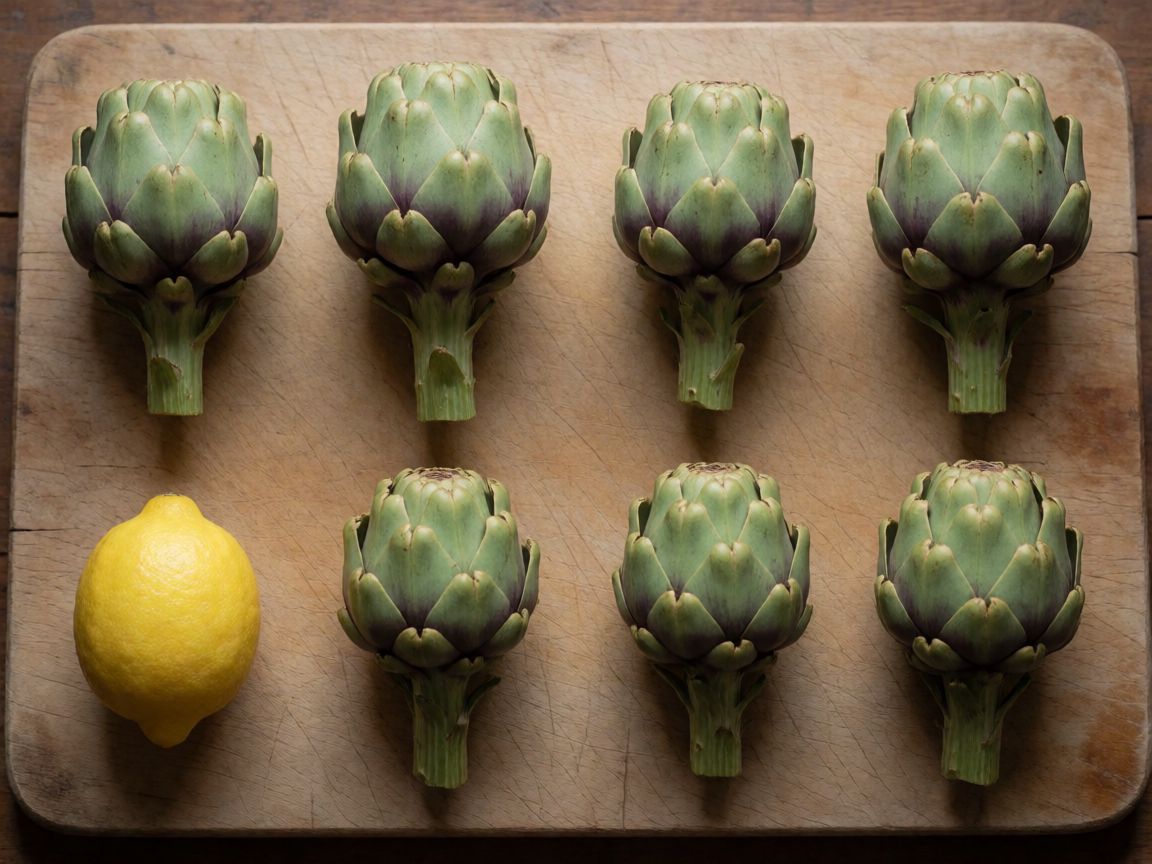
- 8 pcs Artichoke
- 1 pcs Lemon
- Salt to taste
- Black pepper to taste
- Olive oil as needed for frying





Steps
Prepare the artichokes: trim away the outer leaves and the tough part of the stem.
Place the artichokes head-down in a bowl of water with the lemon juice added, and leave for 15 minutes.
15 minDrain the water, pat the artichokes dry, then season with salt and pepper between the leaves.
Put the artichokes into a large pot of hot oil and cook for about 20 minutes, checking for tenderness.
20 minRemove the artichokes, place them head-down on a plate and press gently so the leaves open out; leave to cool.
Heat olive oil in a frying pan and fry the artichokes one at a time, turning to brown both sides.
Before frying, you can sprinkle the artichokes with a little water for extra crispness.
Lift the cooked artichokes onto paper towel to remove excess oil, and serve hot.
This is the Roman ghetto's answer to what to do with the artichokes nobody else wanted. Rome has always grown artichokes by the cartload, and the cheapest ones are big, tough, and full of fibre no amount of boiling will soften. The Jewish cooks of the old quarter solved that the way poor cooks always solve things — with oil and two separate jobs instead of one. First you cook the thing through, gently, in a bath of oil hot enough to do its work but not to brown. Then, once it's pliable, you force it open into a flower shape and let it cool so the leaves set. Only then do you put it back into oil — this time properly hot — to crisp the outside without re-cooking the inside, because the inside is already done.
That split is the whole mechanism, and it's why rushing kills the dish. Fry straight away in hot oil and you get a scorched outer leaf wrapped around a raw heart — because heat moves inward slowly through a dense vegetable, and a fierce oil will char the surface long before the centre softens. Cook it gently first, and the two problems — tenderness and crispness — never fight each other. You deal with them one at a time, which is the only way either one gets done properly.
The artichoke itself is the only ingredient doing real work, so buy with your hands, not your eyes: a tight head that feels heavy for its size, leaves that squeak faintly when pressed together, no give at the base. A light one has already dried out inside and will fry hollow. The outer leaves and the woody base of the stem are cut away not because they're dirty but because they're lignified — that's plant-speak for "turned to wood" — and wood doesn't soften in oil no matter how long you leave it. You're not cooking those leaves away, you're removing them because cooking never will.
The lemon water isn't a cleaning step, whatever your nan might tell you about washing vegetables. A cut artichoke oxidises in minutes — the exposed flesh browns on contact with air the same way a sliced apple does — and the acid simply slows that enzyme reaction down while you work. Any sharp acid does the job: lemon is traditional because it's cheap and always in a Roman kitchen, but a splash of vinegar in water works by the same mechanism if that's what's in the cupboard.
Oil is the one place economics shaped the dish. In a poor kitchen you don't poach eight artichokes' worth of oil in something expensive — that first bath, the one doing the slow cooking, traditionally used whatever neutral oil was cheapest. Olive oil, with its own flavour and lower smoke point, was saved for the second fry, the one that actually touches your tongue. In your kitchen that translates simply: any oil with no smell of its own for the first cook — sunflower, rapeseed, whatever's going spare — and a better olive oil, if you want it, only for the finishing fry where its taste actually survives.
Salt and pepper go on raw, pushed between the leaves before any oil, because once the leaves are cooked and splayed open there's far less surface left exposed to season — you're seasoning the whole vegetable while you still have access to it, not just its skin.
On an ordinary UK hob, forget a deep-fat fryer or a kazan: a wide, heavy saucepan with oil a few centimetres deep does both jobs, you're simply swapping the pan's temperature between them, not swapping pans. Use a splatter guard or just stand back for the water-sprinkle trick — a few drops of water hitting oil hot enough to crisp will spit and crackle hard, which is exactly the point: that violent, fast evaporation at the surface is what shatters the leaf into something crisp instead of merely fried. It's dramatic, not dangerous, as long as you're not leaning over the pan when you do it.
And give yourself the twenty minutes the recipe names as a floor, not a target, plus the time to let the pressed-open artichoke cool properly before its second fry. Patience here isn't virtue for its own sake — it's the only thing standing between a tender, crisp artichoke and a burnt one wrapped around something half raw.