
 AI photo
Kamut Wheat Salad
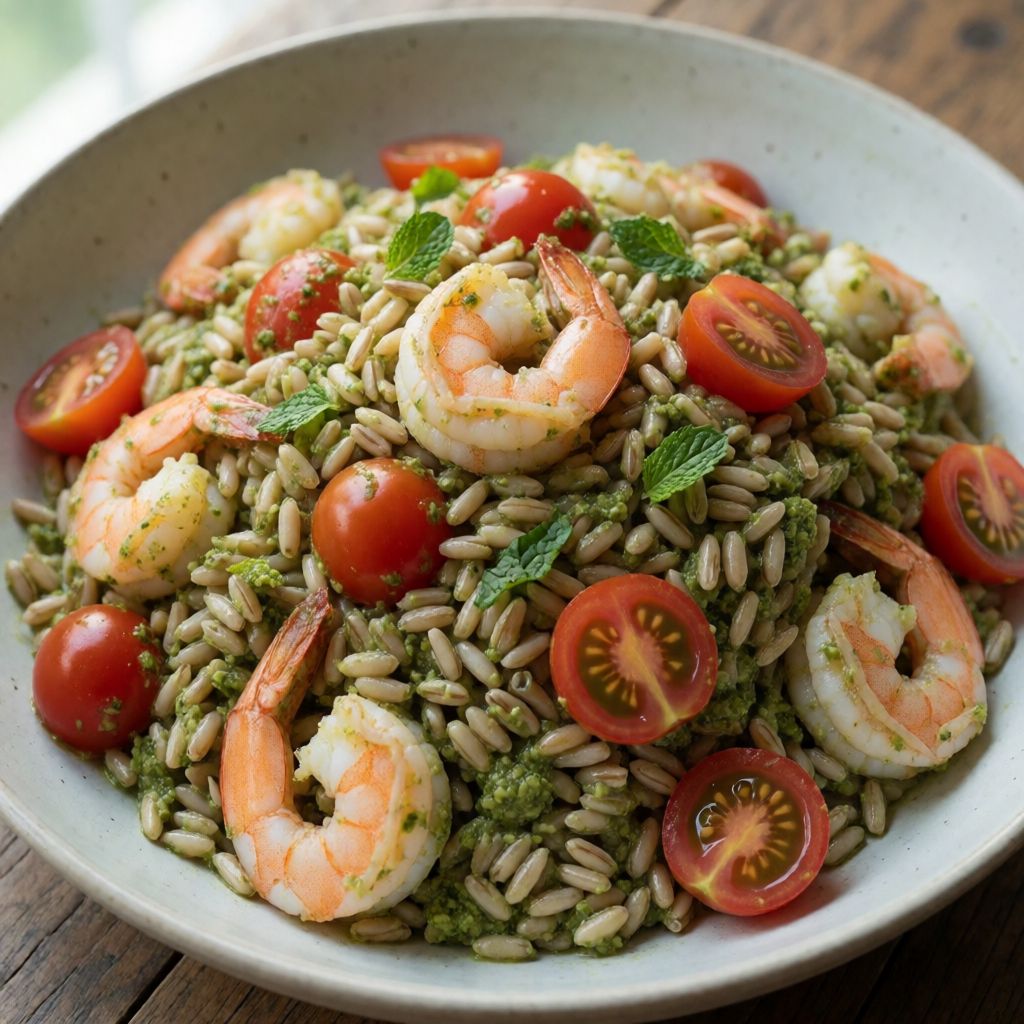
A fresh kamut wheat salad with prawns, cherry tomatoes and mint, finished with olive oil.
Labels are worked out automatically from the ingredients and can be wrong. Check the packaging if it matters to you.
Ingredients







Steps
Put the cooked kamut wheat into a large salad bowl.
Add the pesto, mix, then add the prawns and the cherry tomatoes, cut into wedges.
Using scissors, snip the mint leaves on top.
Gently mix, add a little olive oil and taste, adjusting the amount of salt and black pepper.
Let it rest for 15 minutes before serving.
15 min
This is not a cooked dish, it's an assembly - the "cook: 0 min" on the card is the whole point, not an oversight. Everything that needed heat has already had it: the kamut was boiled days ago maybe, the prawns too. What's left is choosing when each cold, ready ingredient meets the others, and in what order, so the result tastes composed rather than tipped out of three containers.
The mechanism that decides whether this works is simple: fat goes onto starch before water does. Pesto coats the wheat first, grain by grand, with its oil. Only after that do the wetter things join in - prawns with their own moisture, tomatoes that will weep a little once cut. If you reverse the order and dump everything in together, the pesto ends up pooling at the bottom of the bowl instead of clinging to the grain, and you taste it in patches rather than throughout.
Kamut holds its shape when boiled the way rice or regular wheat wouldn't - it's an older, tougher-hulled grain, and that toughness is exactly why it survives sitting in a salad bowl for a day without turning to porridge. That's the whole reason it's used here instead of something softer: structure under dressing, not a special flavour you can't get elsewhere.
The fifteen minutes of rest at the end isn't decoration, it's the step doing the actual seasoning. The grain is dry on the inside even when it looks oiled on the outside; rest gives the oil and salt time to move in rather than just sit on the surface. Skip it and every bite tastes seasoned on the outside only.
Kamut is the trade name wheat growers gave to khorasan wheat when they relaunched it decades ago - older variety, bigger grain, chewier bite than the bread wheat most of us know. You won't find it in a standard UK supermarket shelf next to the porridge oats, so don't go hunting for it specifically. What you actually want is any whole wheat berry, spelt, or farro that keeps a bite after boiling - pearl barley works too, though its flavour is blander. The criterion is simple: a grain that stays separate and slightly resistant when you bite it, not one that wants to collapse into a paste. If 300g cooked weight sounds abstract, that's roughly 100-110g dry grain before boiling, for four people as a light main or starter.
Pesto is doing two jobs here - flavour and lubrication. If you buy it, taste it against the amount of salt you plan to add later, because jarred pesto varies wildly in saltiness depending on the cheese used, and that's exactly why salt is the last thing added in this recipe, not the first - you're tasting a system that's already partly salted by the pesto and partly by however the prawns were cooked or brined. Homemade pesto - basil, a hard salty cheese, nuts, garlic, oil blitzed or pounded - gives you control over that; jarred gives you convenience at the cost of it.
Prawns: the recipe doesn't cook them here because they arrive already cooked, and that's worth saying plainly, because raw prawns tossed cold into a salad is a real way to make people ill - some say you can "cook" prawns just by acid or marinating, no, because citrus and oil don't reach the internal temperature that kills what needs killing. Buy them ready-cooked, or cook them yourself first and let them cool completely before this step. The doneness cue when you do cook them is the curl: a prawn that curls into a loose C is done; one curled tight into an O has gone past it and turned rubbery from protein squeezing out its own moisture.
Cherry tomatoes go in wedges, not halves, for a reason that's about juice, not looks. A halved cherry tomato collapses flat and dumps its liquid in one spot; a wedge has more cut surface spread over the bowl, so the juice seasons the grain around it as it sits, rather than making one soggy corner.
Mint gets cut with scissors, and this looks like a chef's affectation until you've chopped mint with a knife and watched it go black and bitter within minutes. A blade crushes the cell walls along its whole length as it slides through; crushed cells release chlorophyll compounds that taste bitter and oxidise fast, which is why bruised herbs darken. Scissors shear rather than drag, so less cell damage, less bitterness, and the leaf keeps its colour till it's on the plate. If you don't have kitchen scissors, tear the leaves by hand instead of reaching for the knife - rough is fine, dragged is the problem.
Olive oil is there to loosen the mix at the end, after the pesto's already done the real dressing work - any oil with no smell of its own would do the same mechanical job, but olive oil is the one that doesn't fight the pesto's own base, since they're usually the same oil to begin with. This is a dish built for a UK kitchen with no stove involved at all - no pan, no kazan substitute needed, just a bowl, scissors, and the patience to let it sit the fifteen minutes before you eat it, which is the one ingredient here you can't buy more of in a shop.