
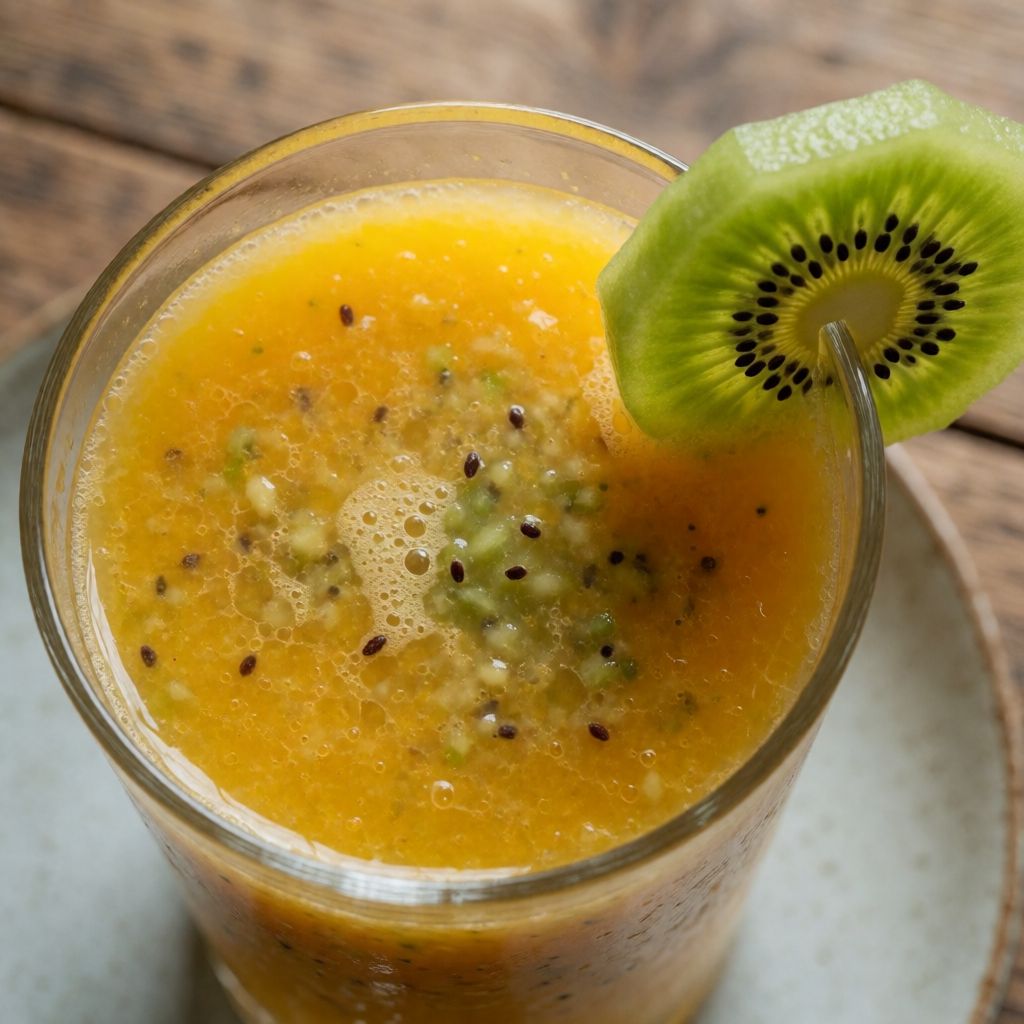
 AI photo
Kiwi and Orange Juice
A refreshing fresh juice made from kiwi and oranges with a hint of ginger.
Labels are worked out automatically from the ingredients and can be wrong. Check the packaging if it matters to you.
Ingredients


Steps
Carefully peel the oranges and kiwis and cut them into small pieces.
Feed the fruit into a juicer, without overloading it with too much at once.
If the juice is too thick, strain it through a fine sieve.
Stir a pinch of fresh ginger into the strained juice.
Pour the finished juice into a tall glass and serve immediately.
This isn't a dish with heat and timing, it's two fruits with opposite personalities being made to work together. Orange is obliging — break its cells open and juice runs free, clean, no resistance. Kiwi is not: cut it and you get a soft green mash laced with a mesh of fibre and a scatter of black seeds, all reluctant to let go of their liquid. The whole job here is managing that difference, not following a clock, because there isn't one — ten minutes of prep and nothing cooks.
What decides whether this works is how you feed the kiwi through the juicer, because the orange looks after itself. A juicer gets juice out by spinning fast enough that the liquid flies outward and the pulp stays behind, caught on a mesh. Drop in too much fruit at once and the machine can't keep that speed — it slows, the mesh clogs, and what you get is foam and waste instead of juice. Feed it steadily, a few pieces at a time, and it does the separating for you. That's the patience this recipe actually asks for: not standing over a pot, just not rushing the hopper.
Straining afterwards isn't fussiness, it's damage control. Even a good juicer leaves some kiwi seed and pulp behind in the liquid — a fine sieve catches what the spinning missed. Skip it if you don't mind a slightly gritty mouthful; strain it if you want something you can actually call a drink and not a smoothie that escaped.
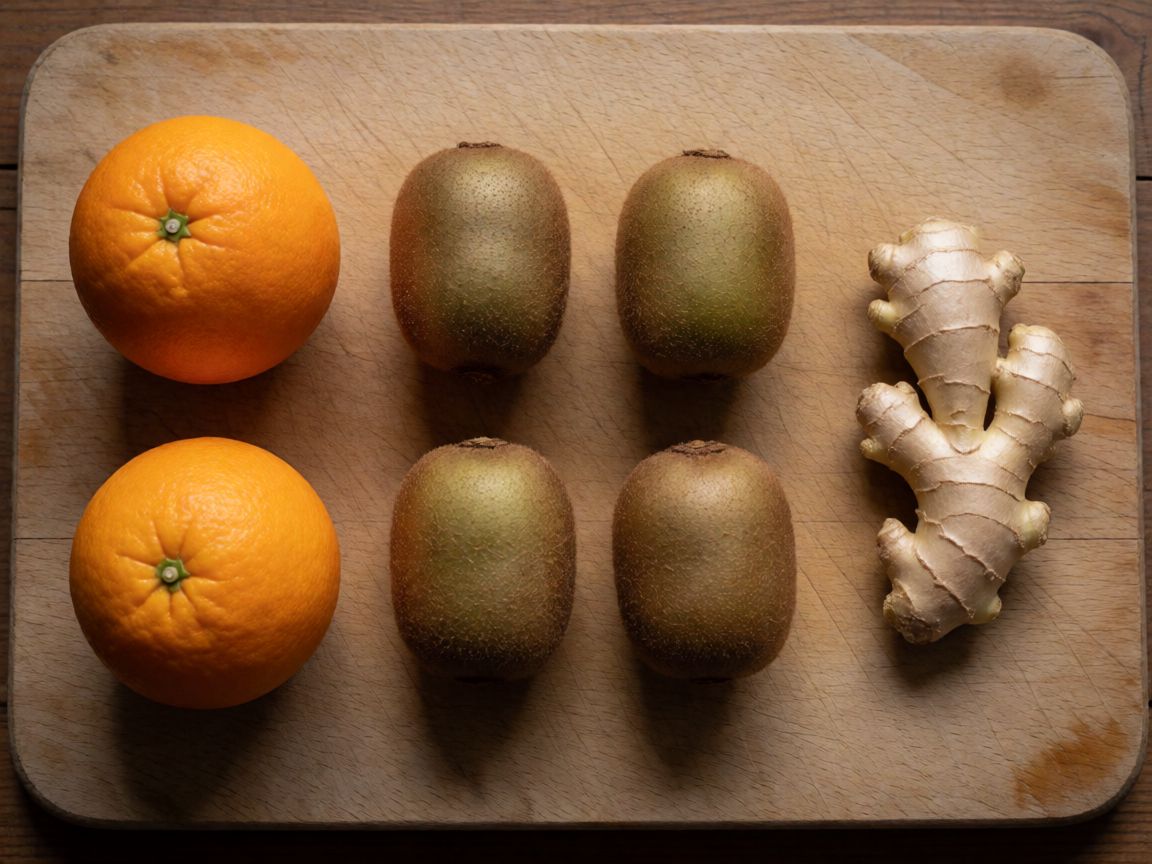
Pick your oranges by weight, not colour — a heavy orange for its size means dense flesh and real juice, a light one means dry pith and air pockets. Two oranges per two glasses is the ratio here because orange is the volume carrier: it supplies most of the liquid and all of the reliable sweetness, while kiwi supplies tang, colour, and a slightly green edge. If you only have blood oranges or even a sharp tangerine substitute, use them — the mechanism doesn't care about variety, only about juice content.
Kiwi should give slightly under your thumb, the way a ripe plum does. A hard kiwi is mostly structure and almost no free liquid — push it through a juicer and you'll get effort for very little reward, plus a sourness that no amount of ginger fixes. Five kiwi for two oranges sounds like a lot until you remember how little juice each one actually surrenders compared to its size.
On peeling: some say peel the kiwi thin, right at the skin, to save the vitamin C said to sit just under it — no, because that fuzzy skin carries bitterness and grit that no sieve will fully strain out afterwards, and the vitamin you'd save is trivial next to the unpleasantness you'd keep. Peel properly, lose a little flesh, gain a clean juice. Same logic with orange pith — leave strands of it in and you get bitterness from naringin, the compound that makes grapefruit rind bitter too; cut it away.
Ginger is a pinch, not a flavour you're meant to taste on its own — it's there to sharpen the edges of the sweetness, the way a squeeze of lime does in a fruit salad. If you've no fresh ginger, a little grated galangal does the same pungent job, or in a real pinch a few threads of orange zest grated straight into the glass gives you a different but related kind of lift — bitter-sharp instead of hot-sharp.
On equipment: a proper centrifugal juicer is the tool this recipe assumes, but plenty of ordinary flats don't have one tucked in a cupboard. A blender works instead, if you accept the extra step — blend the fruit to a rough purée, then push it through a fine sieve or a square of muslin, pressing with the back of a spoon until only dry fibre is left behind. It's slower and messier than a juicer, but the result in the glass is the same, because what matters is separating liquid from fibre, not which machine does it.
And don't make this ahead to save time later — there isn't a later for it. The same enzyme that makes kiwi useful for tenderising a tough cut of meat keeps working on the texture of this juice once it's made, and the vitamin C in both fruits starts dropping the moment air gets at it. This is a drink you make because you're about to drink it, not one you make because you'll be glad it's there.