
 AI photo
Krumiri
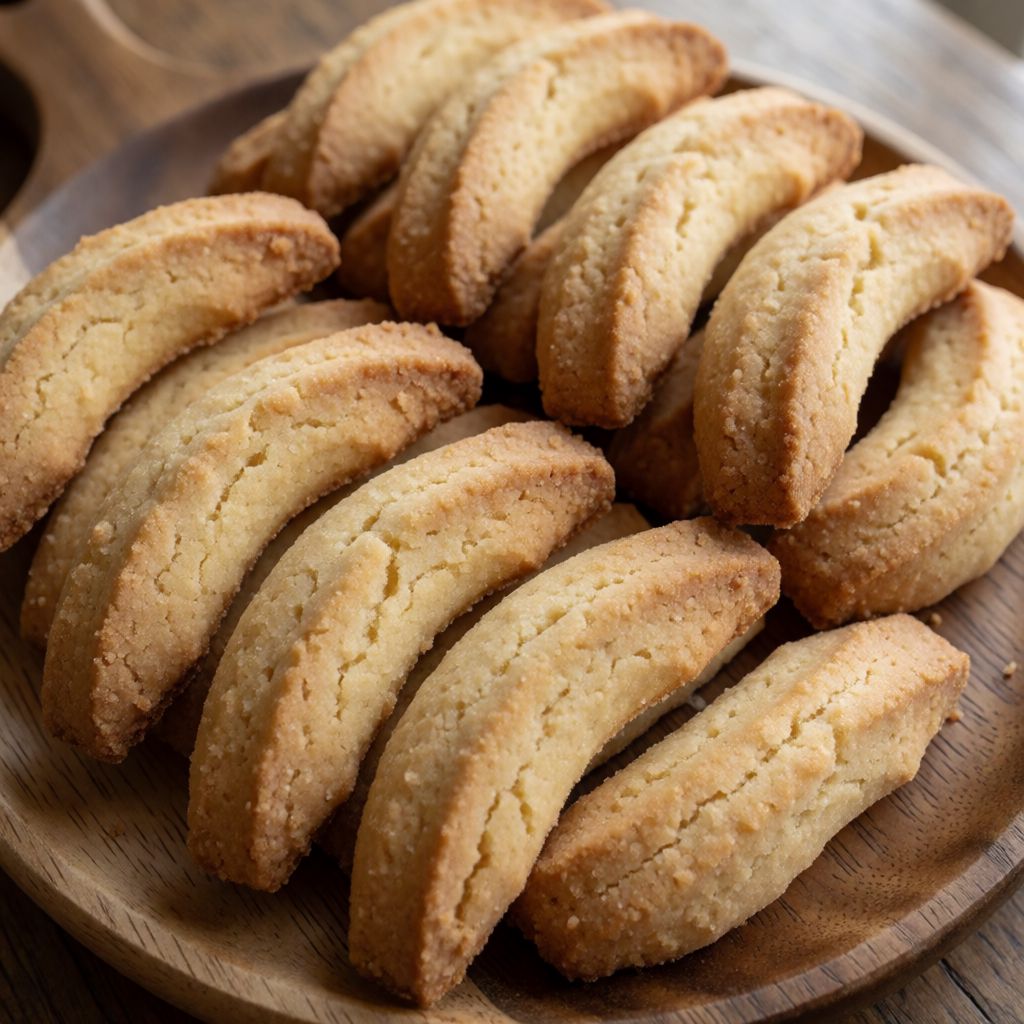
Krumiri are classic Italian butter biscuits, piped into curved shapes and baked until crisp and golden.
Labels are worked out automatically from the ingredients and can be wrong. Check the packaging if it matters to you.
Ingredients
- 350 g Plain flour
- 150 g Butter softened
- 140 g Caster sugar
- 1 pcs Egg
- 2 pcs Egg yolks
- 1 tsp Vanilla extract or ½ vanilla pod






Steps
Let the butter soften at room temperature, then add it to the sugar and mix by hand until smooth and creamy.
Add the egg and the two egg yolks and beat everything together with a mixer.
Sift the flour and add it to the dough a little at a time, mixing as you go.
Add the vanilla pod or vanilla extract.
Leave the dough in the fridge for a couple of hours (or a full day, as in the original recipe).
Using a piping bag, shape the krumiri and place them on a baking tray lined with parchment paper.
Put them in an oven preheated to 200°C for 5 minutes.
5 minLower the temperature to 180°C and bake for a further 12–15 minutes.
13 minRemove from the oven and let cool.
What was changed
Vanilla extract is used instead of vanillin, as it's the form most easily found in local shops.
Krumiri are a northern Italian butter biscuit, piped into short ridged batons and baked until they're pale gold and dry enough to sit in a tin for a fortnight without going soft. The story about them being shaped after a king's twirled moustache is a nice tale, but the real reason they're this fat-heavy and piped rather than rolled is plain economics: a Piedmont bakery in the 1880s needed something that could be boxed, carted around, and sold a week later without turning stale. Butter does that job far better than a sponge ever could.
What decides whether this works isn't mixer speed or the minute count on the oven — it's whether the chilled dough is stiff enough to hold its ridges out of the nozzle, but soft enough that your hand isn't wrestling the bag. Get that balance wrong and you either get flat puddles with no texture at all, or biscuits that look like toothpaste that refused to leave the tube.
The oven does two separate jobs, not one long bake. Five minutes at 200°C set the shape before the butter inside has a chance to melt and the ridges slump flat — piped butter dough spreads fast the moment it warms through, so a hot start locks the pattern in before that happens. Dropping to 180°C afterwards lets the middle finish cooking without scorching those same ridges, which are the first part of any piped biscuit to take colour, simply because they carry the most surface against the heat.
Flour here is plain, and that's deliberate, not a default. Plain flour has less protein than bread flour, so less gluten forms when it's mixed in, and that's exactly what keeps the finished biscuit sandy rather than chewy. Sifting it and adding it gradually isn't fuss for its own sake — it stops you overworking the dough in one go, which is the real cause of a krumiro that ends up tough instead of short. If you only have strong flour in the cupboard, cut it with something lower in protein, or expect a firmer bite than you wanted.
Butter goes in softened, never melted. Melted butter is just liquid fat — it won't hold the egg suspended through the dough, and the mix turns greasy and refuses to pipe cleanly. The real criterion for the fat here is: solid at room temperature, no watery content, no smell of its own that fights the vanilla. Butter wins on flavour as well as texture, which is why it's the default; margarine will pipe at a pinch, but the biscuit tastes thinner for it.
One whole egg plus two extra yolks is not a rounding choice — it's weighted towards fat and colour, away from the water and protein that egg white brings. That's why this dough behaves like soft clay rather than batter, and why the baked biscuit snaps short instead of springing back like a sponge would. Push the ratio the other way, more whole eggs, and you add moisture the dough doesn't want — it turns cakey and loses the sandy bite that's the entire point of a krumiro.
Caster sugar, not granulated, not icing. Granulated is too coarse to dissolve fully into the butter by hand; icing sugar dissolves too easily and leaves the dough too soft to hold a piped ridge. Caster sits in the middle — fine enough to vanish, coarse enough to help work a little texture through the fat as you mix.
Vanilla, pod or extract, is there for clean sweetness, nothing more — the criterion is an aromatic that doesn't compete with butter, so don't reach for almond extract or a strong citrus oil as a swap; a vanilla pod scraped into the sugar beforehand works just as well as extract and is often what's lying around if you've used a pod elsewhere.
The fridge rest is the ingredient most people skip, and it's the one that quietly ruins the batch when they do. Chilling hydrates the flour fully, so the dough stops feeling grainy under the nozzle, and it firms the butter so the piped ridges hold their shape on the tray instead of softening into a slug before they even reach the oven. Two hours is the floor, not the target — the original recipe rests it a full day, and that's patience doing real work, not tradition for tradition's sake. On an ordinary domestic tray lined with parchment, watch the ridges rather than the clock near the end: you want pale gold on the flutes, not brown, because by the time the flutes brown the centre is already done and going further just dries it out.