
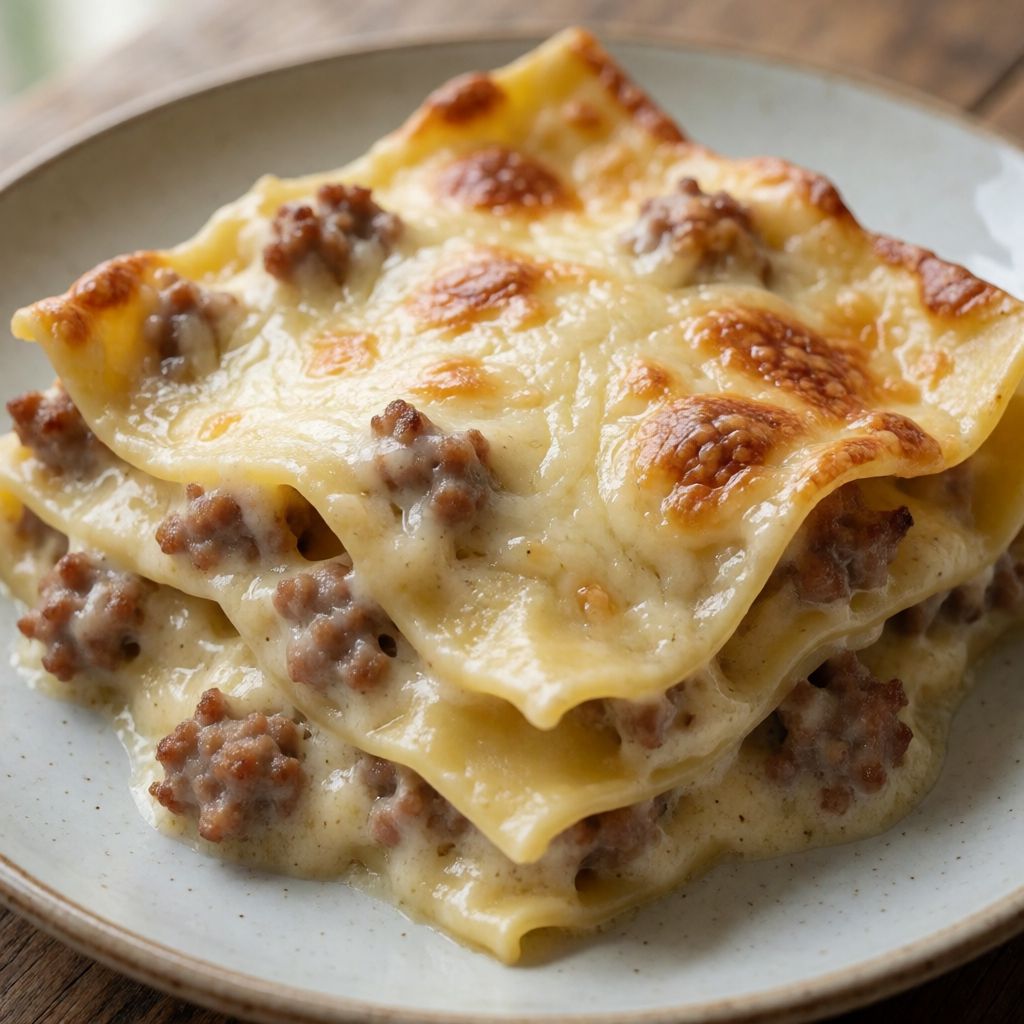
 AI photo
Lasagnette with Sausage and Castelmagno Cheese
Small round lasagnette parcels layered with sausage, béchamel and Castelmagno cheese, baked until golden.
Labels are worked out automatically from the ingredients and can be wrong. Check the packaging if it matters to you.
Ingredients
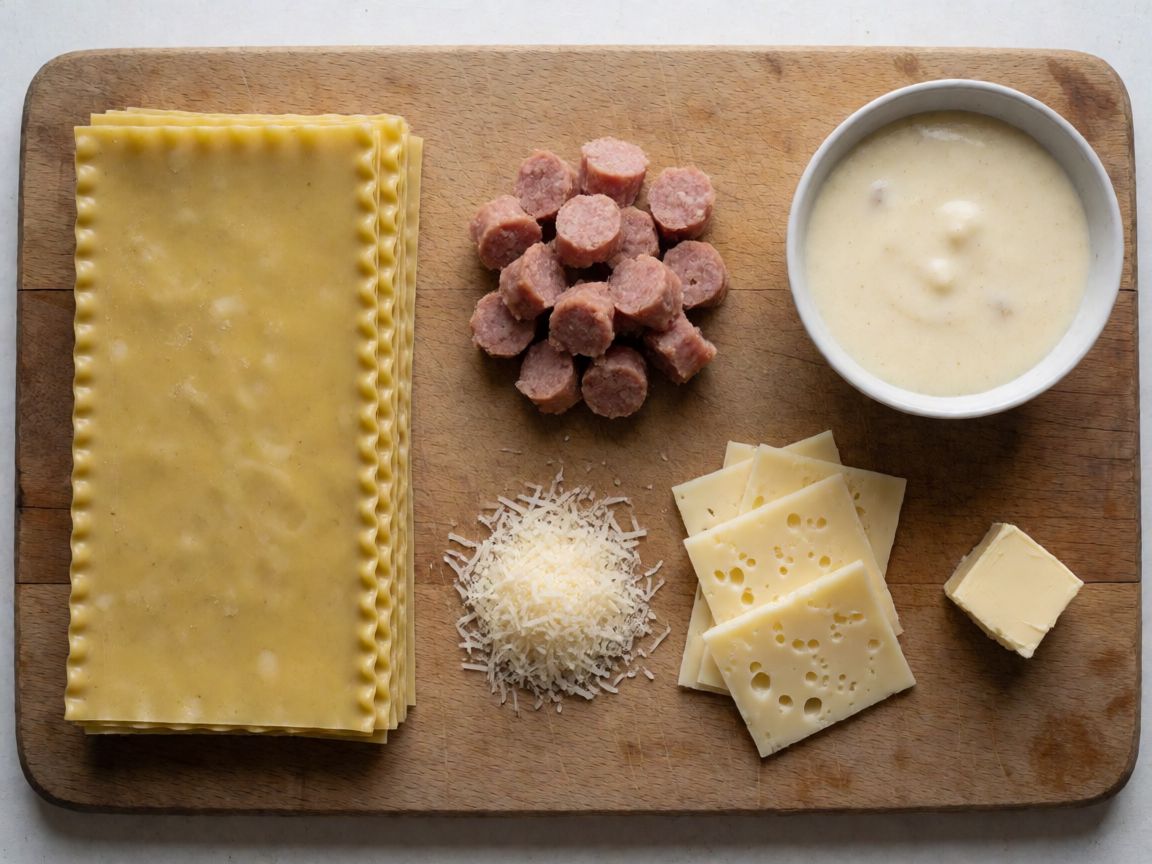
- Lasagna Sheets
- 300 g Sausage
- 500 g Béchamel Sauce
- Salt
- Olive Oil
- Parmesan grated
- Castelmagno sliced
- Butter








Steps
Using a round pastry cutter, cut thin lasagna sheets into circles.
Grease individual aluminium moulds with butter and spoon a little béchamel into the bottom of each.
Line each mould with a disc of fresh pasta.
Fry the sausage with a drop of olive oil until cooked through (make sure the meat reaches an internal temperature of 70°C).
Spoon some sausage into each mould, then top with another spoonful of béchamel.
Using a smaller cutter, cut smaller pasta discs to close this layer.
Add sliced Castelmagno and a little more béchamel.
Add the final layer of pasta.
Cover the surface of the lasagnette with béchamel.
Sprinkle with grated Parmesan and drizzle with olive oil.
Bake in the oven at 180°C for about 10 minutes.
10 minLet the lasagnette cool, then arrange on plates.
Serve with a light tomato sauce or whatever you prefer.
This isn't lasagne, it's lasagne pretending to be dessert — single portions built in little rings, the way a pastry chef thinks rather than a nonna. Three thin discs of pasta, two fillings, baked in individual moulds and turned out onto the plate. The whole idea comes from restaurant kitchens, not family tables: nobody's grandmother portions béchamel with a spoon into aluminium cups. It's lasagne engineered for the plate, not the dish.
What decides whether it works is restraint at two points: the pasta has to be thin and the discs cut clean, and the sausage has to be cooked through before it ever meets the mould. Thin pasta because this is built in layers the height of a stack of coins, not a brick — thick sheets won't set, they'll stay doughy in the short ten minutes it gets in the oven. Clean-cut discs because a torn edge lets béchamel seep sideways and your tidy little tower collapses into soup when you unmould it.
Some say sausage in lasagne has to be simmered slowly in the sauce for an hour, the way a ragù is. No — here the sausage is a filling, not a sauce base. It's fried hot and fast, judged done by the same test you'd use for any minced meat: no pink, no give, firm throughout. Ten minutes in the oven afterwards is for melting the Castelmagno and setting the structure, not for cooking anything through — if you're relying on the oven to finish the meat, you've already lost.
Lasagna sheets, cut into discs: buy the fresh, thin sheets, not the thick dried ones meant for a big tray — they won't fold or sit flat in a small ring, and they take too long to cook through for a ten-minute bake. If all you can get is dried lasagne, blanch it first until just flexible, pat dry, then cut — otherwise your ring will leak raw flour water into the béchamel while it bakes. A round pastry cutter does the job; a glass of the right size works just as well, nobody's checking for a factory edge.
The sausage: 300 g for three people is a light main-course portion because this dish is rich elsewhere — béchamel and Castelmagno carry plenty of fat and salt already. Use a sausage with a coarse, fatty mince and visible seasoning, the kind sold loose or skinned straight from a butcher's counter, not a delicate breakfast link — it needs to hold its shape and flavour against béchamel, which is bland by design and will swallow anything timid. Fry it loose, breaking it up, until no pink shows and it's firm to the bite — that's your real check, more reliable in a home kitchen than trusting a thermometer you may not own, though if you have one, 70°C at the centre is the number to hit.
Béchamel at 500 g sounds like a lot until you remember it's doing four jobs here: sealing the base of the mould so the pasta doesn't stick, binding each layer, coating the top so it doesn't dry under the grill-like heat of a small oven, and seasoning the whole stack since the pasta itself brings none. Make it with butter and flour cooked gently until it smells like biscuit, not raw flour, then milk whisked in slowly — that smell is your real test, not a clock. If béchamel feels like a chore, a thinner, well-seasoned white sauce will do; just don't skip the step of cooking out the flour, or you'll taste chalk under the cheese.
Castelmagno is a hard-ish, blue-veined cow's cheese from Piedmont, aged until it's crumbly outside and almost spreadable near the rind — that contrast is the whole point, and it's why it goes sliced rather than grated. If you can't find it, look for something with the same logic: a semi-soft blue or a washed-rind cheese that turns creamy rather than stringy under heat — a mild gorgonzola dolce is the easier UK substitute, taverna-style cheddar is not, because it just goes rubbery and oily rather than melting into the béchamel.
Parmesan on top is there to brown slightly and give a dry, savoury crust against all that soft cheese and sauce underneath — it's contrast, not flavour duplication, so don't be shy with a proper aged wedge grated fresh; the pre-grated dust in a tub won't brown the same way because it's cut with anti-caking starch.
As for the individual aluminium moulds — don't go hunting a specialist shop for them. Small ramekins, well buttered, or even a muffin tin with the cups buttered generously, will unmould a stack like this just as well, provided you let it rest and cool a little before you turn it out. That rest isn't optional laziness, it's structural: hot béchamel is still liquid, and a few minutes of cooling is what lets it set enough to hold the layers together when you flip it onto the plate. Patience here is short — a few minutes, not an hour — but skip it and you get a nice idea collapsed into a puddle, which still tastes fine but photographs badly and serves worse.