
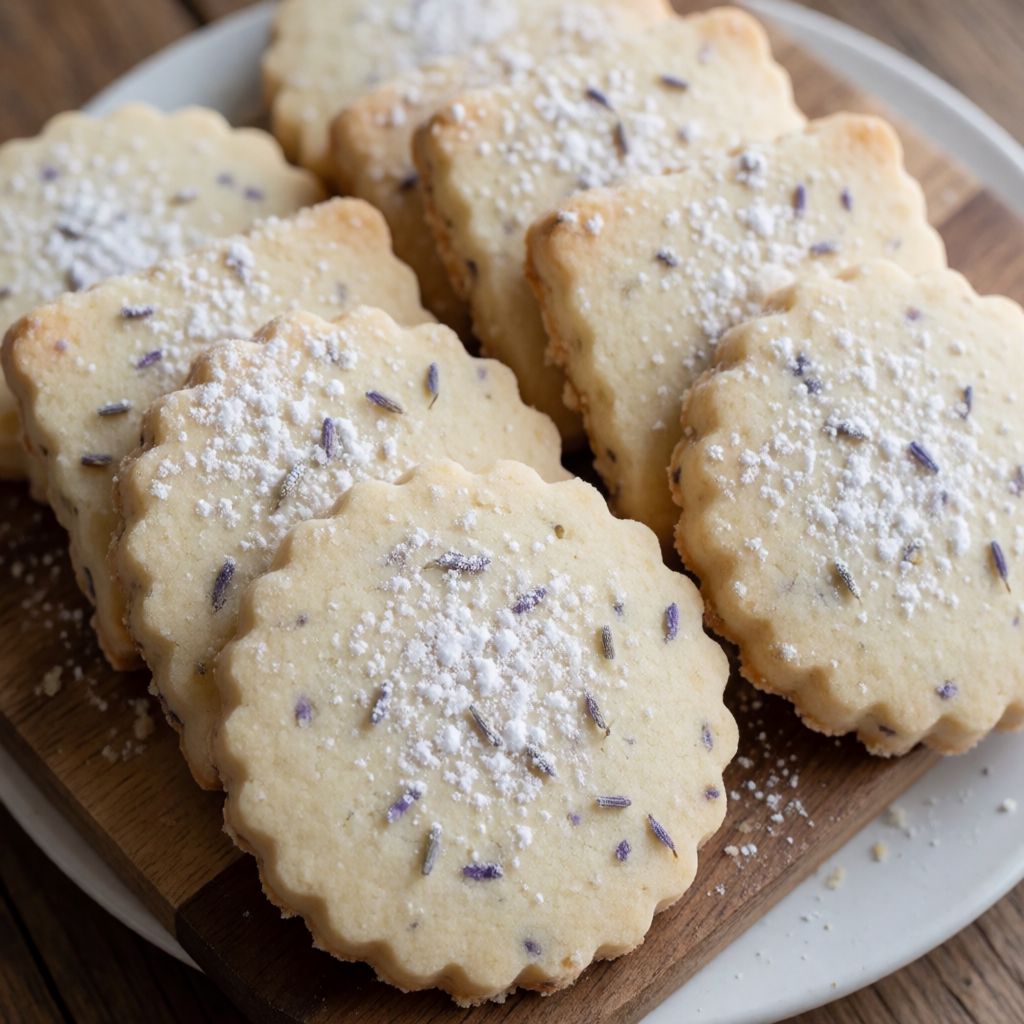
 AI photo
Lavender Shortbread Biscuits
Buttery shortbread biscuits with a light floral note from lavender, lovely with a cup of tea.
Labels are worked out automatically from the ingredients and can be wrong. Check the packaging if it matters to you.
Ingredients
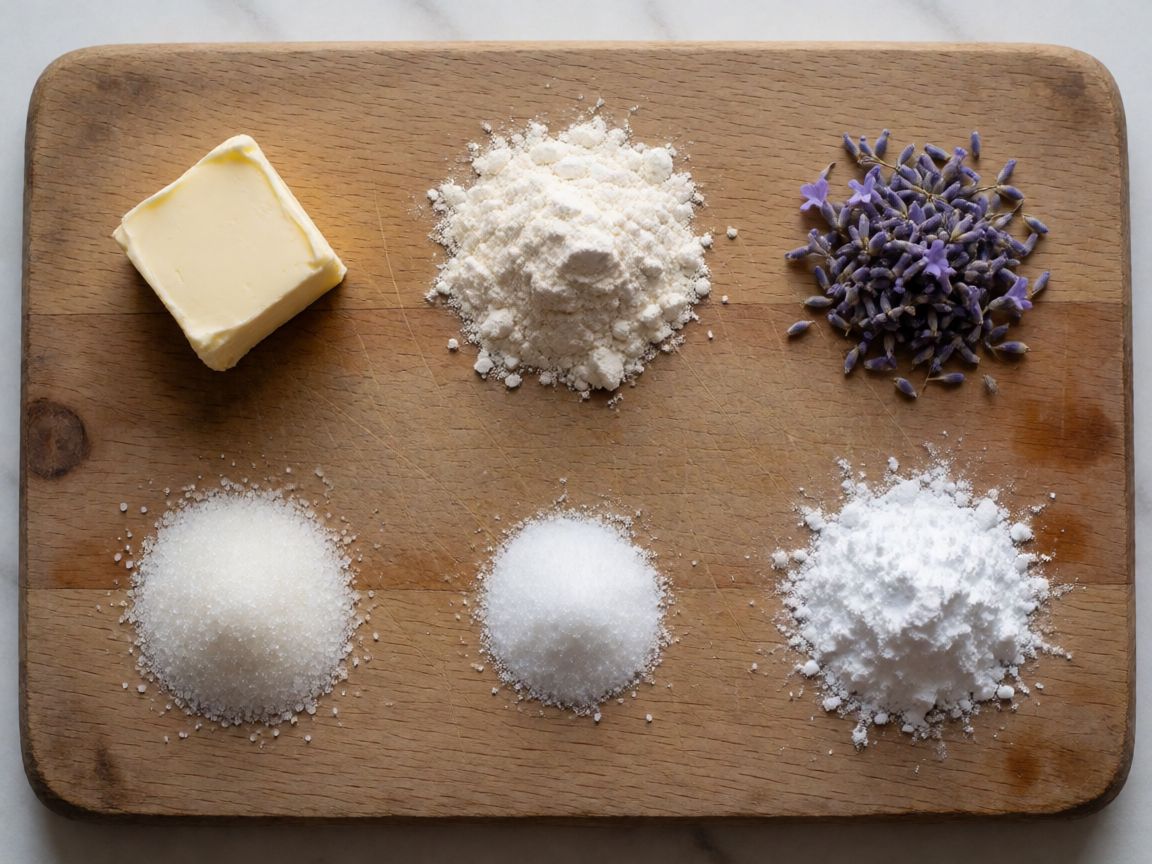
- 100 g Butter
- 150 g Plain Flour
- 0.5 tsp Lavender Flowers
- 90 g Caster Sugar
- 1 tsp Baking Powder
- 2 tsp Vanilla Sugar
- 1 pinch Salt







Steps
Let the butter soften at room temperature for at least 15 minutes.
15 minBeat the softened butter and sugar with a mixer until light and fluffy.
Mix the vanilla sugar, baking powder, salt and lavender flowers in another bowl.
Gradually add the dry mixture to the creamed butter and beat until the dough turns crumbly.
Tip the dough onto a sheet of parchment, bring it together by hand, cover and roll it out with a rolling pin.
Cut out the biscuits with cutters.
Place the biscuits on a prepared baking tray.
Bake at 150°C.
15 minLet the biscuits cool completely.
Shortbread isn't a cake trying to be modest. It's flour held together by fat and almost nothing else — no egg, no milk, barely any liquid at all. The word "short" is the clue: in pastry, "short" means the crumb snaps rather than stretches, because fat has coated the flour grains so thoroughly that the proteins in the flour can't link up into gluten strands. No strands, no stretch, no chew. Just a clean break and a melt.
What decides whether this works is one thing only: did the butter stay soft, or did it melt? Soft butter, beaten with sugar, traps tiny pockets of air and stays a solid-ish emulsion that you can fold flour into evenly. Melted butter behaves like oil poured onto sand — it runs between the grains instead of coating them, and you end up with a crumb that's greasy at the bottom of the tin and dry on top. That's why the first instruction is patience disguised as a timer: give the butter room temperature and real time, not a shortcut in the microwave, which half-melts the outside before the inside has softened.
Some say you should load up on lavender because it's a flower and flowers are shy with their scent. No — lavender is closer to perfume than to herb. Half a teaspoon, dried, is already near the edge of what's pleasant; a heaped spoon and your biscuit tastes of soap, not of a summer hedge. Restraint here isn't stinginess, it's the whole trick.
Butter: use the real, unsalted kind, because you want to set the salt yourself with the pinch in the recipe, not inherit whatever the dairy decided. Margarine will technically cream the same way, but it carries water that butter doesn't, and that water turns to steam in the oven and softens the crumb from the inside — fine for a sponge, wrong for something that's supposed to shatter. If salted butter is all you have, just leave out the pinch of salt; you already have it.
Flour: plain, not strong or bread flour, because the whole point is low protein and a gluten that never properly forms. Reach for bread flour by accident and the biscuit turns from short and sandy to faintly tough — not inedible, just not this dish anymore.
Sugar: caster, because the fine grains dissolve into the butter as you beat it, leaving a smooth crumb. Granulated sugar is coarser and won't fully dissolve in the short time you're creaming — you'll get little gritty craters instead of an even bite. If caster isn't in the cupboard, a few seconds of granulated sugar in a blender gets you there.
Lavender and vanilla sugar: buy lavender sold as culinary or food-grade — garden-centre lavender is often grown for looks, not for eating, and may have been treated with things you don't want on a biscuit. Vanilla sugar is just sugar that's lived next to a vanilla pod; if you haven't got any, a few drops of vanilla extract added while you cream the butter does the same job, and the sugar weight stays as it is.
Baking powder and salt: proper old Scottish shortbread has neither — just butter, flour and sugar, sometimes in a plain three-two-one ratio by weight, because that's what a farmhouse kitchen had and butter was the one luxury worth showing off at Hogmanay. The baking powder here is a modern softener, there to stop a thicker biscuit turning into a rock; the salt isn't there to taste salty, it's there so the sweetness doesn't go flat and one-note.
This amount makes a modest batch — enough for a proper tea round for four, not a tin to last the week. Watch the edges in the oven rather than the middle, since a domestic fan oven tends to run hottest there; you're looking for a faint gold at the rim while the top stays pale. And once they're out, leave them alone. The fat is still soft at oven heat and only locks the crumb together as it cools and re-hardens — pick one up warm and it will fall apart in your hand, not because you did anything wrong, but because the biscuit simply isn't finished setting yet.