
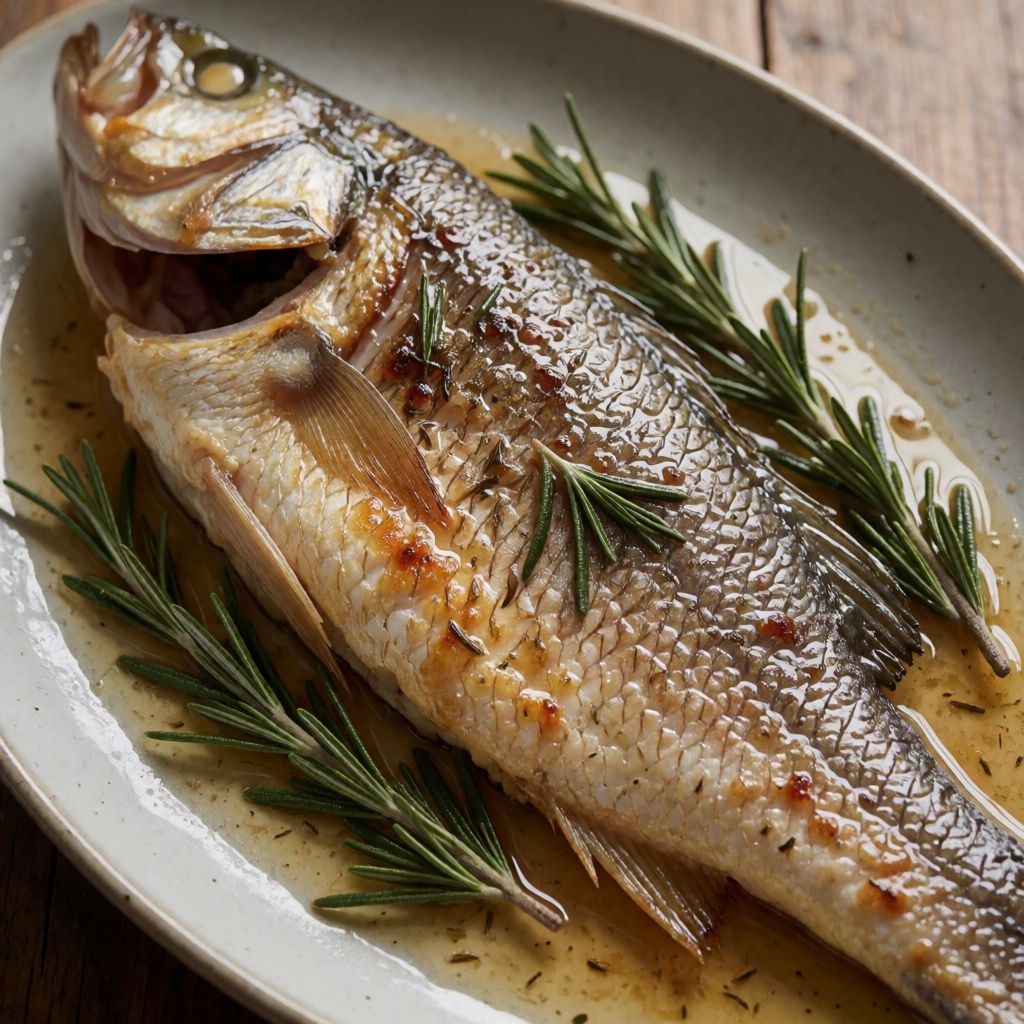
 AI photo
Oven-Baked Sea Bass
A whole sea bass baked in the oven with butter, rosemary and white wine.
Labels are worked out automatically from the ingredients and can be wrong. Check the packaging if it matters to you.
Ingredients
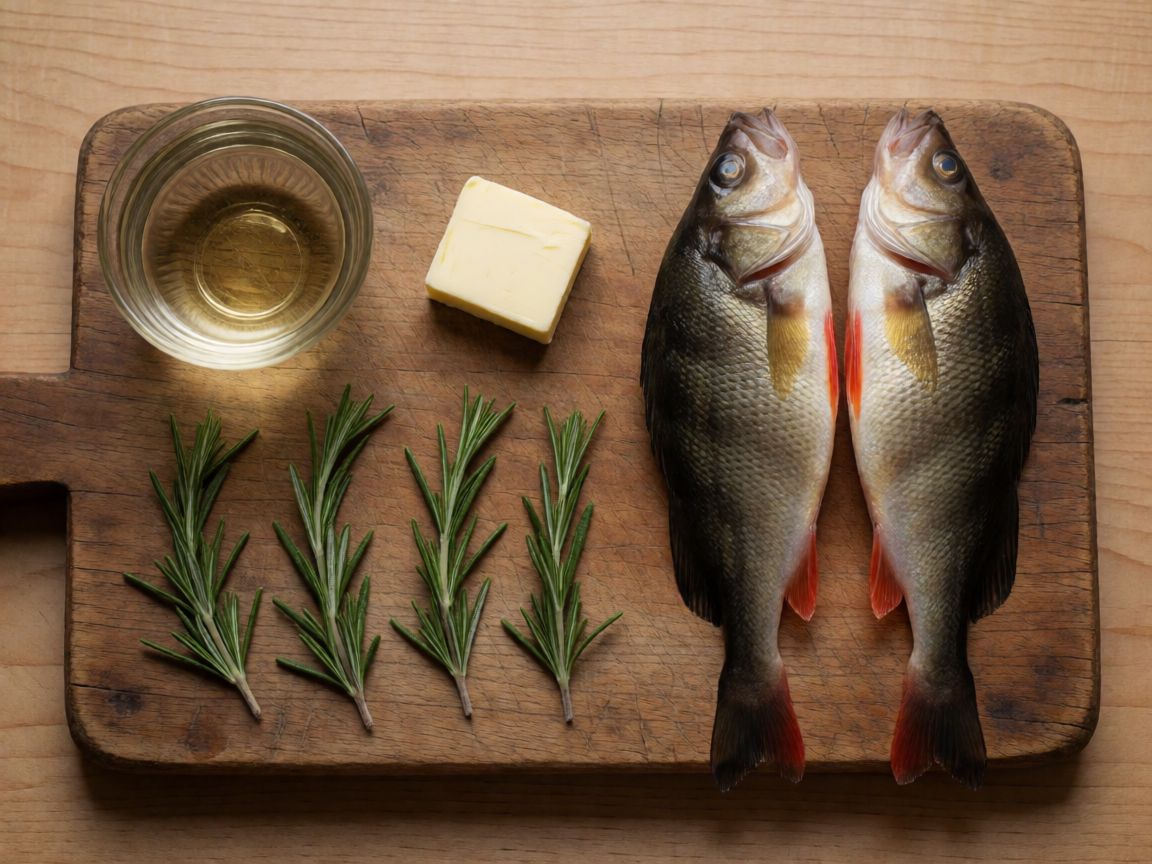
- 2 pcs Sea Bass at least 700 g each
- 1 pcs Butter a small knob, for stuffing
- 4 pcs Rosemary
- 250 ml White Wine
- Olive Oil for greasing
- Salt to taste
- Black Pepper to taste







Steps
Gut the sea bass and rinse thoroughly under cold running water to remove any traces of blood.
Brush the surface of the fish with olive oil, then place a knob of butter, salt and black pepper inside the cavity.
Place the sea bass in an oiled roasting tin, tucking rosemary sprigs on top and inside the fish.
Put the roasting tin into an oven preheated to 180°C and bake for at least 10 minutes.
10 minTake out the tin and carefully pour in the white wine, then return the fish to the oven and bake for a further 10 minutes.
10 minThe fish is ready when the thickest part reaches an internal temperature of 63°C. Drizzle the sea bass with the wine and rosemary before serving.
This is a whole fish cooked whole — bone in, skin on — because that's the only way a 700-gram sea bass keeps its juice without a drop of liquid added at the start. The bone acts like a heating element from the inside: it holds heat a beat longer than flesh, so by the time the surface is done, the centre has caught up. Cut the same fish into fillets and you lose that balance — the outside dries while you wait for the inside, which is why whole roasting was never a fancy idea, just the sensible one for people who fished more than they filleted.
What decides whether it works is not the oven dial, it's the inside of the fish. Some say cook it by the clock — ten minutes a side, or a minute a hundred grams. No — because one sea bass is never exactly like another, and a domestic oven lies to you about its own temperature more than you'd think. The only honest marker is what's happening at the thickest part near the backbone: 63°C and the flesh has gone from glassy grey to an opaque, almost pearly white, and it lifts cleanly off the bone instead of clinging. Get there by feel and temperature, and the minutes on the recipe are just the point where you start checking, not the point where you stop.
On the ingredients, start with the fish itself, because nothing else here can save a bad one. At 700 grams a fish, each sea bass is really a single generous plate — this recipe feeds two people one fish each, not two people sharing. Buy it whole if you can: gills bright red, not brown, eyes clear not sunken, flesh that springs back under a finger instead of leaving a dent. A fish that's been sitting too long will fall apart in the oven instead of staying whole, no matter how carefully you cook it — that's a buying problem, not a cooking one.
Butter inside the cavity is doing a specific job: the skin and oil on the outside look after the exterior, but the cavity is the only place fat can reach the inner flesh directly, basting it from the bone outward as it melts. If you've no butter, any fat that's solid at room temperature and melts cleanly will do the same work — a spoon of ghee, even a knob of cold olive-oil-soaked bread, though butter's the easiest because it holds its shape going in and liquefies exactly when you want it to.
Rosemary earns its place by surviving the oven. A soft herb like dill or parsley would scorch and turn bitter at 180°C; rosemary's woody stem and oily needles release their scent slowly over the whole twenty minutes instead of burning off in the first five. If you haven't got it, reach for something with the same backbone — thyme, or bay — not for anything leafy and delicate.
The white wine isn't for strength, it's for acid and steam. A dry wine cuts through the oiliness of the fish and, once it hits the hot tin, turns to vapour that keeps the flesh from drying in the second half of cooking. A sweet wine will catch and caramelise instead of evaporating cleanly, which changes the whole point of adding it. If wine's not to hand, a splash of dry cider or even water with a spoon of vinegar gets you the acid and the steam, just without the aroma.
Olive oil on the outside of the fish and in the tin is there to stop skin welding itself to metal — a fish torn in half when you try to lift it out is usually a greasing problem, not a doneness one. Use anything with no strong character of its own so the fish, not the fat, stays the thing you taste; a neutral vegetable oil works if olive oil isn't in the cupboard, though you lose a little of its own quiet flavour at the edges.
And patience belongs on this list as much as any of them. The ten minutes between the dry roast and the wine, the wait until the thermometer — not the clock — says the fish is done: none of that can be rushed without the fish knowing it.