
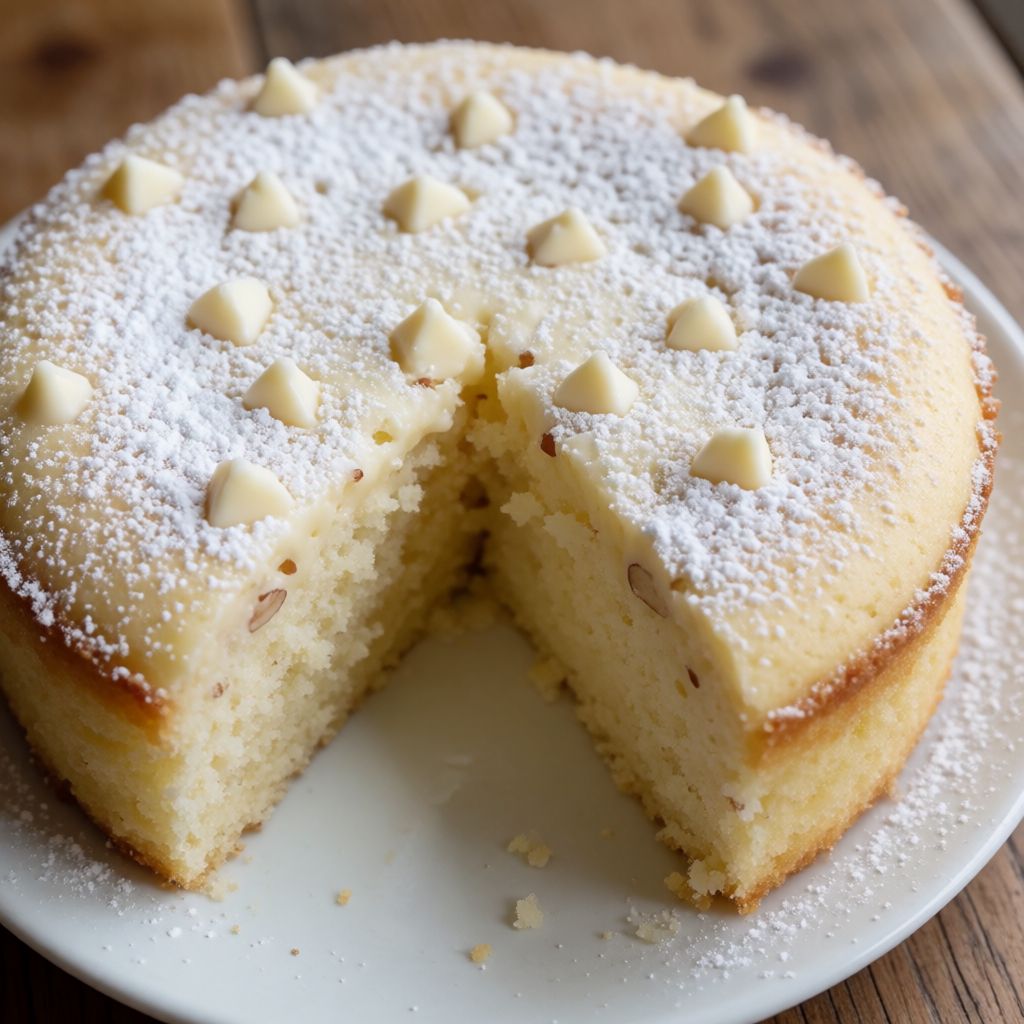
 AI photo
Lemon Caprese Cake
A rich, flourless lemon version of the classic Italian caprese cake, made with ground almonds and white chocolate.
Labels are worked out automatically from the ingredients and can be wrong. Check the packaging if it matters to you.
Ingredients
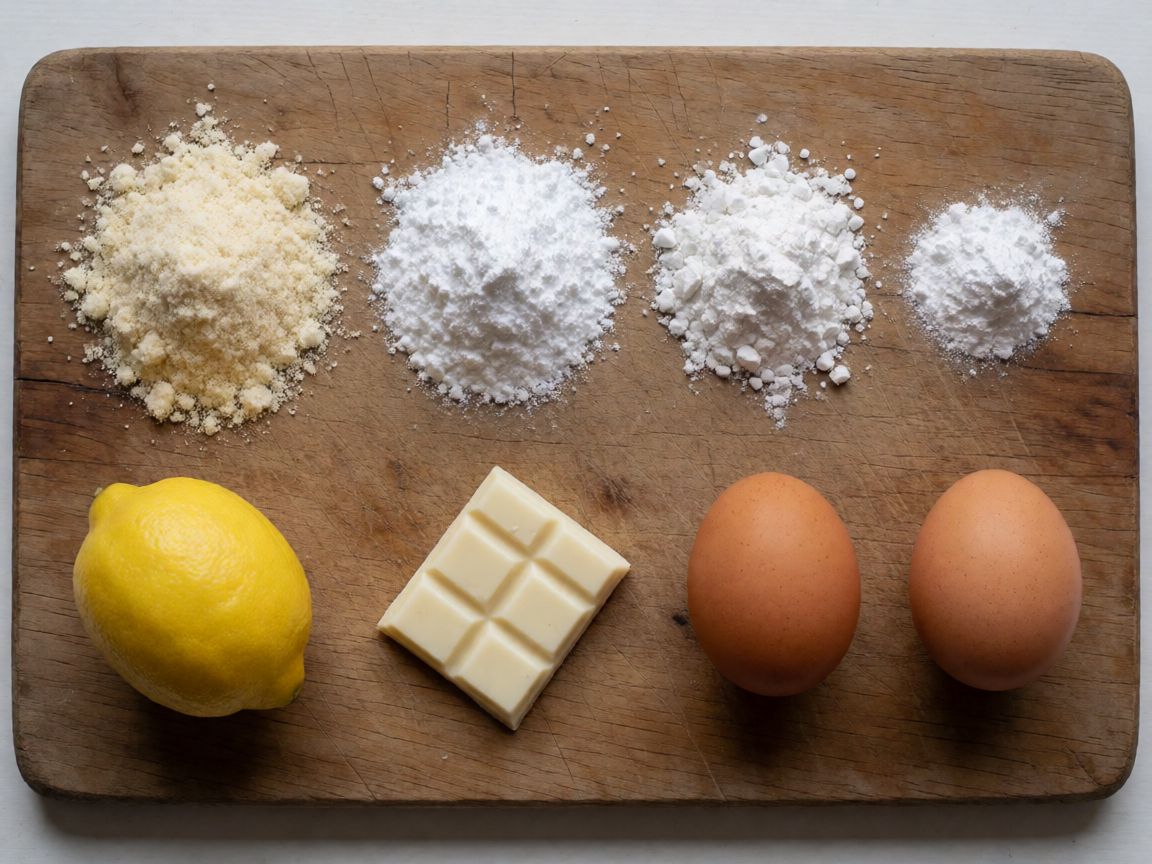
- 250 g Almond flour or ground almonds
- 150 g Icing sugar
- 60 g Potato starch
- 0.5 pcs Baking powder
- 2 pcs Lemon for zest
- 200 g White chocolate hand-grated
- 6 pcs Eggs
- 100 ml Olive oil
- 20 g Flaked almonds to taste, for decorating
- 10 g Butter to taste, for greasing








Steps
Tip the almond flour and icing sugar into a bowl and mix. Add the potato starch, baking powder and lemon zest, then stir to combine.
Add the hand-grated white chocolate to the dry ingredients.
In a separate bowl, whisk the eggs until doubled in volume.
Add the eggs to the dry ingredients, mix well, then pour in the olive oil.
Grease a tin with butter and dust with potato starch, pour in the batter and scatter with flaked almonds.
Bake in a preheated oven at 180°C for 35 minutes.
35 minRemove the cake from the oven and decorate as you like. Serve once cooled.
Forget the kazan talk for this one — this is a Capri cake, which means it was built around what the island didn't have rather than what it did. No wheat flour. The story goes a cook forgot to put flour in a chocolate-almond batter and the cake turned out better for it; more likely, almonds and lemons grew on the hillsides and flour had to be shipped in, so someone worked out you don't need it. That's the whole engine of this recipe: eggs and almond flour doing the job gluten usually does.
What decides whether it works is step 3, the one that looks like nothing: whisk the eggs until they double. That's not decoration, that's your leavening. In a normal cake, gluten forms a stretchy net that traps the gas from baking powder. Here there's no gluten — almond flour and potato starch don't make one — so the air has to already be beaten into the eggs before anything goes near the oven. Half a sachet of baking powder helps, but it's a top-up, not the main act. Skip the real whisking and you get a flat, heavy disc that tastes fine and sits in your stomach like a brick.
Some say a cake without flour can't rise properly. No — it rises differently. The structure comes from set egg protein and starch instead of gluten, which is also why it's naturally gluten-free and why the crumb is denser and damper than a sponge, closer to a baked almond paste with air pockets of melted white chocolate running through it.
Almond flour: buy it finely ground and bone dry — if it clumps when you pinch it, the almonds have started releasing their oil, and your cake will be greasy at the base. Ground almonds from the baking aisle are the same thing under a different name; just check they're fine, not the coarse kind meant for crumbles.
Icing sugar matters more than it looks: it's sugar that's already been reduced to near-dust, so it dissolves into the almond flour and eggs without gritty patches. Caster sugar will work in a pinch but you'll taste tiny crunches of undissolved sugar at the edges — a small defect, worth avoiding if you have icing sugar in the cupboard, which most UK kitchens do, because it's the same stuff you'd use for icing a Victoria sponge.
Potato starch isn't there for flavour, it's there to stop the cake collapsing into a wet almond paste — it absorbs moisture and firms the crumb as it cools, which is also why you dust the tin with it rather than flour: keeps the whole thing gluten-free and non-stick at once. No potato starch, no problem — cornflour does the identical job; the criterion is any fine, flavourless starch, not a brand.
Eggs: six of them are doing structural work, not just volume, so use them at room temperature if you can — cold eggs don't whip up as much air, and less air here means a denser cake than the recipe intends. Standard large eggs from any UK supermarket are fine; this isn't a recipe that notices the difference between a free-range yolk and a barn one.
Olive oil keeps the crumb moist without the dairy weight of butter, and it's traditional for the same reason flour was skipped — it's what Capri had. The rule for substituting is simple: any oil with no smell of its own, so a mild olive oil or a plain sunflower oil, not an extra-virgin that tastes of itself and fights the lemon. The 10g of butter for greasing is a different job entirely — just helping the starch dusting stick to the tin — and a spray oil does that equally well.
On the oven: 180°C is where egg protein sets and the chocolate shards go soft without scorching, but don't trust the clock alone. Domestic ovens run hot in patches, fan ovens run faster than conventional ones — go by what you see and feel: a skewer should come out with moist crumb clinging but no raw batter, and the top should spring back rather than dent when you press it lightly. And once it's out, leave it be. The starch is still firming up as it cools; cut it warm and it'll collapse under the knife instead of holding a slice. That wait is part of the recipe, not dead time before it — good with the kind of tea that has milk in it, which is exactly when this cake is at its best anyway.