
 AI photo
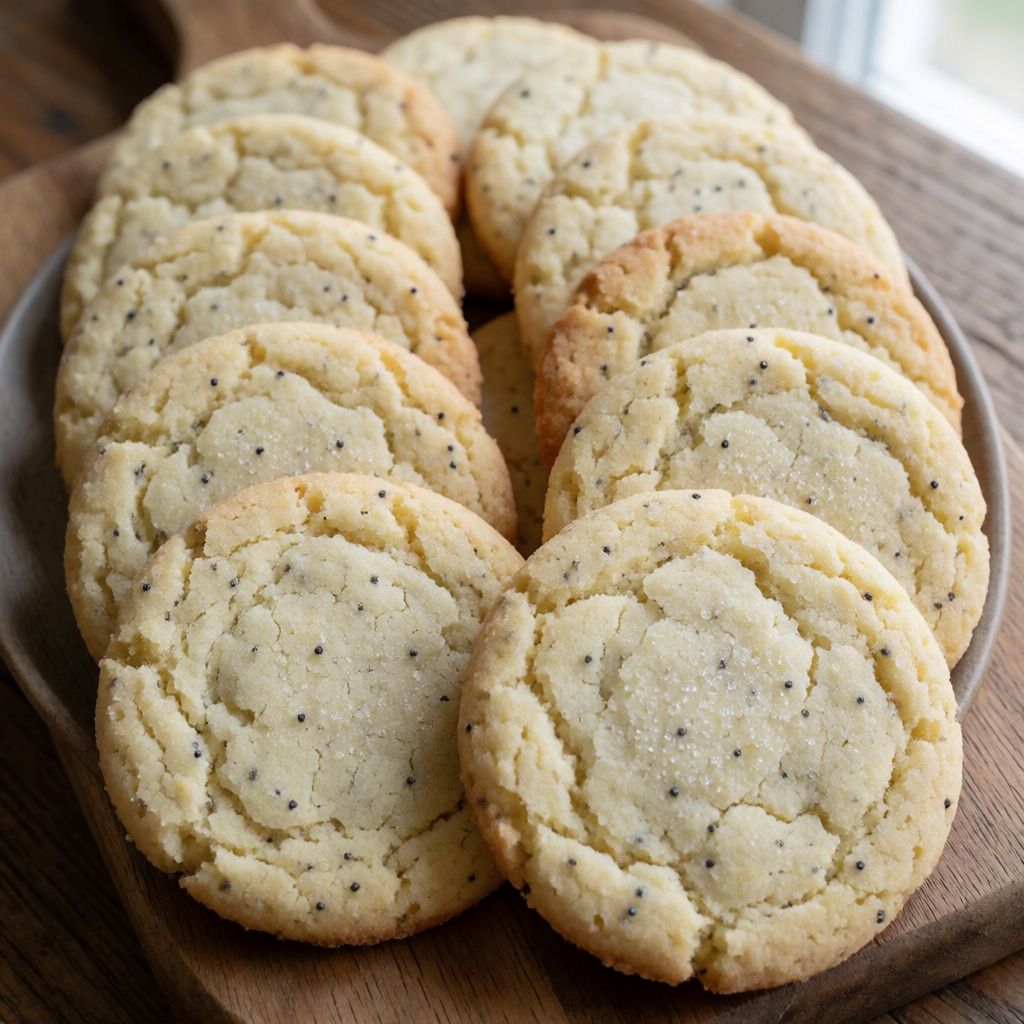
Lemon and Poppy Seed Cookies
Crisp lemon and poppy seed cookies with a buttery crumb and bits of white chocolate.
Labels are worked out automatically from the ingredients and can be wrong. Check the packaging if it matters to you.
Ingredients
- 160 g Plain Flour
- 1 tsp Baking Powder
- 50 g Caster Sugar
- 2 pcs Lemon finely grated zest
- 2 tbsp Lemon Juice freshly squeezed
- 1 pinch Vanilla Powder
- 120 g Butter softened, at room temperature
- 50 g White Chocolate finely chopped
- 1 tbsp Poppy Seeds









Steps
Mix the flour, baking powder, caster sugar, vanilla powder and finely grated lemon zest thoroughly.
Crumble in the butter and quickly bring the dough together with the lemon juice and white chocolate.
Roll the dough into a log about 2 cm in diameter.
Cut the dough into slices about 1 cm thick, sprinkle with poppy seeds and press with a fork to make grooves.
Place the cookies on a baking tray lined with parchment paper and bake in a preheated fan oven at 180°C for 10–12 minutes.
11 min
What was changed
The oven temperature has been rounded to fan.
This is a British biscuit-tin cookie wearing a French shortbread's clothes: flour, a generous slab of butter, not much sugar, rolled into a log and sliced rather than scooped or piped. Forty cookies out of 160 grams of flour sounds like a conjuring trick until you remember each one is a centimetre thick — a bite for with your tea, not a pudding in its own right.
What decides whether these turn out right or turn into greasy puddles is the relationship between fat and flour, and how fast you move while they're getting acquainted. Butter rubbed into flour stays as tiny separate pockets of fat coating the flour grains — that's what keeps a shortbread-type dough short, meaning it shears cleanly instead of stretching like bread. Warm it with your hands too long, or over-knead it chasing a smooth dough, and the butter stops being pockets and becomes grease smeared through everything. The dough goes from crumbly to slick, and in the oven it spreads and puddles instead of holding its disc shape.
Some say more lemon juice means more lemon flavour. No — because the fragrance of a lemon lives in the oil glands of the zest, not in the juice, which is mostly water and acid. The juice here is doing a small, humble job: adding a touch of liquid and sourness to help the dough come together. Grate the zest finely, off the coloured skin only — the white pith underneath is bitter and does nothing for you — and you've done the real flavour work before the juice even enters.
Flour here is doing the opposite of its job in bread — you don't want gluten to develop, you want it to stay quiet. Plain flour, with its modest protein, is the right tool; if all you have is strong bread flour, it will do, but handle the dough even less than the recipe already asks, because every extra minute of mixing builds more of the stretch you're trying to avoid.
Butter needs to be soft enough to crumble into the flour with your fingers in seconds, not so soft it's turned to paste. Think of pressing a thumb into firm clay — it gives, but holds its shape. Cold butter won't distribute evenly and leaves hard streaks that melt unevenly in the oven; butter gone soft to the point of shine has already started turning to grease, and you've lost the battle before the oven's even hot. Any dairy butter with no strong flavour of its own works; margarine will get you a cookie, but a flatter, greasier one, because it carries water that butter doesn't.
Caster sugar is chosen for its grain size, not its name — fine enough to vanish into a dough with almost no liquid in it. Granulated sugar sits gritty in a dough this dry; icing sugar, with its added starch, turns the texture pasty. If caster isn't in the cupboard, a few seconds in a blender with ordinary sugar gets you there.
The white chocolate is chopped small and buried in the dough rather than melted and streaked through it, precisely because it's fragile under heat — buried, the surrounding dough insulates it; left exposed on top, it would brown and turn bitter before the cookie itself is even pale gold. If you've none, any sweet, fat-rich, quiet-flavoured substitute — white chocolate chips, or even a few extra grams of sugar and a splash more cream — fills the same role: pockets of richness that interrupt the crumb, not a competing flavour.
The baking powder is a teaspoon for 160 grams of flour — that's not a leavening agent trying to make a cake rise, that's a whisper, just enough to stop the cookie baking down into something as dense as a biscuit tin lid. Don't be tempted to add more chasing lightness; the lift in this dough comes from butter melting and steaming off a little moisture as it bakes, not from gas bubbles.
A fan oven moves hot air around the food, which cooks faster and more evenly than a still oven at the same number on the dial — that's why the recipe's 180°C assumes a fan. If your oven has no fan, the usual correction is to add about 20°C to compensate, then trust your eyes over the dial: watch for that pale gold rim rather than the clock. The dough log should roll easily and hold its round shape when you cut a slice off; if your kitchen's warm and it starts slumping instead of slicing clean, a few minutes in the fridge costs you nothing — the recipe doesn't ask for it, but butter doesn't read recipes. Let the cookies sit on the tray a minute once out of the oven before you move them; hot, they're still mostly butter holding its breath, and they'll crumble in your hand if you rush them onto a rack. That minute of patience is as much an ingredient here as the lemon.