
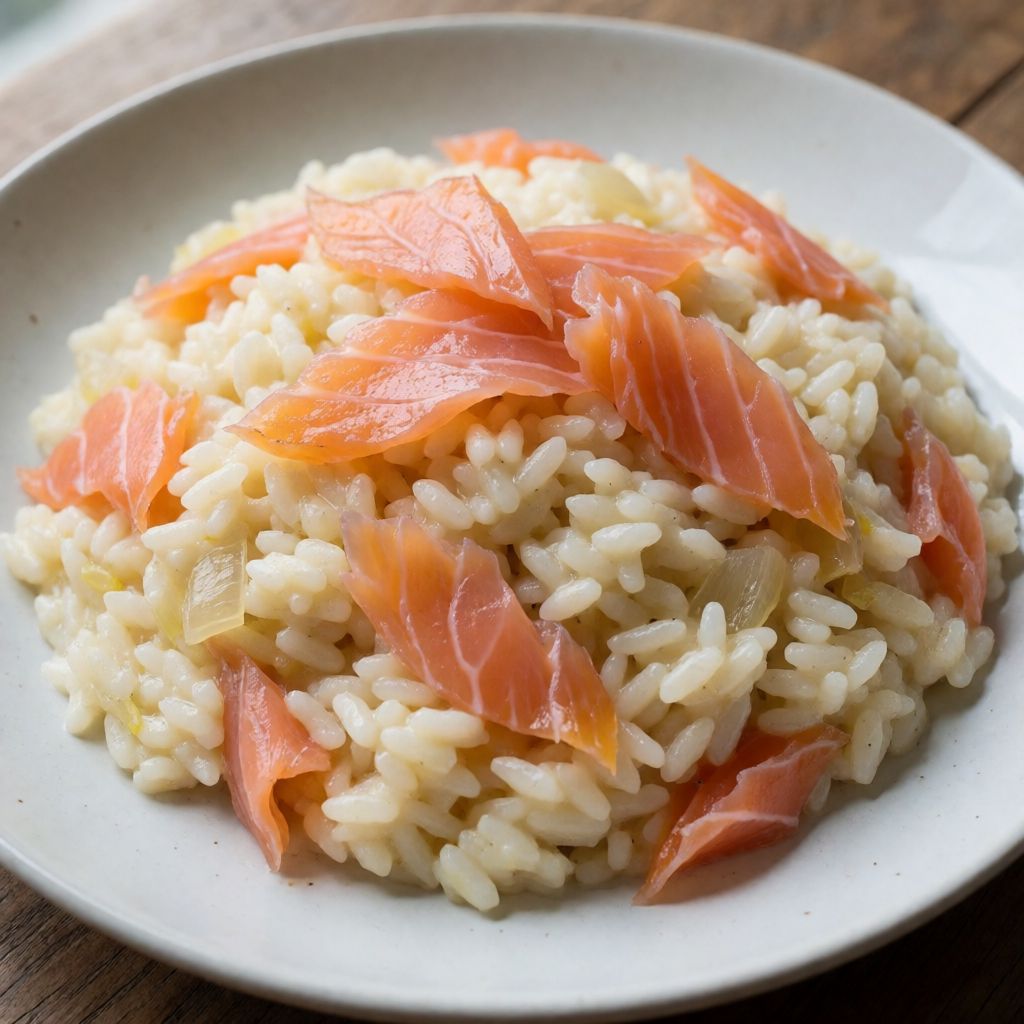
 AI photo
Lemon and Smoked Salmon Risotto
A creamy risotto with lemon and smoked salmon.
Labels are worked out automatically from the ingredients and can be wrong. Check the packaging if it matters to you.
Ingredients
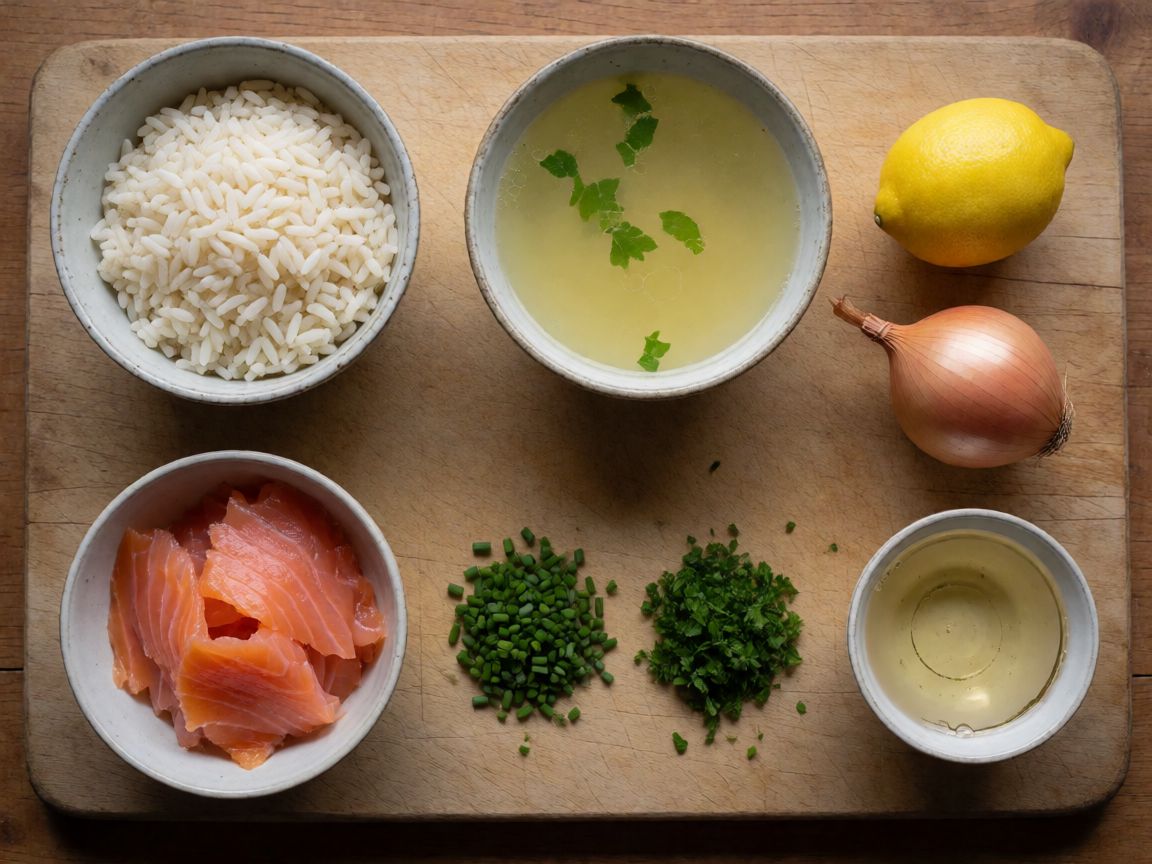
- 350 g Carnaroli rice
- vegetable stock to taste
- 1 pcs lemon
- 1 pcs onion
- olive oil to taste
- salt to taste
- black pepper to taste
- 150 g smoked salmon
- chives to taste
- parsley to taste
- 120 ml white wine
- 20 g butter












Steps
Cut the salmon into thin strips and toss it in a bowl with lemon juice, lemon zest and chopped parsley and chives.
Chill the marinated salmon in the fridge.
30 minFry the onion in olive oil in a pan, then add the rice and cook, stirring, until it turns translucent.
Pour in the white wine and let it bubble away completely.
Add the vegetable stock a little at a time, stirring often, until the rice is creamy and just tender.
Season with salt and black pepper, then fold in the marinated salmon.
Stir in the butter for a creamy finish and serve sprinkled with herbs.
Risotto is not a rice dish. It's a starch-management exercise where you keep the grain just this side of giving up its structure, and the cream on the plate is not cream at all — it's rice flour and water, released on your terms, spoonful by spoonful. The salmon here never sees heat; it cures for half an hour in lemon and herbs, and gets folded in at the very end, raw-cooked by acid alone, so it stays silky instead of turning to rubber.
What decides whether this works is the stock-adding rhythm, not a clock. You add liquid in small amounts and you wait for the pan to go almost dry before the next ladle — not because tradition says so, but because that's what forces the rice grains to rub against each other and the pan, scraping starch off their own surface. Dump the whole stock in at once, Carnaroli will cook, sure, but it cooks swimming, not scraping, and you get rice in broth instead of risotto.
Some say risotto needs a kazan-like heavy pan with sloped sides to work. No — any wide, heavy-bottomed pan does the job, because the only thing that matters is surface area for evaporation and a base thick enough not to scorch where the stock first lands. A domestic wide frying pan or a sauté pan is closer to right than a tall narrow saucepan ever will be — tall and narrow just steams the rice instead of reducing around it.
Carnaroli is the rice that makes this forgiving. It carries more amylose than Arborio, so it releases starch slowly and holds its shape longer under stirring — useful if your hob runs hotter than you think, which most domestic rings do near the middle of the dial. If you can't find Carnaroli, Arborio works but cooks a touch faster and forgives less; don't reach for long-grain or basmati, they're bred for the opposite job — staying separate, not binding.
The onion goes in raw-cooked in oil before the rice, and the reason is simple: rice added to a cold or half-cooked onion just boils in its own moisture instead of toasting. You want the onion gone soft and translucent, not browned — browning here means bitterness creeping into a dish that's meant to taste clean and lemony. Use an oil with no flavour of its own for this stage; a mild olive oil is traditional in a dish with an Italian spine, but any neutral vegetable oil does the identical job if that's what's in your cupboard.
Wine goes in next and it must bubble away completely — not "mostly," completely — because what you're doing is cooking off the alcohol and leaving behind acid and flavour compounds that would otherwise taste raw and sharp against the fat. Skip the wine if you must, but then add a splash more lemon juice later to replace the acidity it was carrying; the dish needs some sharpness or the salmon and butter together will feel heavy.
The stock should be warm, not cold from the fridge, for the dull but real reason that cold liquid shocks the pan temperature down each time you add it, stalling the starch release you're trying to coax out. It doesn't need to be a proper demi-glace exercise — a basic vegetable stock, even one from a cube if that's what your week allows, does the job; just keep it warm on a back ring so each ladle doesn't reset the pan.
Smoked salmon marinating raw in lemon juice is the part people hesitate over, as if raw fish needs flame to be "cooked." It doesn't — it's already smoked, already cured once, and the acid here is seasoning and lightly firming the texture, not a safety step. Folding it in off the heat at the end, after the butter, means the salmon warms through from the risotto's own heat without ever hitting a pan — that's what keeps it ribboned and soft instead of curling into dry flakes the way it would if you fried it.
Butter at the finish is not decoration — it's what rounds the starch and stock into something that coats a spoon rather than just wetting it, the fat binding with the released starch into something closer to an emulsion. If you're out of butter, a spoon of good olive oil stirred in hard will do something similar, though it won't taste the same — butter gives richness, olive oil gives brightness, and this dish, being lemon-forward already, can actually carry either.
Patience is the real ingredient the list doesn't name. Stand at the pan. Stir, wait, add, stir, wait — that's the whole mechanism, and there's no shortcut that doesn't cost you the texture.