
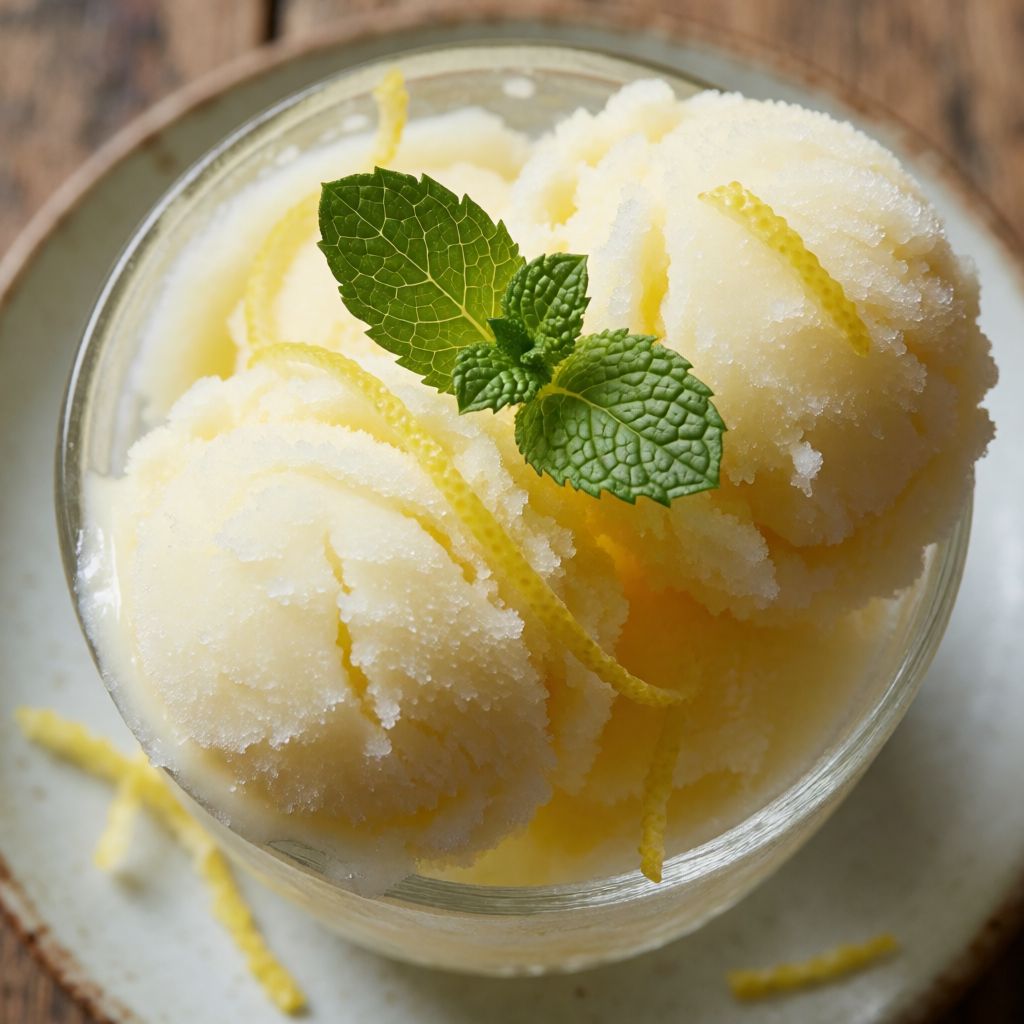
 AI photo
Lemon Sorbet
A refreshing lemon sorbet made with fresh lemon juice, sugar syrup and whipped egg whites.
Labels are worked out automatically from the ingredients and can be wrong. Check the packaging if it matters to you.
Ingredients
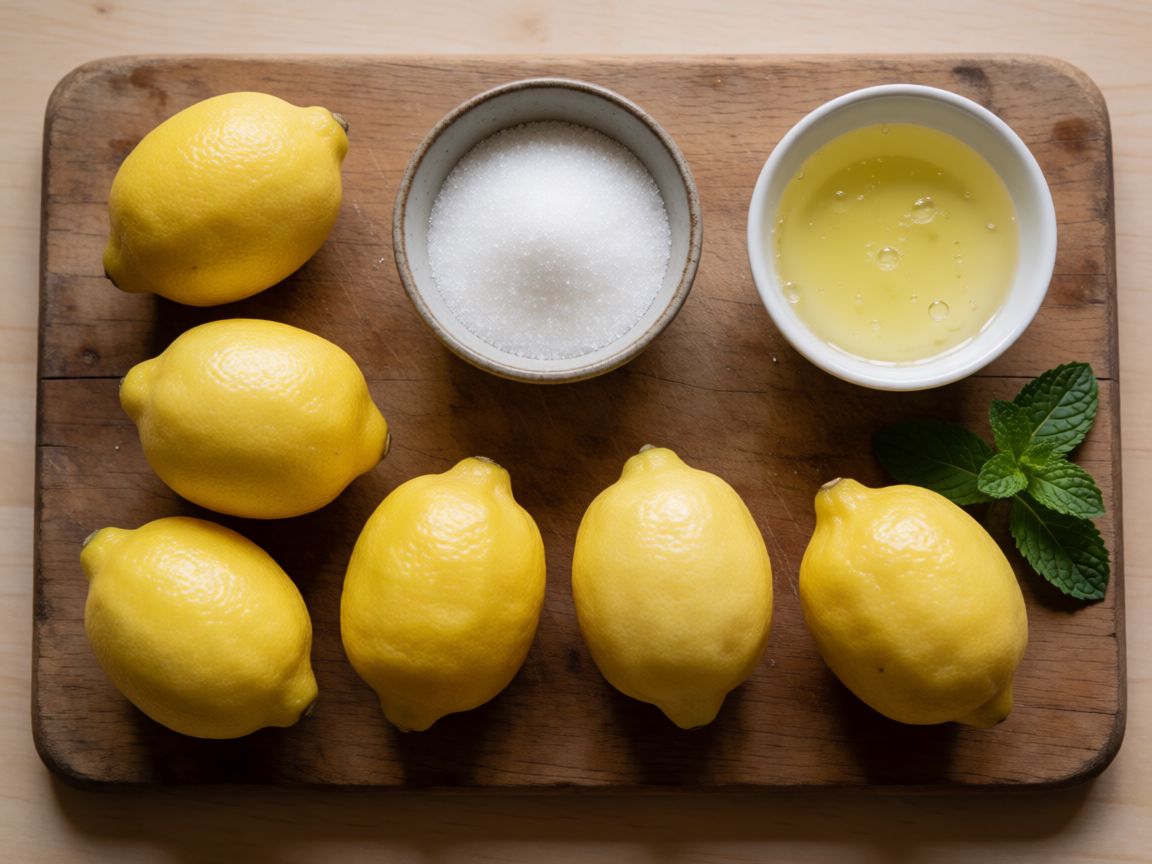
- 6-7 pcs Lemon makes about 250ml juice
- 150 g Sugar
- 180 ml Water
- 30 g Egg whites
- 1 bunch Mint to taste, for garnish





Steps
Wash and dry the lemons. Remove the zest with a knife, lemon zester or vegetable peeler, avoiding the white pith.
Put the zest in a small saucepan with the water and sugar. Simmer gently for a few minutes until the sugar dissolves.
Remove from the heat and let the syrup cool completely.
Using a juicer, squeeze the juice from the zested lemons.
In a large bowl, combine the lemon juice, cooled syrup and egg whites whisked to stiff peaks. Gently fold together with a spatula.
Pour the mixture into a rectangular dish or tray.
Freeze for 4 hours, stirring vigorously with a fork every hour.
240 minServe the sorbet in bowls or individual glasses, garnished with a mint leaf or lemon zest.
This isn't ice cream — there's no cream, no churn, no machine required. It's sugar syrup and lemon juice frozen under duress, roughed up every hour so it never has the chance to set into a solid sheet of ice. What you end up with is somewhere between a drink and a dessert: cold, sharp, and light because of the air folded into it, not because of any fat.
What decides whether it works is simple chemistry you don't need to name to use. Sugar in water doesn't freeze the way plain water does — it lowers the freezing point and keeps the ice crystals small. Too little sugar and you get a lemon brick you need a chisel for. Too much and it never properly sets, stays slush forever. The 150g against 180ml water and roughly 250ml juice here is already tuned for that balance — don't improvise heavily on it.
The other half of the job is mechanical, not chemical. Left alone in a freezer, water molecules clump into big lattice sheets of ice — that's the crunch you get in a bad homemade sorbet. An ice cream machine prevents this by churning constantly. You don't have one, so you do its job by hand: a hard stir with a fork every hour, breaking up whatever crystals have formed before they get a chance to grow large. Some say you need the machine — no, because the machine is only automating what your fork and your patience can do slower.
Patience really is the ingredient people skip. Four hours with hourly interruptions isn't a chore you can shortcut by cranking the freezer colder — faster freezing just locks in bigger crystals sooner. Let it take its time.
Lemons: you need both the juice and the zest, and they're doing different jobs. The juice brings the acid and the volume — about 250ml from 6-7 lemons, depending on how juicy they are, which is why you squeeze what you've already zested rather than buying juice separately. The zest brings the aromatic oils that live in the coloured skin, not in the juice. Scrape only the yellow layer; the white pith underneath is where the bitterness sits, mostly from compounds called limonoids, and if you dig into it you'll taste that bitterness straight through the syrup. A vegetable peeler held shallow does this safer than a knife.
Sugar: not just sweetness here, it's the thing controlling whether this freezes into something scoopable or something slushy, as above. Don't swap it for honey or sweetener thinking it's a like-for-like substitute — different sugars behave differently in freezing solutions, and you'll change the texture, not just the taste. Granulated white sugar is what dissolves cleanly into the warm water; that's the whole reason you simmer it rather than just stirring it into cold juice.
Water and syrup: simmering the zest in the sugar water isn't about cooking anything, it's an infusion — heat helps pull the lemon oil out of the zest and into the liquid. Cooling it fully before mixing matters because warm syrup would cook the egg white instead of aerating it.
Egg whites: whisked to stiff peaks, these trap air. Folded gently into the cold lemon-syrup mixture, that air is what keeps the frozen result from being pure ice — it's closer to a light foam that's been chilled hard. If you're uneasy about raw egg white, which is a fair worry in a British kitchen, use pasteurised egg white from a carton — it whisks the same way and solves the problem without changing the result. Leaving the egg out altogether gives you a granita instead — still good, just icier and more granular, a different dessert with the same base.
On freezer logistics: use a wide, shallow dish, not a deep bowl. A thin layer freezes evenly and lets your fork actually reach every part of it when you stir — a deep container freezes solid at the edges while the middle is still liquid, and no amount of stirring saves that.
Mint is only garnish, so don't overthink it — a leaf for colour and a cool smell when you bring the bowl to your face. Historically this kind of iced fruit drink-turned-dessert comes from economy as much as pleasure: sugar, water and citrus were cheap and available long before cream was, which is why sorbets and granitas were the everyday cooling dessert across the Mediterranean while cream-based ices stayed a richer household's affair. After something as heavy as a Sunday roast, that's exactly the role it's still good for — something sharp and cold to clear the palate, not compete with it.