
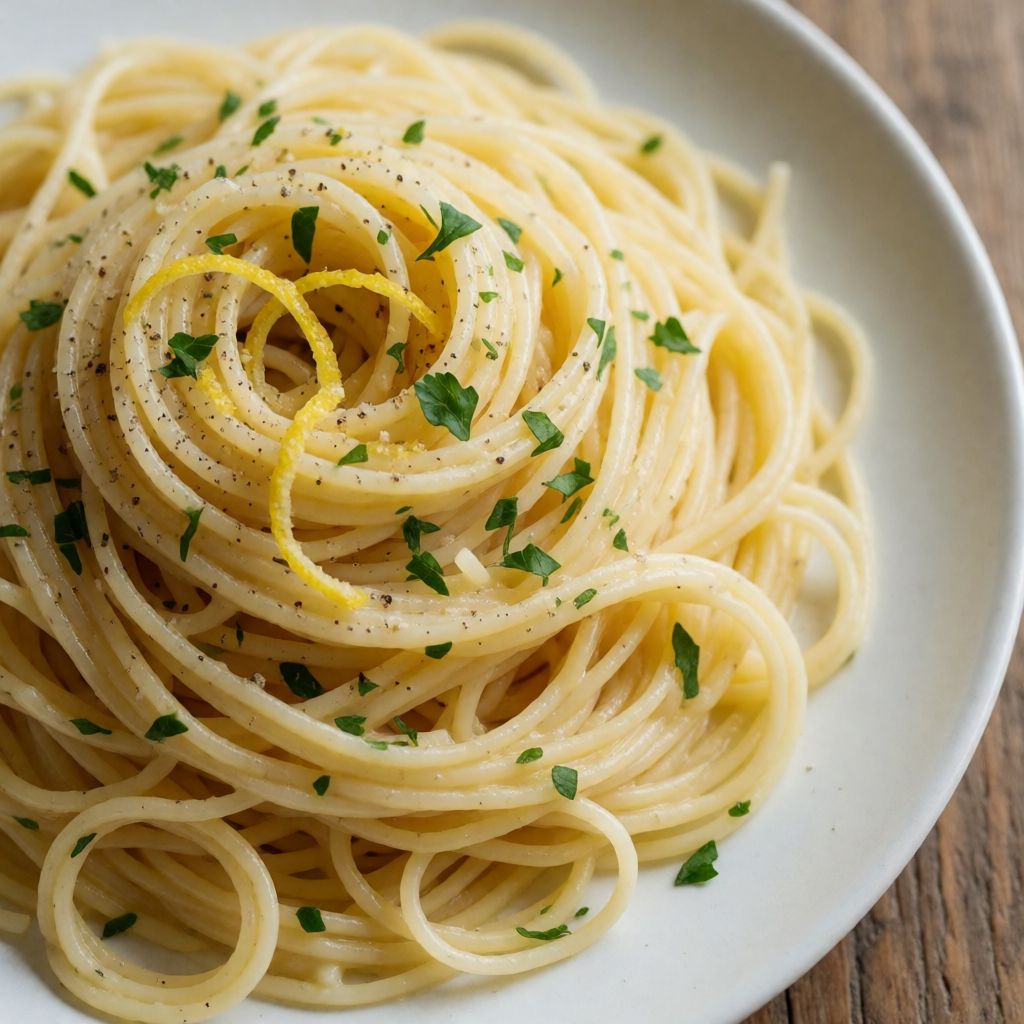
 AI photo
Spaghettini with Lemon
A quick, zesty pasta dish of spaghettini tossed in butter with lemon and parsley.
Labels are worked out automatically from the ingredients and can be wrong. Check the packaging if it matters to you.
Ingredients
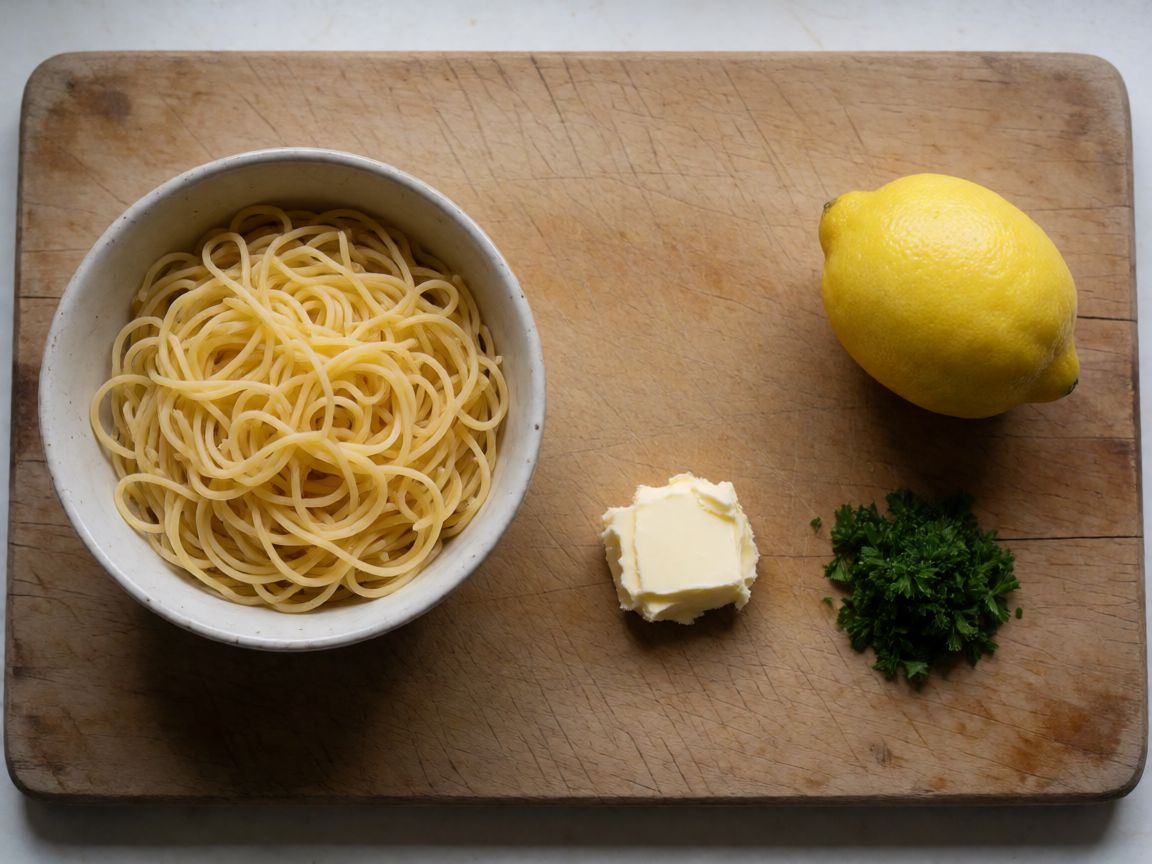
- 400 g Spaghettini
- 1 pcs Lemon
- 40 g Butter
- Parsley to taste
- Salt to taste
- White pepper to taste






Steps
Zest the lemon, avoiding the white pith.
2 minIn a pan, melt the butter, add the zest and warm through.
2 minCook the spaghettini until al dente.
8 minDrain the pasta and transfer it to the pan with the butter and zest.
1 minAdd the lemon juice, white pepper and parsley, stir and serve.
2 min
This is the five-minute dish that proves a sauce doesn't need weight to have flavour — spaghettini finished in lemon-scented butter, nothing more. Four servings, 400 g of pasta, one lemon doing all the work. It lives or dies on timing: the sauce has to be waiting for the pasta, not the other way round, because cold butter on hot strands seizes into a greasy mess instead of coating them.
What decides whether it works isn't the ingredient list — it's three small judgements. First, how finely you take the zest off the lemon: go too deep and you drag white pith with it, and pith is bitter in a way no amount of butter fixes. Second, whether you let that butter melt or let it brown: melted butter carries the zest's oil gently; browned butter adds a nutty flavour of its own that fights the lemon instead of framing it, and scorches the zest sitting in it. Third, whether you keep back a splash of the pasta water before you drain — that cloudy starchy water is what turns butter and lemon juice from two separate liquids sliding off the pasta into an actual sauce that clings.
Some say you should add oil to the pasta water to stop the strands sticking. Don't — oil floats on top, coats the spaghettini in a thin film, and that film is exactly what stops a sauce gripping later. What actually keeps pasta from sticking is enough water in the pot and a stir in the first minute, nothing more.
Spaghettini is thin for a reason: more surface per gram of pasta means more contact with a sauce that's really just melted butter and juice, no body to it at all. Ordinary spaghetti works if that's what's in the cupboard — just trust the bite, not the clock, to tell you when it's done. Al dente here means the strand still has a slight resistance at the centre when you bite it, not a timer number; every brand and every batch of flour behaves slightly differently.
The lemon carries the whole dish, so look at it properly. In the UK most supermarket lemons are waxed for shine and shelf life, and that wax sits right where your zester is working — wash it in warm water first, or buy an unwaxed one if your shop stocks them, labelled for baking. You want the zest for its aromatic oil and the juice for its acid; one lemon for four people sounds mean, but this dish is meant to taste of lemon in the background, not to double as a shock of citrus on the tongue.
Butter here is doing a job, not just adding richness: it emulsifies with the starchy pasta water into something that coats rather than pools. Unsalted gives you control over seasoning later; if you only have salted, go gentle on the salt elsewhere. Any fat with little flavour of its own and a capacity to emulsify with starchy water will stand in for it at a push — a mild olive oil, for instance — but understand that you've changed the dish's character, because butter's whole contribution is a soft richness that oil doesn't replicate.
Parsley goes in at the very end, chopped fine, because its brightness fades fast with heat — this is garnish doing flavour work, not just colour. Flat-leaf has more flavour than curly if you have the choice; dried parsley is a last resort and tastes mostly of nothing.
Salt belongs in the pasta water, generously, because that's the only point where the pasta itself gets seasoned — no amount of salting the sauce afterwards reaches the inside of the strand. White pepper isn't a milder stand-in for black; it's there because flecks of black pepper show up dark against a pale butter sauce, and its flavour leans a touch more floral and less sharp. Black pepper will do the job if that's what you've got — you'll just see it.
There's no great history behind this one, no festival or family story — it's a dish built by economics: a handful of pantry staples, no simmering, no reduction, done in the time it takes water to boil and pasta to cook. That's the whole tradition — speed and few ingredients, which is exactly why it travelled so easily and why it survives on weeknights rather than Sundays.