
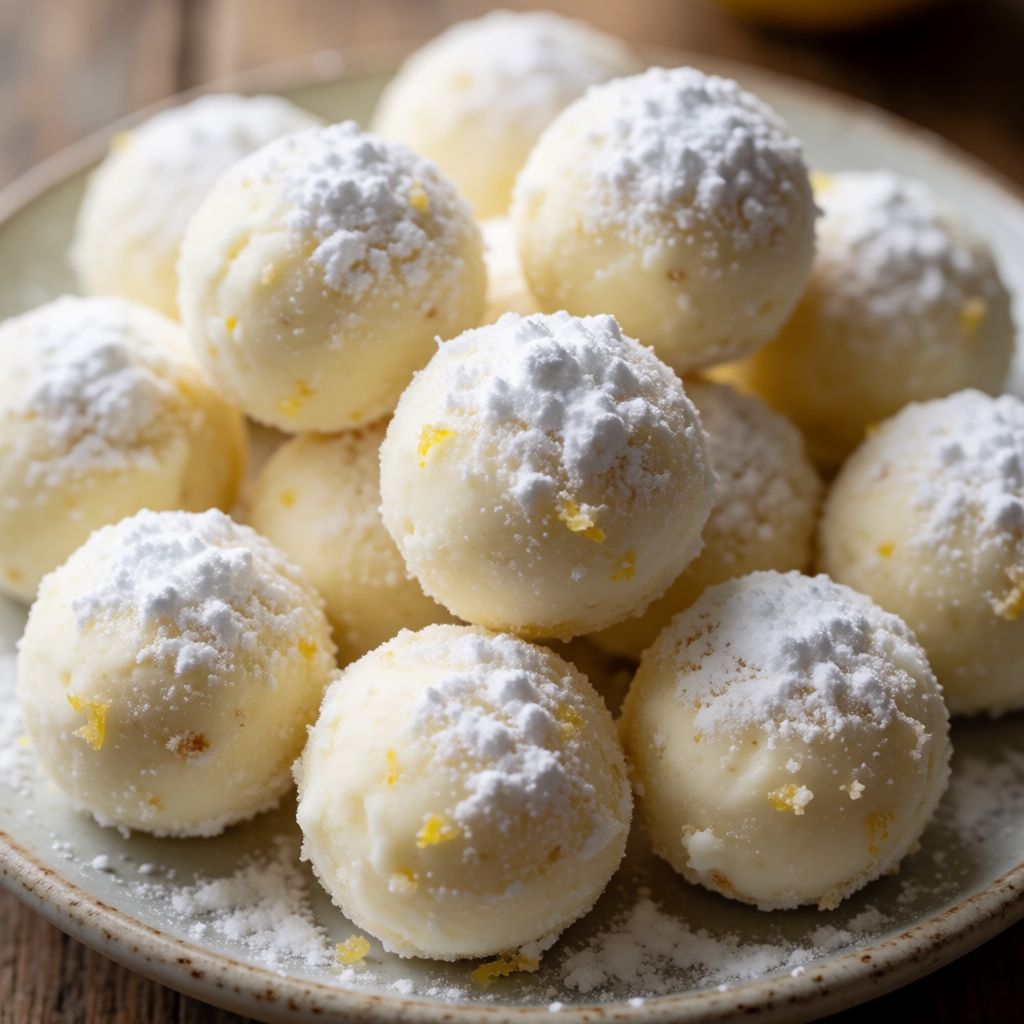
 AI photo
Lemon Truffles
No-bake lemon truffles made with crushed biscuits, mascarpone and fresh lemon, rolled in coconut.
Labels are worked out automatically from the ingredients and can be wrong. Check the packaging if it matters to you.
Ingredients
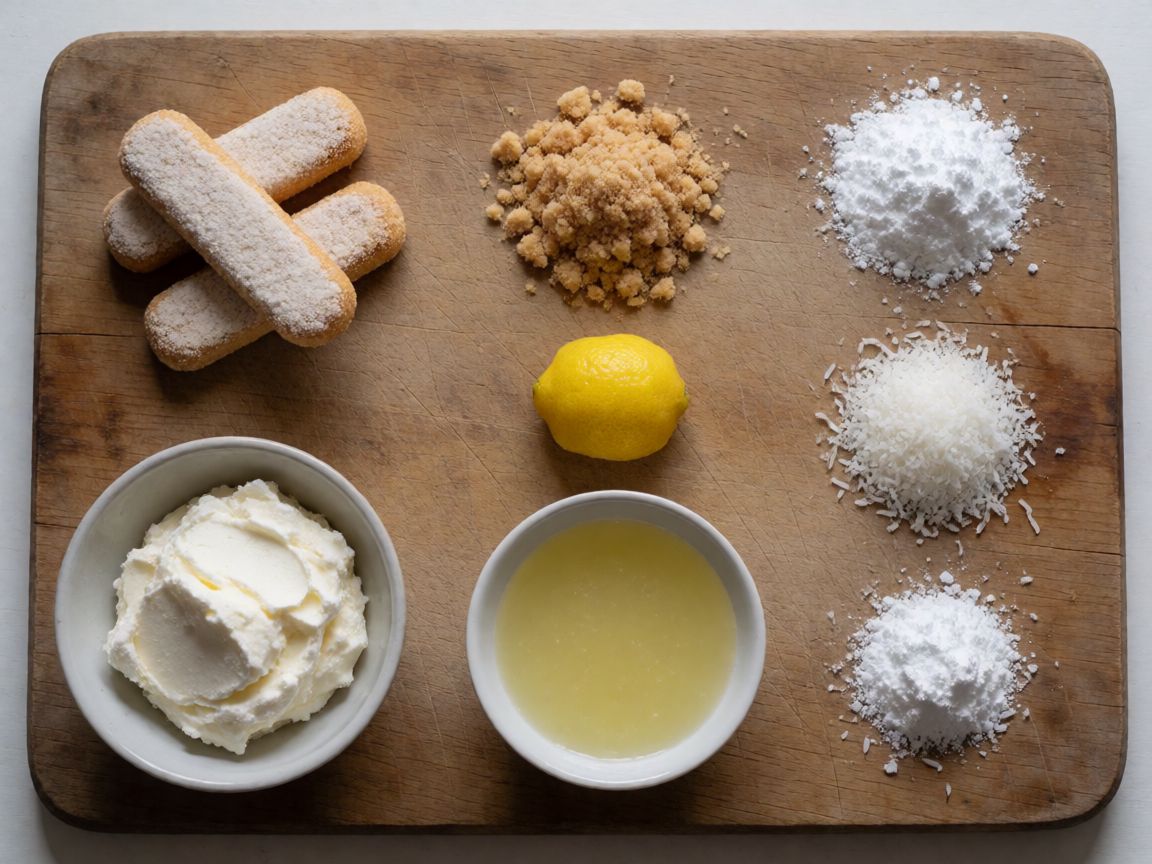
- 120 g Savoiardi sponge fingers
- 30 g Amaretti biscuits
- 60 g Icing sugar
- 150 g Mascarpone
- 2.5 tbsp Lemon juice
- 1 pcs Lemon zest
- Desiccated coconut to taste
- Icing sugar to taste, alternative to coconut






Steps
Blend the savoiardi biscuits together with the amaretti biscuits in a food processor until you get fine crumbs.
Add the icing sugar and mix well.
Zest one washed lemon and add it to the mixture for extra flavour.
Stir in the mascarpone and lemon juice, mixing until the mixture becomes smooth and pliable.
Cover the bowl with plastic wrap and chill in the fridge for about 30 minutes.
30 minTake the mixture out of the fridge and shape it into small balls, working with small batches at a time.
Roll each truffle in a mixture of desiccated coconut and lemon zest — this adds extra flavour and a nice colour.
Keep the truffles in the fridge until ready to serve, and serve chilled.
This is not baking, it is setting. You are building a paste — biscuit crumb, sugar, mascarpone, lemon — and then asking the fridge to do the one job an oven can't: harden fat slowly enough that you can shape it with your hands. Call it a cheesecake that skipped the oven and the tin and went straight to being eaten.
The word "truffle" throws people off — they expect chocolate. No: the name is about the shape, lumpy and round like the mushroom, not about what's inside. Lemon ones have existed as long as people needed a dessert that uses no gas, no heat, and whatever stale biscuits are sitting in the tin.
What decides whether this works is simple: the ratio of dry crumb to wet mascarpone, and whether you actually give it the half hour in the fridge before you try to roll it. Skip the chill and you get sludge on your palms instead of balls. The mixture needs cold to go from pliable to roll-able — that's not a formality, that's the only cooking step this recipe has.
Four people, a modest plateful each — three or four balls per person is the usual portion, since they're rich and small.
Savoiardi are the backbone here — dry, airy, almost flavourless on their own, which is exactly their job: they soak up the mascarpone's moisture and give the paste body without turning it gluey. If you haven't got Savoiardi, any plain, dry sponge finger or even digestive biscuit (minus a little sugar, since digestives bring their own) will do the same structural work. The criterion is dryness, not brand.
Amaretti are the opposite kind of ingredient — a small amount, but doing a job no other biscuit does: bitter almond depth against all that sweet lemon. Leave them out and the truffle tastes flat, one-note sweet. If you can't find amaretti, a few drops of almond extract stirred into the crumb gets you close, though the crunch amaretti gives before it's blended smooth won't be quite the same.
Mascarpone is the fat and the glue in one. It has almost no water in it compared to cream cheese, which is why it sets firm in the fridge instead of weeping. If you only have cream cheese, drain it first — sit it in a sieve lined with a napkin for ten minutes — or your balls will slump instead of holding a shape.
Lemon does two jobs and people often only use it for one. The zest is oil — rub it and you'll smell it on your fingers — and it's what gives you that top-note lemon smell before you've even bitten in. The juice is acid, and acid is what stops the whole thing tasting like sweetened putty; it cuts the sugar back down to something sharp and clean. Always zest before you juice — a juiced lemon won't give you zest worth having.
Icing sugar dissolves into the crumb without leaving grit, which is why it's specified over caster — caster sugar would sit there crunching between your teeth, wrong texture entirely for something meant to be smooth.
The coating — coconut or more icing sugar — isn't decoration, it's a barrier. Roll a bare mascarpone ball and in five minutes it's sweating and sticking to the plate; the coating keeps the surface dry so the truffles survive sitting in the fridge, and survive being picked up by hand later, without falling apart. Use what you've got — chopped toasted nuts, cocoa powder, even more biscuit crumb — anything dry and fine enough to roll in.
And the fridge: thirty minutes is a floor, not a ceiling. If your kitchen runs warm, or the mascarpone was soft to start with, give it longer — you're waiting for the fat to go from spreadable to mouldable, and that's a thing you feel with your fingers, not a thing a clock tells you.