
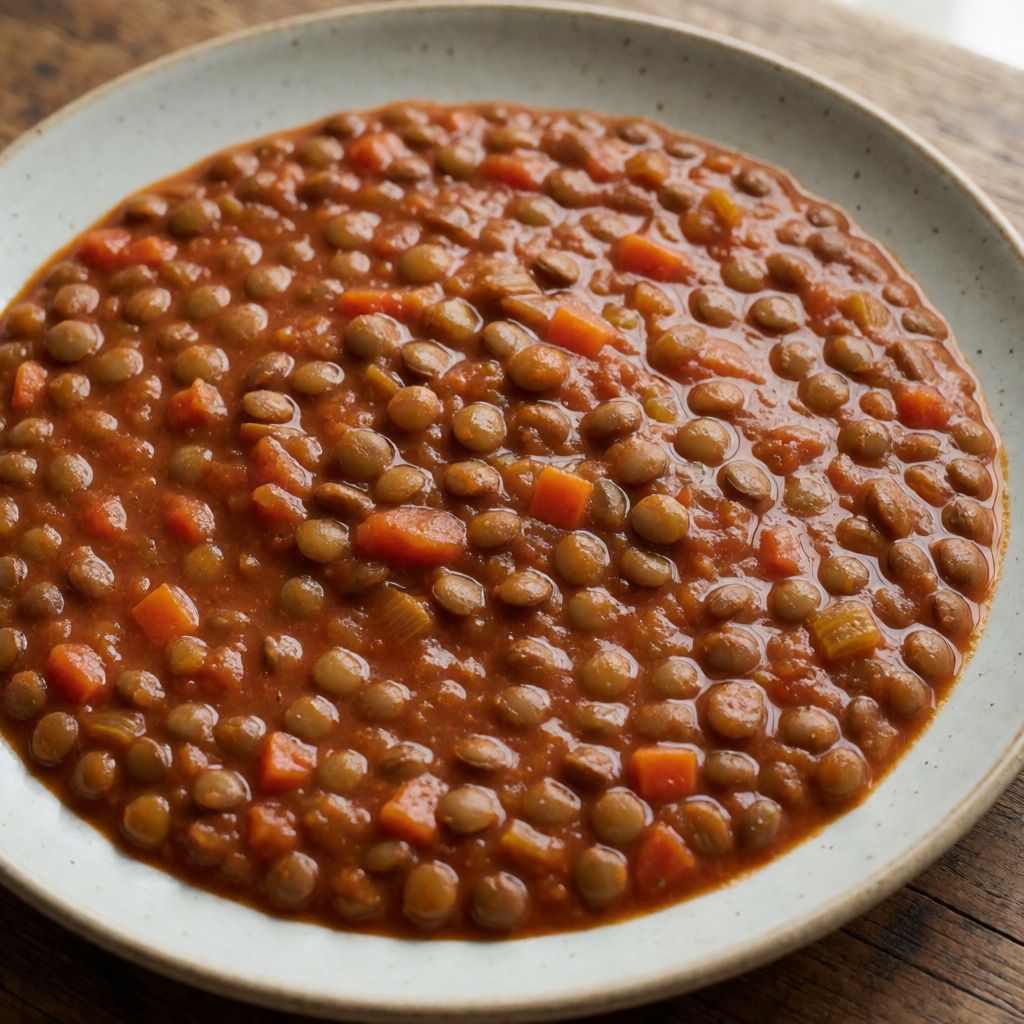
 AI photo
Lentil Ragù for Pasta and Bruschetta
A warm, comforting lentil ragù that makes a hearty sauce for pasta or a topping for bruschetta.
Labels are worked out automatically from the ingredients and can be wrong. Check the packaging if it matters to you.
Ingredients
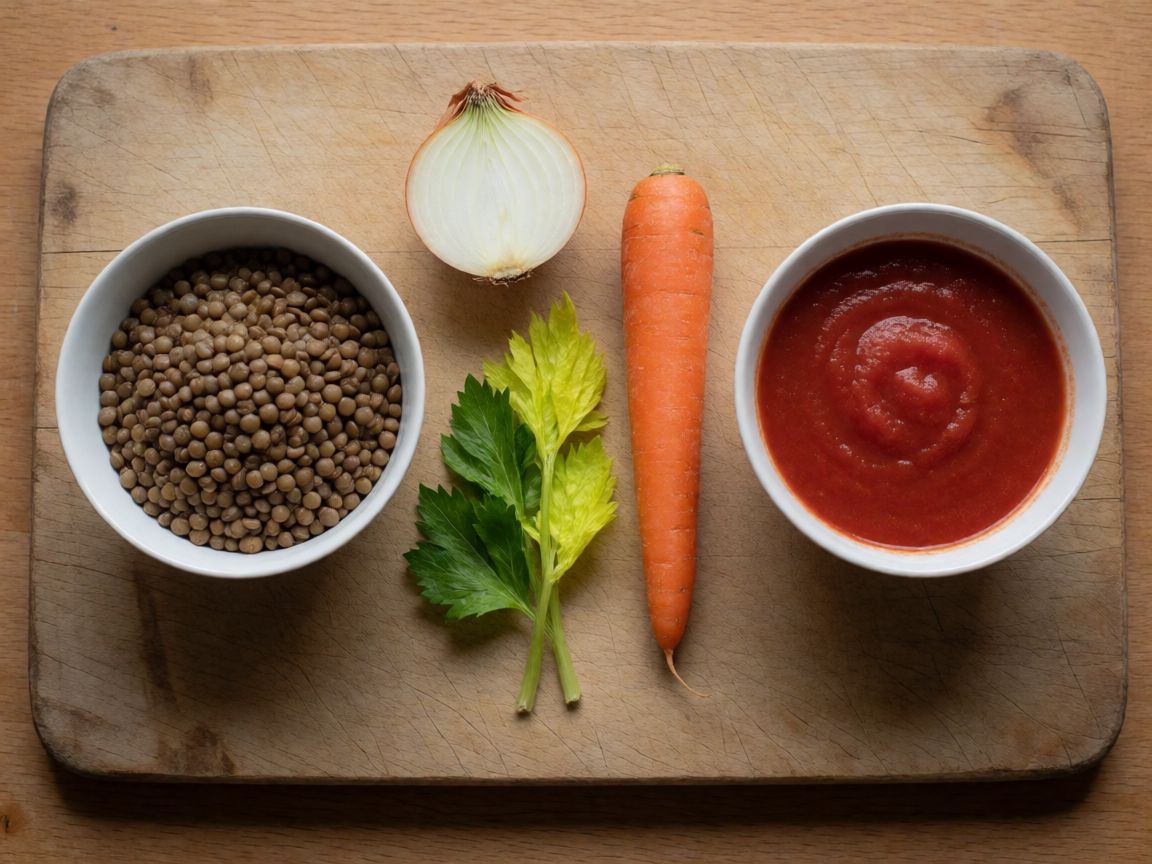
- 200 g Lentils
- 200 g Tomato Passata
- 1 pcs Carrot
- 3 pcs Celery leaves
- 0.5 pcs Onion
- Olive Oil to taste
- Salt to taste
- Black Pepper to taste
- Water as needed, or use stock









Steps
Finely chop the celery, carrot and onion, then sauté gently in a pan with olive oil until softened.
Add the thoroughly rinsed lentils, stir well and cook over medium heat for a few minutes.
Pour in the tomato passata, then immediately add enough water to fully cover the lentils.
Bring to the boil, reduce the heat and simmer with the lid half on for about 1 hour, topping up with water or stock as needed.
60 minSeason with salt and pepper only once the lentils are fully cooked.
The finished ragù should be creamy, not too thin.
This is a lentil ragù that does the job meat usually does — a thick, savoury coating for pasta, or a spread for bread under the broiler. It's not trying to impersonate a bolognese; it borrows its logic. In Italian kitchens this kind of dish comes from the same place as most good peasant cooking: lentils are cheap, they keep in a jar for a year, and they need no soaking. That last point matters more than people think.
What decides whether it works is texture, not flavour — flavour you can fix with salt and time, texture you can't fix once it's gone wrong. The lentils should hold their shape but give in when you press one against the roof of your mouth. The sauce around them should cling to a spoon, not run off it. Too much water left in and you've made a lentil soup; boil it down too hard and you've made a dry paste that scorches on the bottom of the pan. The middle ground is the whole recipe.
Some say lentils need soaking overnight, the way dried beans do. No — beans have a tough outer coat that locks the starch inside and needs hours of water to loosen; lentils have a thin skin and no such lock, so they're cooked through in under an hour straight from the bag, rinsed and in. Soaking them does nothing but waste an evening you could have spent doing something else.
Lentils: pick a variety that holds its shape under heat — brown, green, or the small dark ones sold as Puy. Red or yellow split lentils will do the opposite of what this dish wants: they break down into a smooth mush within twenty minutes, which is lovely for a dal but wrong here, because a ragù needs something for the pasta or the bread to catch onto, not a purée. If you only have red lentils, use them, but expect a smoother result and call it something else in your head so you're not disappointed.
The onion, carrot and celery aren't decoration, they're the actual base the whole dish stands on. Cooked gently in oil until soft — not browned, not caramelised, just gone from sharp to sweet — they lose their raw bite and give up their sugars into the fat, which is what you taste under the tomato later. Rush this step and brown the vegetables instead of softening them, and the ragù will taste thin all the way through no matter how long you simmer it afterwards; there's no fixing a weak base by cooking longer, only by building it properly the first time. Watch the onion: when it goes from white to a faint gold and starts smelling sweet instead of sharp, it's ready, not before.
Tomato passata is tomato that's been cooked down and strained of skin and seed — buy the plain kind with nothing added, since sugar or vinegar in a cheap passata will throw off a sauce built on nothing but vegetables and salt. If you can't find it, blitz a tin of whole tomatoes and push the pulp through a sieve, or thin a spoonful of tomato paste with water until it pours. The passata and the water go in together, not one after the other, because lentils dropped into tomato alone without enough liquid will catch and stick to the bottom of a thin domestic pan long before they're cooked — a kazan has thick walls that spread the heat; your pan doesn't, so the extra water is doing a job the pan can't do on its own.
Salt and pepper wait until the lentils are done, and this isn't superstition. As the sauce reduces, the salt you added earlier concentrates along with everything else — season at the start and you'll oversalt by the time the water's gone. Taste at the end, when the sauce is close to what it'll be on the plate, and you're seasoning the thing you'll actually eat, not a watery version of it.
For oil, olive oil is doing double duty here — carrying the heat to soften the vegetables, and leaving its own flavour behind, which you want in a dish this plain. If you don't have it, any neutral oil works for the cooking itself, but add a spoon of butter or a good oil at the very end to bring back some of the roundness you'd otherwise lose.
In a flat without a kazan or a proper lid, use the widest pan you own — more surface means faster, more even evaporation — and if the lid doesn't fit, rest a plate over it, slightly off-centre, which gives you the same half-covered compromise the recipe asks for: enough containment to stop it drying at the edges, enough gap to let the water actually leave. Top up with water or stock whenever the surface looks tight and dry rather than glossy; that's the dish telling you it's about to catch, before it actually does. Two hundred grams of lentils this way feeds four at the table, modestly, the way a weeknight pot should — no carving knife, no resting under foil, just patience measured in standing near the stove rather than performing at it.