
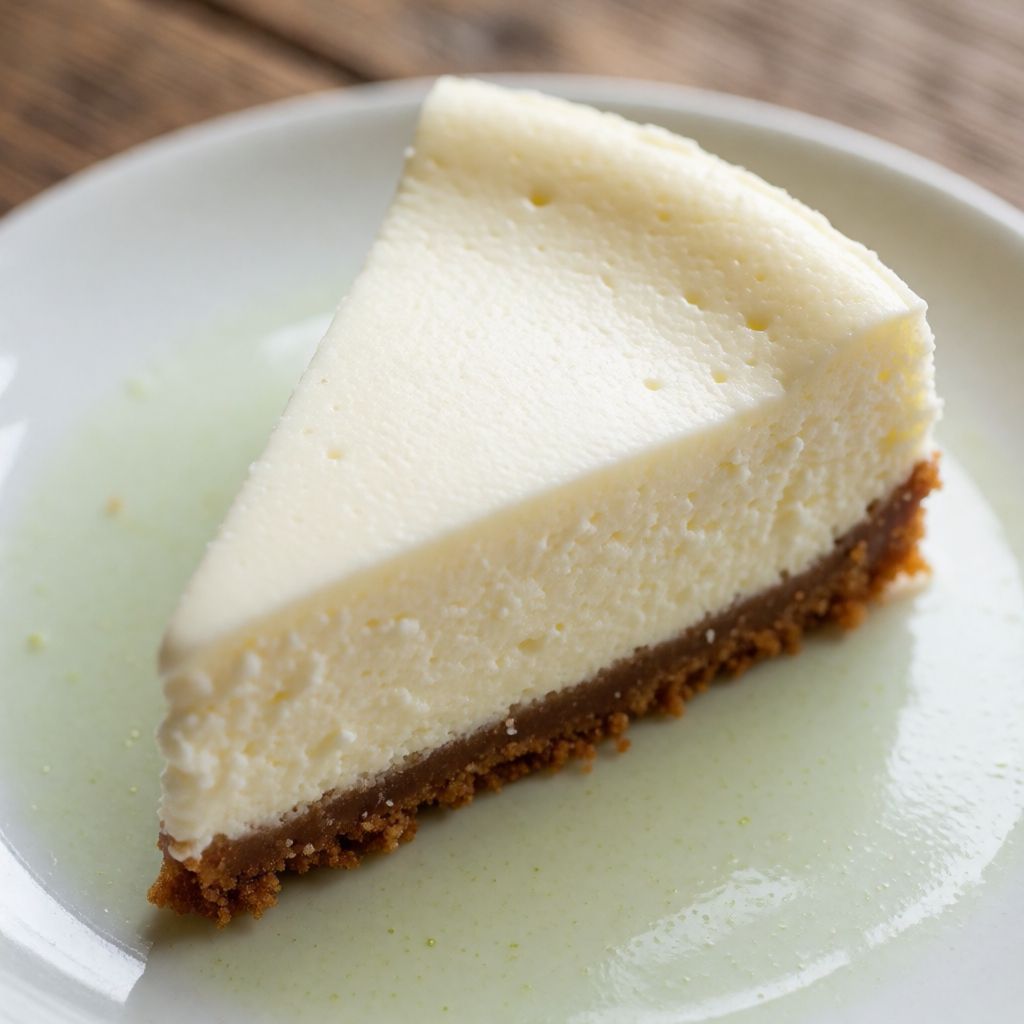
 AI photo
Lime Cheesecake
A no-bake lime cheesecake with a buttery digestive biscuit base and a tangy mascarpone and cream filling.
Labels are worked out automatically from the ingredients and can be wrong. Check the packaging if it matters to you.
Ingredients
- 300 g Digestive biscuits
- 150 g Butter melted
- 250 g Mascarpone
- 350 ml Double cream or whipping cream
- 150 g Caster sugar
- 10 g Gelatine
- 3 pcs Lime juice
- 4 pcs Lime zest







Steps
Blitz the digestive biscuits in a food processor, tip into a large bowl, add the melted butter and mix well.
Spoon the mixture into a springform tin lined with baking paper and press it evenly across the base.
Chill the tin in the fridge while the base sets.
30 minZest two of the limes and squeeze out their juice.
Using an electric mixer, beat the mascarpone with the caster sugar, then add the lime zest and the juice of the three limes.
Soak the gelatine in a bowl with a little cold water.
Squeeze out the gelatine and dissolve it in 50 ml of warmed double cream, then leave to cool.
In a separate bowl, whip the remaining cream, fold it into the mascarpone mixture, then stir in the cooled gelatine.
Carefully spread the filling over the biscuit base and chill in the fridge.
240 minBefore serving, decorate with lime wedges and mint, if liked.
This is a fridge cheesecake, not an oven one — a biscuit crust holding up a lime-and-mascarpone cream that sets on its own, no egg, no bake, no water bath to fuss over. The whole mechanism rests on two things happening correctly and quietly in the fridge: butter re-hardening under the crumb, and gelatine locking the cream into something you can slice rather than spoon.
What decides whether it works isn't flavour — lime and sugar are forgiving — it's structure. Too little gelatine and your "cheesecake" is a lime mousse that slumps the second you lift a wedge. Too much and it sets like jelly cubes, bouncy, cold on the tongue, the richness of mascarpone wasted under rubber. You want it to hold a cut edge and still give slightly when you press it, the way a set custard trembles rather than snaps.
Some people insist a cheesecake has to be baked to be a real cheesecake. No — this is a different branch of the same family, built on gelatine instead of egg-and-heat. It exists because gelatine sets in a domestic fridge with no risk of curdling, cracking, or a soggy-bottomed water bath — which is exactly the kind of risk a home oven, with its uneven heat, is bad at managing. The baked version is a different dish solving a different problem; this one solves "I don't trust my oven with a custard."
Start with the biscuit. Digestive is the British default because it's cheap, sold everywhere, and not too sweet — it was built as an everyday biscuit, and that neutrality is exactly what a crust needs, since the filling brings all the sugar it wants. The criterion for substitution is simple: any plain biscuit that crumbs finely and takes on butter without turning to paste — graham crackers, oat biscuits, even ginger nuts if you want a spiced edge under the lime. What the butter does here is purely mechanical: melted, it coats every crumb; chilled, it goes solid again and glues the crust into one piece. Skimp on butter and the base crumbles the moment a fork goes through it — that's not a bad biscuit, that's not enough glue. Too much, and the crust turns greasy, heavier than the cream it's meant to carry.
Mascarpone earns its place because it's high in fat and barely contains free water — which means lime juice, an acid, can go straight into it without the curdling or weeping you'd risk with a lower-fat soft cheese. This is why you can't swap it for cream cheese without expecting a slightly looser, tangier result — not wrong, just a different animal.
Double cream is there for one number: its fat content is high enough — around 48% — to whip into a stable foam that holds air. That air is what keeps the finished cheesecake from tasting like a dense block of sweetened cheese; it's the difference between a slice and a brick. Single cream won't whip properly at all — not enough fat to trap the air — so don't reach for it here no matter what the fridge offers.
Caster sugar isn't tradition, it's physics: its fine grain dissolves into a cold mixture quickly, with no graininess left on the tongue. Granulated sugar would still be there, gritty, days later.
Gelatine is the one ingredient that punishes impatience. Soak it in cold water first, not warm — cold lets it absorb water evenly and swell before it melts, so it dissolves clean later instead of turning into stringy lumps in the warm cream. And once it's dissolved, let it cool before folding it in — add it hot and it can start setting the cream around it unevenly, leaving little flecks of jelly through the filling instead of one smooth set.
Lime does two separate jobs, and that's why zest and juice are measured differently — four zests but only three limes' worth of juice. Zest carries the aromatic oil, sharp and floral, with none of the sourness; juice carries the acid that cuts the richness of mascarpone and cream so the whole thing doesn't sit heavy. Zest only the green skin, never the white pith underneath — that's where the bitterness lives, and it will sit under the lime flavour like a bad note you can't quite place.
You don't need a food processor for the crust — a sealed bag and a rolling pin does the same crushing, just with more noise and a bit more arm work. What you do need is the springform tin: this filling never firms up enough to be turned out of an ordinary cake tin the way a sponge would, so the removable side isn't a nicety, it's the only way the thing comes out in one piece. Line the base with baking paper for the same reason — not tradition, just so the crust releases clean instead of staying fused to the metal. This feeds six, and it's one of those desserts where the work is all upfront — the fridge does the actual finishing, and the only ingredient you can't buy more of is patience while it sits there.