
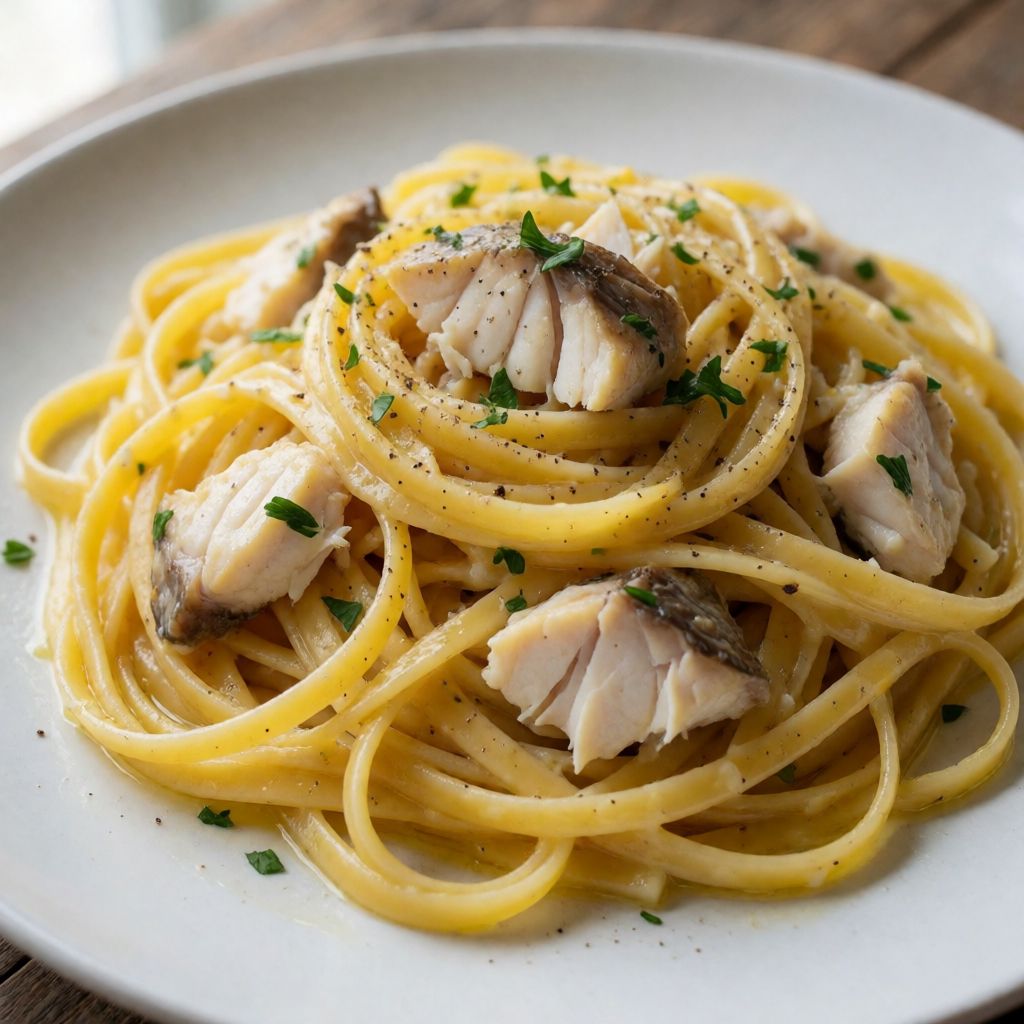
 AI photo
Linguine with Flounder Fillet and Saffron
A quick pasta dish of saffron-infused linguine tossed with pan-seared flounder fillet.
Labels are worked out automatically from the ingredients and can be wrong. Check the packaging if it matters to you.
Ingredients







Steps
In a non-stick pan, drizzle a thin stream of olive oil and lay in the flounder fillets.
Season the fillets with salt and cook for a few minutes until done; bring to an internal temperature of 63°C.
Meanwhile, boil the linguine, adding the saffron to the cooking water.
Drain the pasta and sauté it in the pan together with the fish.
Generously sprinkle with parsley and freshly ground black pepper.
What was changed
The fish was swapped from perch to flounder Flounder Fillet, matching the alternative the author already mentioned and what UK shops stock.
This is a fifteen-minute fish-and-pasta dish built on one piece of timing: the fish and the pasta must land in the same pan at the same moment, both just done. That's the whole skill. Nothing here is hard — a non-stick pan, a pot of boiling water, some patience — but if you let either element overshoot, you don't get a disaster, you get something a bit sad: dry fish sitting on sauceless pasta, or soft pasta drowning a fillet that's gone to rubber.
The saffron isn't decoration. It goes into the pasta water, not into a sauce, because saffron's colour and aroma are water-soluble — they need heat and time in liquid to come out of the thread, and the starch in the cooking water carries them straight into the linguine as it cooks. That's also why you don't need to pre-soak the saffron in a cup of warm water first, a step you'll see in half the recipes online: the pasta pot is already hot water doing exactly that job. One soak is enough.
The fish wants a non-stick pan for a specific reason, not habit: flounder fillet is thin, has almost no connective tissue holding it together, and a hot bare metal surface will bond with its proteins before you can slide a spatula under it — so when you try to turn it, half stays behind. Non-stick (or a well-seasoned pan with enough oil that the fish never actually touches metal) is what lets you turn it in one piece.
On the 400g of linguine for one person: don't take that literally. A standard dry-pasta portion is closer to 80–100g per person, so this recipe as written is really feeding three to four people comfortably, one person very thoroughly and uncomfortably. Scale the pasta to your table, not to the card.
Flounder is a flat fish with a mild, slightly sweet flesh and almost no oiliness — which is exactly why it cooks in minutes and why it dries out in minutes too if you walk away. If your fishmonger doesn't have flounder (common enough in the UK, where plaice and lemon sole sit next to it in the same case), use any thin flat white fish with little connective tissue — plaice, dab, sole. What you're choosing for is thinness and a fillet that holds together, not a specific species; a thick cod loin will not behave the same way in this pan.
The olive oil here is working two jobs: a thin film so the fish never fully touches the pan surface (the real reason for "non-stick"), and flavour at the end when you toss everything together. For the cooking stage, any neutral oil with no smell of its own will do the first job — sunflower, a mild rapeseed oil, which is cheap and everywhere in a UK supermarket. Save a proper extra virgin olive oil, the kind with actual olive flavour, for drizzling at the very end, off the heat, where its aroma won't just burn off.
Saffron comes in threads or powder; a "package" in most kitchens is a tiny pinch, because saffron is the most expensive spice by weight there is — it's hand-picked stigmas from a crocus flower, three per bloom, which is the whole economic story of why a thimbleful costs what it does. There's no honest substitute for the flavour; turmeric will give you the colour and nothing else, so don't be fooled into thinking it's a swap — it's a different spice doing a different job.
Freshly ground black pepper matters here for a plain mechanical reason: pepper's aroma lives in volatile oils that start evaporating the moment the corn is cracked open. Pre-ground pepper has usually been sitting in a tin losing that aroma for months before it reaches you, so what you're adding is mostly heat with none of the smell. Grind it at the table, not in the pan — the smell is the point, and you want it going up your nose, not into the air above a hot pan.
Parsley, fresh, goes on raw at the end — it's there for colour and a clean green bite against the fish, and it has no business near heat, which would just wilt it into something that tastes like boiled spinach. If you only have dried, use less than you think and accept it's a different, duller thing — dried parsley loses most of what makes fresh parsley worth using in the first place.