
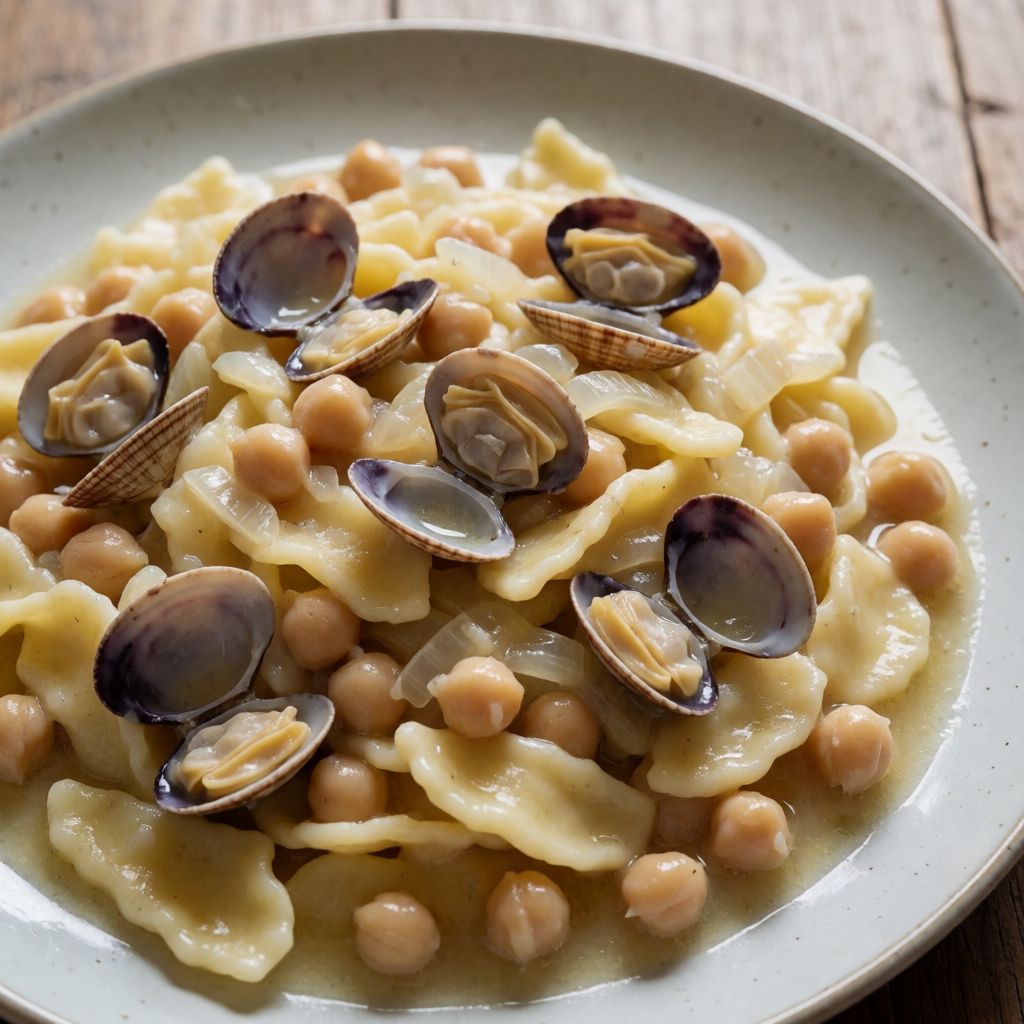
 AI photo
Maltagliati with Clams and Chickpeas
A quick pasta dish of clams and chickpeas tossed with white wine.
Labels are worked out automatically from the ingredients and can be wrong. Check the packaging if it matters to you.
Ingredients
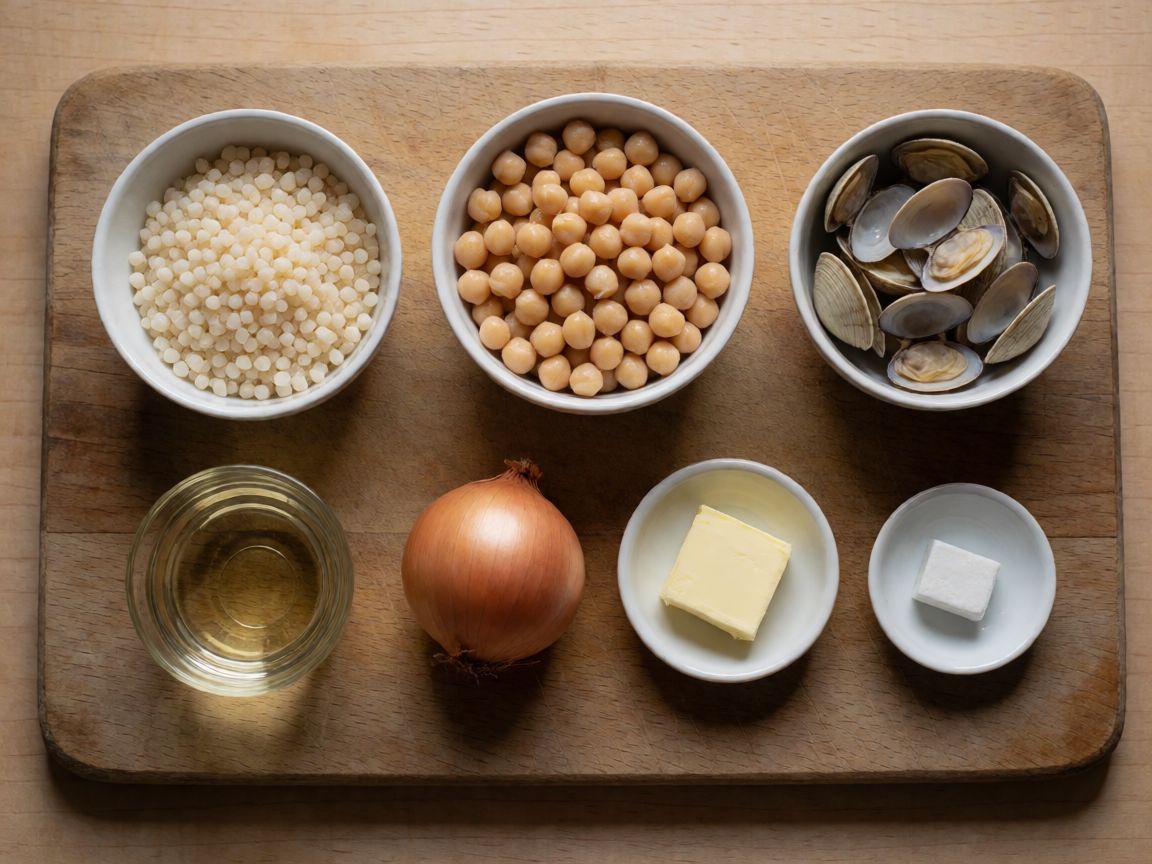
- 200 g Maltagliati
- 2 can Chickpeas cooked
- 1 package Clams
- 1 pcs Onion
- 250 ml White wine
- Butter to taste
- Salt to taste
- Water a little
- 1 pcs Stock cube
- Black pepper to taste
- Vegetable oil to taste, for frying










Steps
Fry the onion in the oil.
Add the clams and a little white wine, and cook.
Add the chickpeas, more white wine, the stock cube, water and pepper, and cook until done.
Mix the cooked pasta with the sauce and warm through.
1 minServe immediately.
Maltagliati means "badly cut" — the off-cuts from rolling pasta sheets, what was left on the board after the ravioli or the tagliatelle were stamped out. Nothing in an Italian kitchen with little money went in the bin, so the scraps got their own name and their own dish. Pairing those scraps with clams and chickpeas is the same thrift talking twice: a handful of tinned pulses and a bag of shellfish make a sauce with body and salt in it already, no cream, no flour, no fuss.
What decides whether this works is not the pasta shape, it's three small mechanical things. First, the clams have to open on their own heat — that's the muscle holding the shell shut giving up, not you forcing it. A clam that stays shut was already dead, throw it out, don't pry it. Second, the wine has to lose its raw bite before you move on — that's the alcohol cooking off, and rushing this step is the single most common reason this sauce tastes sharp and thin instead of round. Third, the body of the sauce comes from the chickpeas and their own liquid, not from flour or cream — get the ratio of liquid to starch wrong and you've made soup, or worse, paste.
Start with the pasta itself. Maltagliati has no fixed shape by definition — it's whatever was trimmed off the sheet, so any pasta with a rough, thick edge that can hold a chunky sauce will stand in for it: torn pappardelle, broken lasagne sheets, even a bag labelled "pasta mista" from an Italian delicatessen. What it must not be is something thin and smooth like spaghetti — that slides off this sauce instead of catching it.
The clams are the part most worth getting right for a UK kitchen. "A package of clams" almost certainly means the cooked, vacuum-packed or netted kind from the chilled or frozen fish aisle, not live clams in a net bag from a fishmonger — and that's good news, because it skips the hours of soaking in salted water that live clams need to spit out their grit. If you can't get clams at all, mussels work on the same chemistry — heat relaxes the hinge muscle, shell opens — and give a similar brine. No shellfish in the house at all, a splash of fish stock gets you some of the savour, though honestly then it's a different, plainer dish.
Tinned chickpeas are already cooked — their only job here is to go soft enough to half-collapse and to lend their own liquid, which carries starch, to thicken the sauce without flour. Don't tip that liquid down the sink before you've decided you don't need it; it's free thickener, and it's exactly what the recipe means by "a little water." Rinse them only if you want a thinner, cleaner-tasting sauce — keeping the liquid gives you more cling.
The onion's job is a slow base note, built by softening it until it turns from stiff and sharp-smelling to soft and sweet-smelling — no browning, no catching, because a scorched edge here turns bitter and you taste it through everything that follows. For the oil to fry it in, the only real criterion is that it shouldn't argue with the sea smell you're building — sunflower or rapeseed, or a light olive oil if that's what's in the cupboard; a strongly flavoured extra virgin olive oil will fight the clams rather than support them.
The wine's role is acid, not flavour showing off — it cuts the richness of the chickpeas and butter, and it's part of what coaxes the clams open. Some say you need a decent drinking wine for cooking, no — the heat and the reduction strip out most of what made it "decent" anyway. What matters is that it isn't corked or gone to vinegar; a cheap, clean dry white does the job. The stock cube is there for the same economic reason the whole dish exists — it fakes a long-simmered stock in seconds — but remember clams are salty on their own, so taste before you reach for more salt, rather than seasoning on the assumption of a blank canvas.
For the pan itself: a wide sauté pan stands in fine for what would be a shallow pot elsewhere — nothing in this dish needs the depth or the lid of a stockpot. If you want the clams to open a touch faster, a plate set over the pan traps the steam almost as well as a proper lid would, and that's an old trick, not a shortcut taken under duress. And on the servings line — this amount of pasta, clams and two tins of chickpeas settles two generous bowls comfortably, three with bread on the side, whatever the card says about one.