
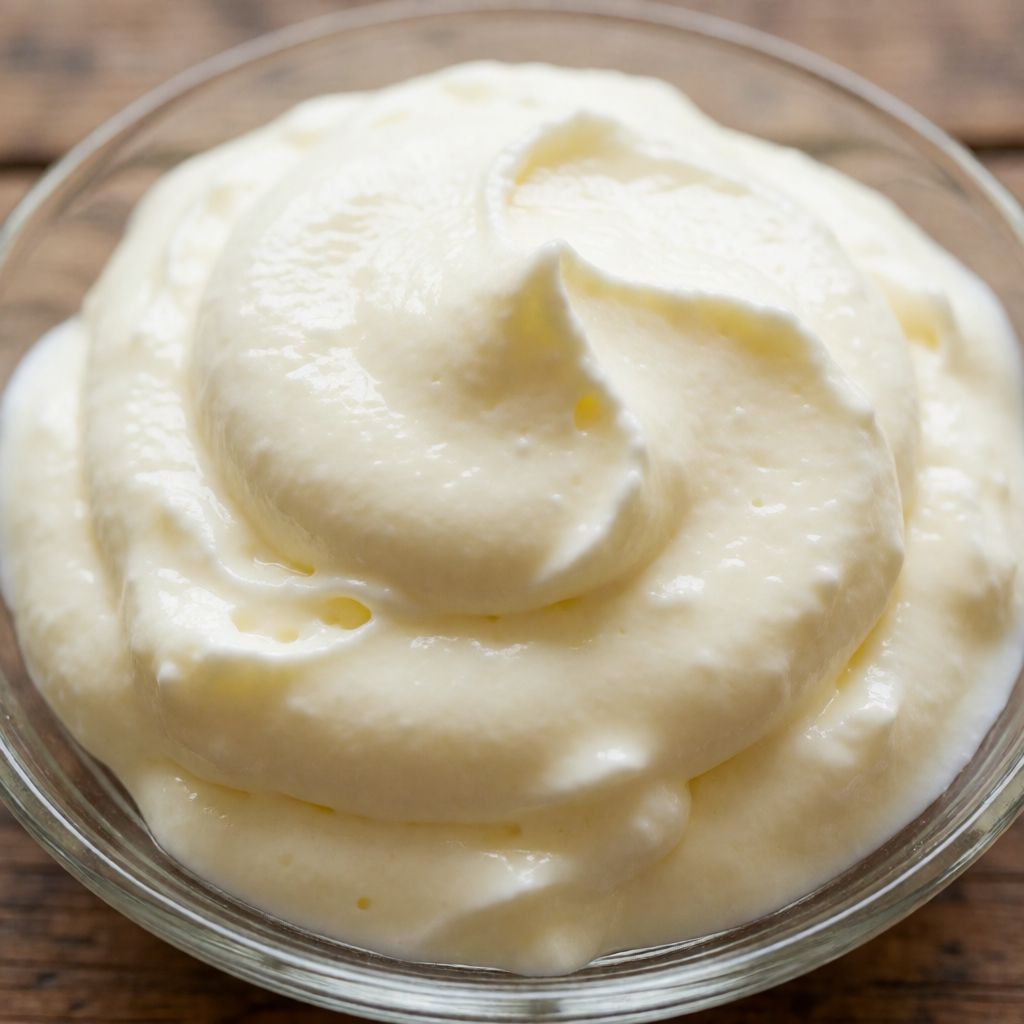
 AI photo
Mascarpone Cream for Tiramisu: Smooth and Lump-Free
A smooth, lump-free mascarpone cream that makes the perfect filling for tiramisu.
Labels are worked out automatically from the ingredients and can be wrong. Check the packaging if it matters to you.
Ingredients
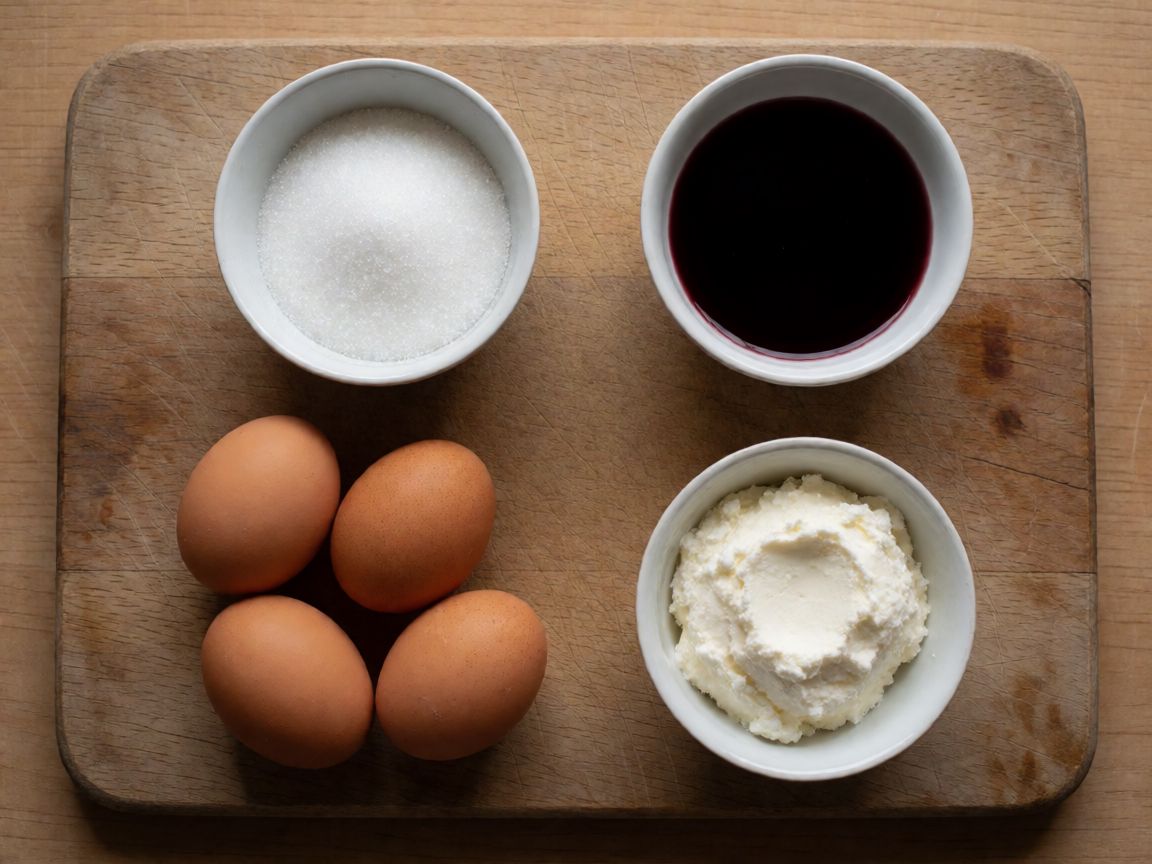
- 4 pcs Eggs
- 100 g Sugar
- 500 g Mascarpone
- 3 tbsp Marsala Wine optional




Steps
Separate the yolks from the whites: put the yolks in one bowl and the whites in another. The eggs should be very fresh.
5 minBeat the yolks with the sugar using an electric mixer until pale and fluffy.
5 minMash the mascarpone with a fork, add the Marsala, and combine with the egg yolk and sugar mixture.
5 minWhisk the egg whites to a thick foam and gently fold them into the egg, sugar, and mascarpone mixture until you get a thick, smooth cream.
5 min
This is not a custard and not whipped cream — it's an emulsion holding air, built from raw egg and a fat-heavy cheese with no fire anywhere near it. What you're actually making is two separate creams merged into one: a yolk-and-sugar paste beaten until it carries air, and a white whipped into foam, both folded through softened mascarpone. Everything about whether this works comes down to keeping that air in. Five hundred grams of cheese gives you enough cream for four people — plenty for one tiramisu, built in a bowl, no kazan or oven required.
What decides it: the freshness of the eggs, because there's no cooking to forgive a mistake; the state of the mascarpone before it meets the yolks — mashed loose, not cold and solid straight from the fridge; and how gently you fold at the very end. Every failure traces back to one of these. Lumps come from stiff mascarpone fighting a looser yolk mixture instead of being coaxed into it first. A thin, runny cream comes from whites stirred in circles instead of folded. A flat, heavy cream comes from whites beaten past their peak into dry crumbs that water logs out and never properly blend.
Some recipes cook the yolks with sugar over steam first — a sabayon — and present this as the safe way. This one doesn't, and that's not carelessness. Warming the mixture would warm the mascarpone too, soften its fat structure, and trade a cream that holds its own shape for something closer to sweet soup. The deal struck here is: freshness of egg for texture of cream. Get fresh eggs and the stove stays off.
Eggs: the criterion is very fresh, and you can check this without a lab — a fresh egg sinks in a bowl of water and lies flat, an old one stands on end or floats; crack one open and a fresh yolk sits up round and tall rather than spreading thin. This matters because nothing in this cream gets heated: the yolk thickens only through mechanical beating with sugar, and the white only holds its foam if its proteins are still tight, which loosens with age whether or not the egg looks fine. In the UK, eggs carrying the British Lion stamp are vaccinated-flock eggs with a lower salmonella risk, which is the sensible thing to reach for in a dish eaten raw. If you'd rather not gamble at all, pasteurized egg from a carton is a fair substitute — it whips a touch softer and the yolk won't ribbon quite as dramatically, but it's safe and it works.
Sugar: it dissolves into the yolk while you beat, not before. Fine or caster sugar dissolves faster than granulated and keeps the finished cream from feeling grainy on the tongue. The cue for doneness here isn't a clock, it's two senses at once — the scrape against the bowl stops feeling gritty, and the mixture turns pale and leaves a ribbon on the surface for a second before sinking back in. If all you've got is granulated, it'll still work, just beat it longer and check by feel rather than by guessing the time.
Mascarpone: a fresh, very high-fat cream cheese with no rennet and no ageing, which is exactly why it has none of the tang you'd get from actual cream cheese. It started as a practical use for surplus cream in Lombard dairies — cheap, fast to make, no weeks of ripening — and that same quickness is why it suits a dessert built in twenty minutes with a fork and a hand mixer rather than an oven. Mash it loose on its own before it touches anything else; skip that step and the cold, firm block resists blending into the lighter yolk mixture, leaving streaks that look like undissolved sugar and never actually dissolve. If you can't find it, look for the same thing under a different name — a very high-fat, non-sour soft cheese; a mix of cream cheese and double cream gets you close, with a little tang riding along uninvited. Don't grab crème fraîche off the shelf next to it in a UK supermarket — that's deliberately soured and will throw both the look and the taste of this cream off.
Marsala: a fortified Sicilian wine, here for flavour only, not for structure — leave it out and the cream sets exactly the same, you just lose a nutty, slightly bitter warmth underneath the sweetness. The substitution criterion is any fortified or dessert wine with that same caramelised edge: a cream sherry, a Madeira, even a splash of dark rum at a pinch. None of these are wrong, they just shift the flavour a little each time, and since it's optional to begin with, there's no real way to get this one badly.
Whites and the fold: whip until the foam stands up when you lift the whisk but still looks glossy, not dry or crumbly — overwhipped whites have already shed the water that's meant to bind into the rest of the cream, and that water turns up later as a thin puddle under your finished dish rather than inside it. Fold with a spatula, cutting down and lifting, never stirring in circles — the same reason you don't stir a Yorkshire pudding batter once it's gone into the tin: circular movement pushes air straight back out. The difference is this cream has no oven to rise in afterwards, so there's no second chance once the air's gone.