
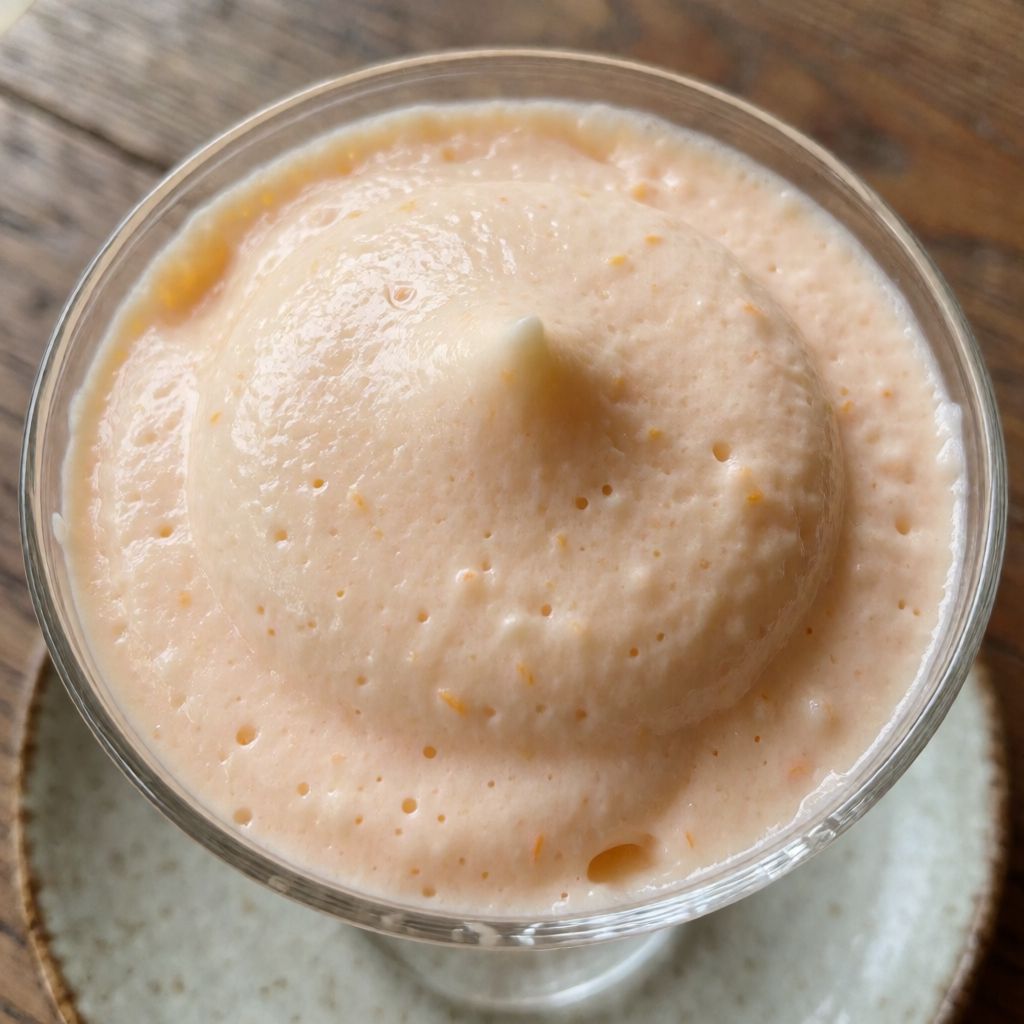
 AI photo
Melon Mousse
A light, creamy chilled dessert made with sweet melon, cream cheese and ricotta.
Labels are worked out automatically from the ingredients and can be wrong. Check the packaging if it matters to you.
Ingredients
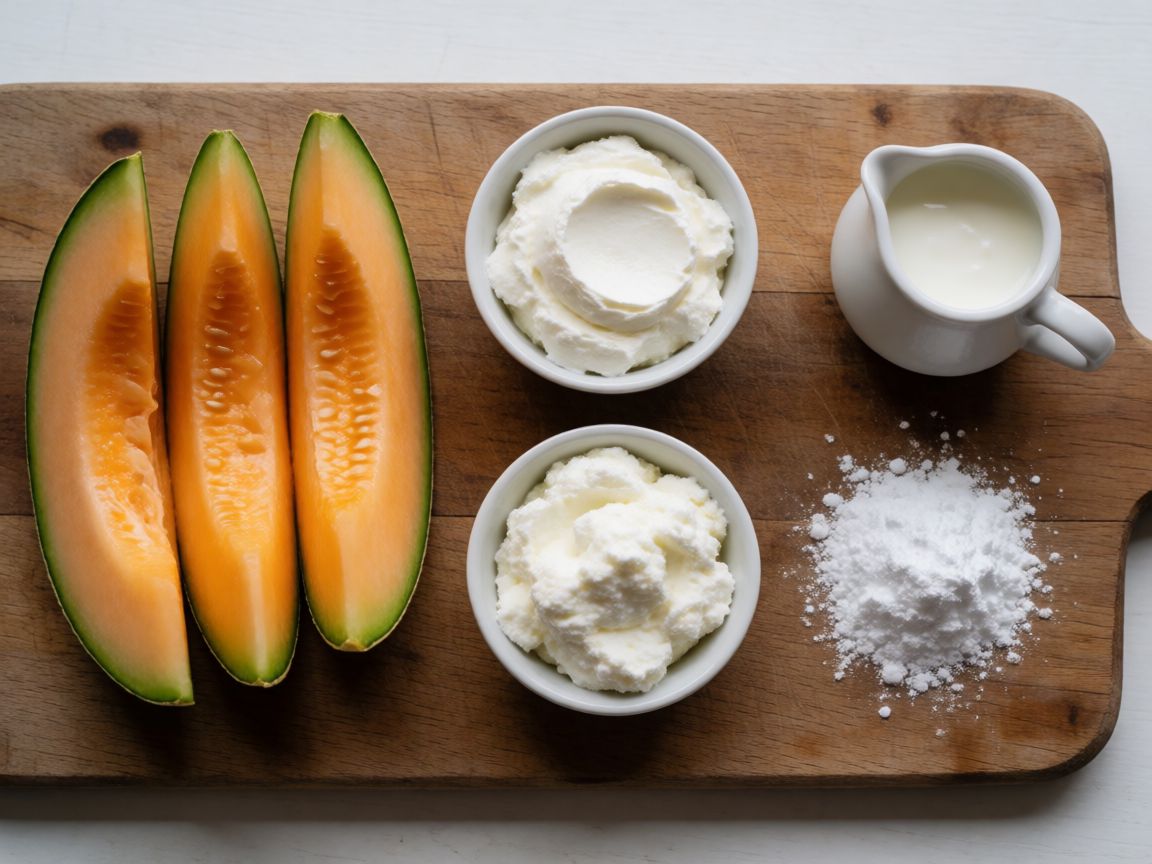
- 3 pcs Melon slices
- 250 g Cream Cheese
- 100 g Ricotta
- 50 ml Cream
- 1 tbsp Icing Sugar





Steps
Wash the melon and cut it into 3 slices, remove the skin and seeds, then blend the flesh until smooth and creamy.
In a large bowl, combine the cream cheese, ricotta and icing sugar, and mix until smooth and soft.
Add the blended melon flesh and mix well.
In a separate bowl, whip the cream until thick, then gently fold it into the cheese mixture with a bottom-to-top motion.
Spoon the mousse into individual glasses and chill in the refrigerator.
30 minServe garnished with fresh pieces of melon.
Melon mousse is not a dessert you cook — it's one you build and then let gravity and cold finish for you. Three dairy textures (cream cheese for body, ricotta for air, cream for lift) get folded together with blended melon, spooned into glasses, and left in the fridge. No flame touches any of it. The only heat in the whole process is the one you're trying to avoid letting it get warm.
What decides whether it works is the melon, and specifically how ripe it is before it ever meets the blender. Melon is mostly water held inside cells, and blending breaks every one of those cells open at once. An under-ripe melon gives you a thin, barely-sweet, slightly bitter liquid that dilutes the cheese mix and leaves the mousse loose and sad in the glass. A properly ripe one — flesh that gives slightly under your thumb near the stalk end, a sweet smell coming through the skin without you even cutting it — gives you a thick, genuinely sweet puree that carries its own flavour and doesn't need extra sugar fighting to compensate.
Some say a mousse needs gelatine to hold its shape. No — because the structure here isn't a gel at all, it's fat and trapped air. Cream cheese and ricotta are already thick before anything happens to them; whipped cream folded in adds air without adding liquid, so the whole thing stays dense rather than runny. The fridge doesn't "set" it chemically — it just firms the fat back up after the warmth of your hands and the blender motor loosened it. That's the entire mechanism, and it's why this dessert belongs to no stove at all.
The folding step is where most home cooks lose the air they just spent effort whipping into the cream. Stirring in circles, the way you'd mix a batter, knocks the bubbles straight back out — you end up diluting the whipped cream back toward liquid cream, and the mousse sits heavy instead of soft. The bottom-to-top motion is deliberate: you're lifting the heavier cheese mixture up through the lighter cream rather than beating them together, so the air stays suspended. If your mousse comes out dense and wet rather than light, this is almost always why — not the ingredients, the motion.
Melon itself: pick one that smells through the skin and yields slightly to thumb pressure near the stem. If all you can get is a flavourless supermarket melon out of season, don't force it — a ripe peach or mango works on exactly the same logic (soft flesh, high water content, low acidity) and the mechanism won't care that the name on the dish changes.
Cream cheese is the backbone — it's already thick at fridge temperature and holds its own shape in a spoon before you've added anything. Any full-fat, unsalted soft curd cheese does the same job; in a British kitchen that's just block Philadelphia, nothing exotic needed. Ricotta sits alongside it for a different reason: on its own, cream cheese can taste heavy and slightly chalky in a chilled dessert, and ricotta's looser, wetter curd lightens that without thinning the whole mix the way more cream would. If you've no ricotta, use a touch more cream cheese and accept a denser mousse — it will still hold, just with less lift.
The cream wants to be the kind that's genuinely rich — in the UK that's double cream, because its fat content is high enough to whip to a soft, thick fold without the risk of it suddenly turning into butter, which thinner whipping cream can do if you walk away for thirty seconds too long. You're not after stiff peaks here, just thick enough to hold a ribbon — overwhip it and when it meets the slightly acidic cheese mixture, it can curdle into grainy little flecks instead of staying smooth.
Icing sugar rather than granulated is not fussiness — it's that this mousse never sees heat, so there's no way to dissolve a coarser sugar. Icing sugar is already fine enough to vanish into a cold mix; granulated sugar would sit there as grit on your tongue, a small defect with a very traceable cause.
Thirty minutes in the fridge is the lower bound, not the answer. What you're waiting for is the fat firming back to the thickness it had before your hands and the whisk warmed it — you'll know it's there when a spoonful holds its shape in the glass rather than slumping sideways. If your kitchen runs warm, give it longer; patience here costs you nothing but time, and rushing it is the one mistake you can't fix afterwards.