
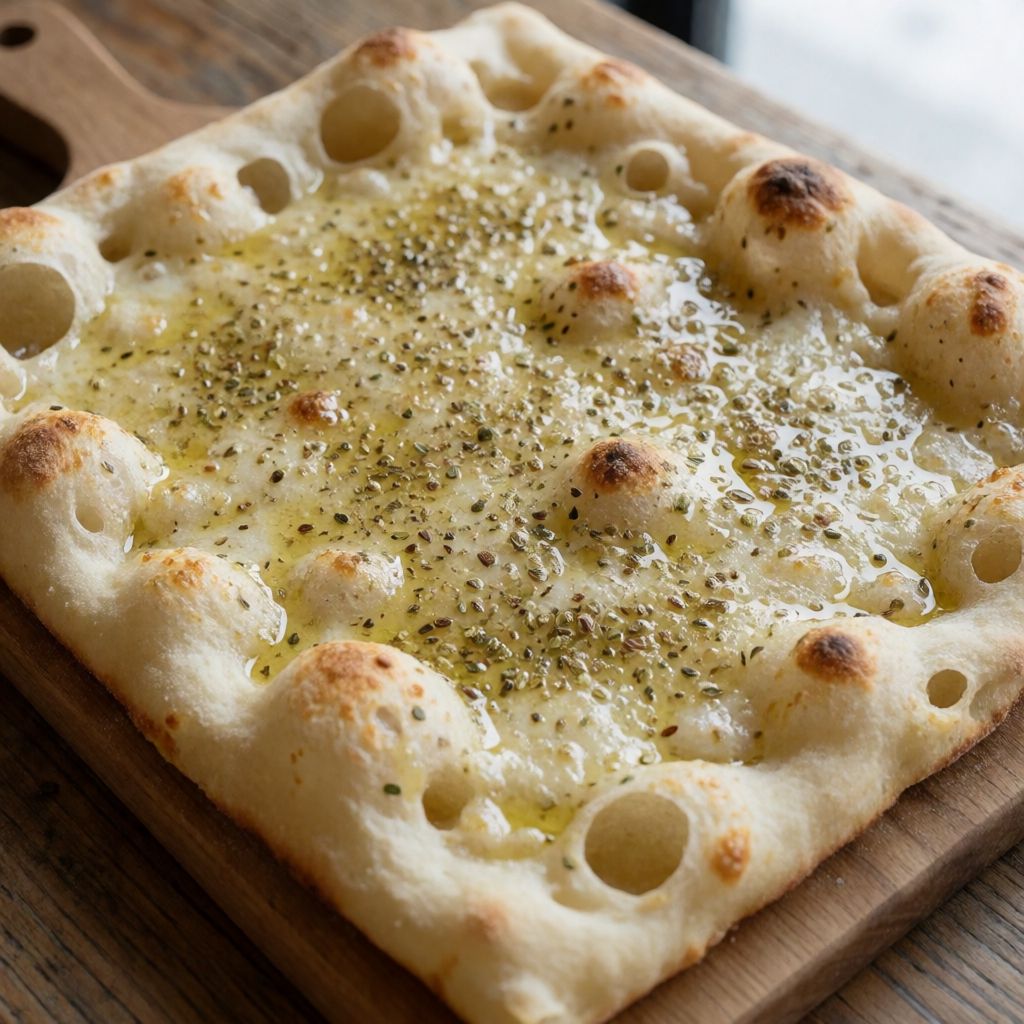
 AI photo
Milanese Pizza al Taglio
A thick, airy Milanese-style sheet pizza topped simply with tomato and mozzarella.
Labels are worked out automatically from the ingredients and can be wrong. Check the packaging if it matters to you.
Ingredients
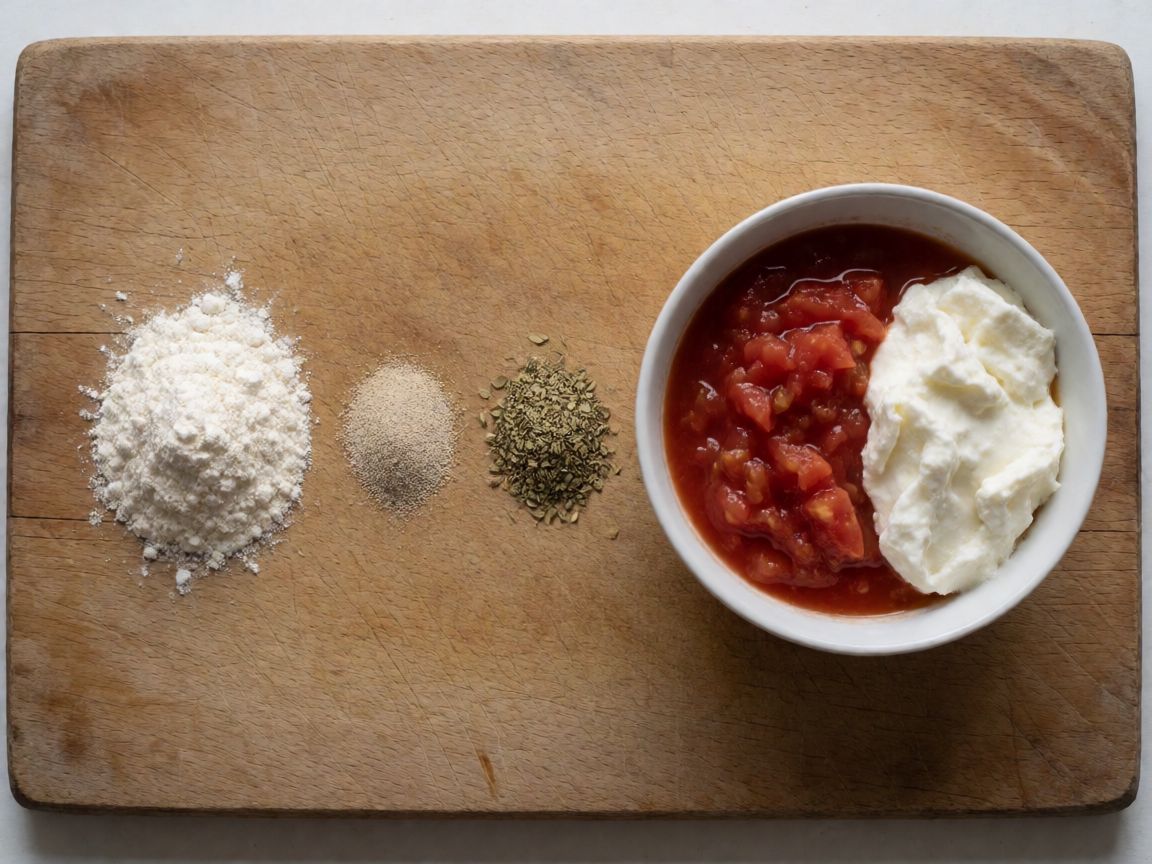
- 400 g Plain flour or strong white bread flour
- 240 ml Water
- 3 g Dried yeast or 9 g fresh yeast
- 6-8 g Salt
- 10 g Olive oil
- Oregano to taste
- Tinned chopped tomatoes peeled, to taste
- Mozzarella to taste
- Olive oil to taste








Steps
Tip the flour into a large bowl, add the dried yeast and mix. Gradually pour in the water, then add the salt and olive oil. Mix briskly, then knead by hand until the dough is smooth.
Cover the bowl with a tea towel and leave the dough in a dry spot away from draughts.
30 minGive the dough a set of strengthening folds: fold it in your hands 4-5 times, turning 90° after each fold. Pinch the edges together, cover the bowl and leave for another 20 minutes.
20 minLeave the dough at room temperature for 1 hour.
60 minMove the dough to the fridge for about 2 hours.
120 minLeave the dough at room temperature for a further 2 hours.
120 minTip the dough out onto a surface sprinkled with semolina and stretch it out with your fingers. Move it into an oiled 30×40 cm baking tin.
Leave for 90 minutes at room temperature.
90 minSprinkle the dough with oregano, spread over the tinned tomatoes and drizzle with olive oil. Cover with cling film and leave for about 1 hour at room temperature.
60 minPreheat the oven to 230°C and bake the pizza for 20-25 minutes.
22 minAdd the sliced mozzarella and return to the oven for a few minutes until the cheese melts.
This is pizza al taglio — Roman-style by name of the game, but it lands on a Milanese table the same way: a flat tray of bread, baked, cut with scissors into squares, sold or eaten by weight or by the piece. What decides whether it works isn't the topping. It's whether the dough has had enough clock time to build structure without any heat helping it along. You're not making a thin, blistered Neapolitan disc here — you're making something closer to focaccia with ambitions, thick enough to hold air pockets the size of a thumbnail.
The whole method is a long argument against rushing yeast. Look at the sequence: 30 minutes rest, folds, 20 minutes, an hour out, two hours in the fridge, two more hours out, 90 minutes after shaping, an hour after topping. That's nearly seven hours of a four-ingredient dough doing almost nothing you can see — and that's the point. Fast yeast gives you lift without flavour and a crumb like upholstery foam. Slow fermentation gives the dough time to break its own starches into sugars, which is where the flavour actually comes from, not from the toppings sitting on top of it.
Some say you can skip the fridge stage and just prove it longer at room temperature — no, because the fridge isn't there to save time, it's there to slow the yeast down while the enzymes and gluten keep working. A warm room makes gas; a cold spell makes structure. You want both, in that order, or the dough blows up fast and collapses just as fast when it hits the oven.
Flour first. "Strong white bread flour" is doing real work in that ingredient line — it means more protein, which means more gluten, which means a dough that can hold big bubbles instead of deflating into a flatbread. Plain flour will still make a pizza; it just won't be this one, with the open, slightly chewy crumb that long fermentation is trying to build. If all you've got is plain flour, you can get partway there by cutting the water slightly and kneading a touch longer — you're compensating for weaker gluten with more mechanical development.
Yeast: 3 g dried or 9 g fresh is a 1:3 ratio, which is standard — fresh yeast is mostly water weight, dried is concentrated. Either works; what you're choosing between is really shelf life and habit, not performance. Don't be tempted to add more to "help" the dough along — more yeast means a faster, cruder ferment, which is exactly what this whole seven-hour schedule is built to avoid.
Water at 240 ml against 400 g flour is a 60% hydration dough — wet enough to need handling with slightly oiled or damp hands rather than a death-grip with dry flour, which only toughens it. Salt isn't a seasoning afterthought here; it tightens the gluten network and also slows the yeast down, which is why it goes in after the yeast has had a moment in the water, not mixed in dry together — dump them in together and the salt can stun the yeast before it's woken up properly.
The olive oil in the dough (just 10 g) is there for tenderness and a thin barrier against moisture loss, not for flavour at that quantity — any neutral or light oil would do the same structural job, though olive oil is cheap enough in Italy that there's no reason to substitute it. The oil drizzled on top before baking is a different job entirely: it fries the tomato slightly in the oven's heat and stops the surface drying into cardboard.
Tinned chopped tomatoes, "peeled," because whole peeled tomatoes you crush yourself have less added liquid and a cleaner, less metallic edge than ready-chopped tins, which are often bulked with juice and citric acid for shelf stability. If you're using chopped tomatoes anyway, drain them a little first — a wet dough topped with wet tomato on a thin UK oven tray (no kazan-style thermal mass here, just a domestic fan oven) will steam instead of bake, and you'll get a soggy centre no matter how good your crust was underneath.
Mozzarella goes on at the very end, after the base has already had its 20-25 minutes alone — not because of tradition, but because mozzarella is mostly water and fat; put it in from the start and by the time the crust is done, the cheese has split and turned rubbery and oily. A few minutes at the end melts it without murdering it. If you can't get proper mozzarella, a low-moisture block grates and melts more predictably on a home oven's uneven heat, though you lose that stretch.
A 30×40 cm tin at 230°C is about as hot as most UK domestic ovens will comfortably and accurately hold — push higher and many ovens either can't reach it or the thermostat lies to you anyway. The two hours in the fridge, by the way, double nicely as the one bit of this recipe you can leave running while you do something else entirely — patience here isn't suffering, it's just scheduling.