
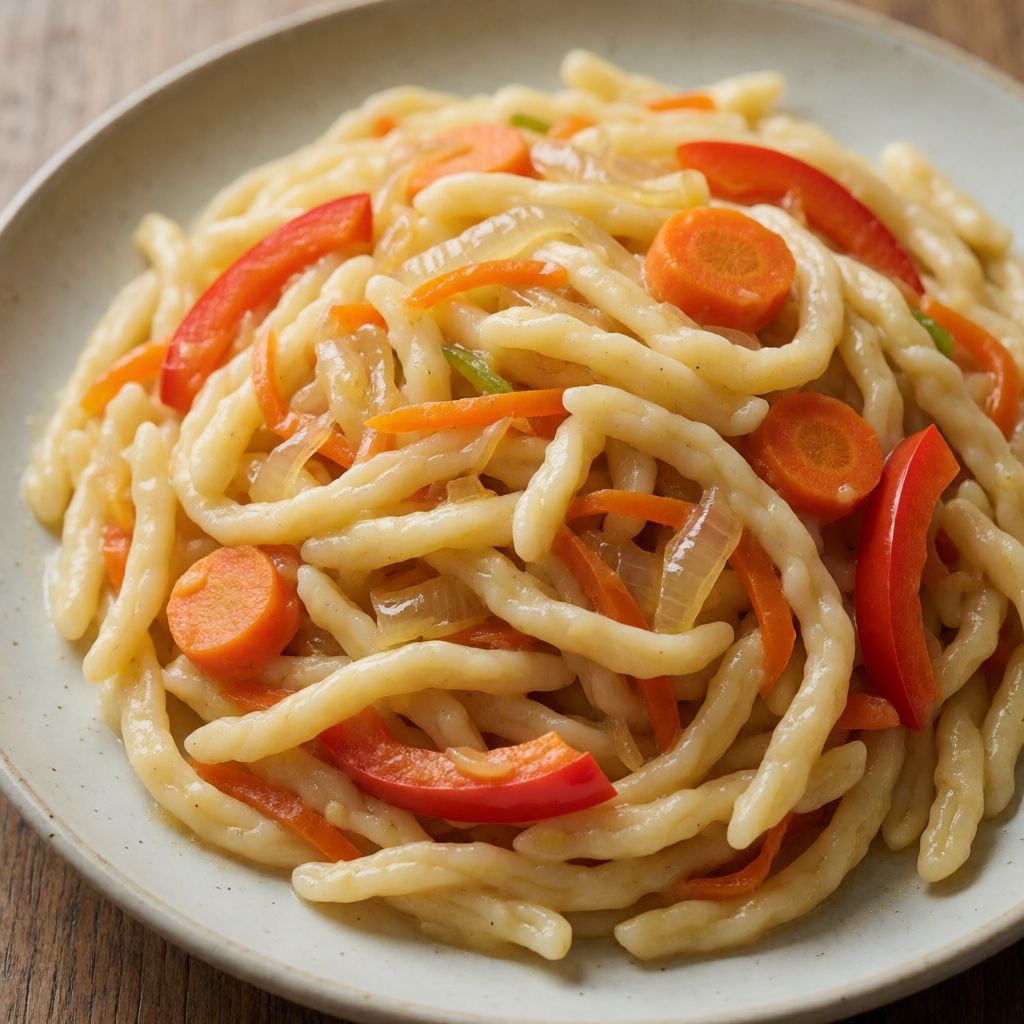
 AI photo
Miller's Pasta
A rustic pasta with a slow-cooked rib and vegetable sauce, finished with a simple flour-and-water pasta.
Labels are worked out automatically from the ingredients and can be wrong. Check the packaging if it matters to you.
Ingredients
- 400 g Plain flour
- 230 g Water
- 1 pinch Salt
- 1/2 pcs Onion
- 1 pcs Carrot
- 1/2 pcs Green pepper
- 1 pcs Pepper
- 1/2 pcs Aubergine
- 700 ml Tomato passata
- 4 pcs Ribs
- Olive oil to taste
- Salt to taste
- Pecorino to taste







Steps
Fry the finely chopped onion, carrot and green pepper in olive oil until soft.
Add the ribs and brown them on both sides over medium-high heat until lightly golden.
Add the pepper and aubergine, cut into larger pieces, along with the tomato passata.
Season with salt to taste and bring to the boil.
Simmer the sauce on low heat for at least 1 hour, until the meat is tender.
60 minTip the flour into a bowl, add the water and a pinch of salt, and mix by hand.
Transfer the dough to a work surface and knead until smooth and no longer sticky.
Wrap the dough in cling film and leave to rest for 30 minutes.
30 minRoll out the dough with a rolling pin to a thin sheet, 2-3 mm thick.
This is a dish built backwards from how a mill worker's kitchen actually worked: flour and water for the pasta because that's what was on hand in sacks, and a sauce that simmers for an hour because nobody was standing over it — they were working. The "miller" in the name isn't romantic, it's logistical. Flour was the one ingredient guaranteed to be free or cheap if you worked a mill, so the pasta is the fixed point and everything else — ribs, aubergine, peppers — is whatever vegetables and cheap cuts were around that week.
What decides whether this works is not the pasta, it's the sauce, and specifically whether you let the ribs actually render. Browning the ribs "until lightly golden" isn't decoration — it's the Maillard reaction laying down flavour compounds that a passata alone cannot produce. Skip that step, or rush it on heat that's too timid, and you get a sauce that tastes like tinned tomatoes with meat floating in it rather than meat that has flavoured the tomatoes. The hour of simmering afterwards isn't there to "cook the sauce" — the passata is already cooked. It's there to let collagen in the ribs break down into gelatine, which is what gives the sauce body instead of wateriness. That takes time, not heat. Turning the gas up to rush it will not get you there faster; it'll just reduce the liquid and scorch the bottom.
On the ribs: these aren't the meaty, smoky barbecue kind you might picture from a Sunday roast context. Here they're a flavour base, cooked slow until the meat falls or nearly falls off the bone and the fat and collagen have gone into the sauce. Any cut with a good amount of connective tissue and bone will behave the same way — pork ribs are standard, but a cut like oxtail or short rib would follow the same logic, because what matters is collagen content, not species.
The vegetables — onion, carrot, green pepper — go in first and are cooked "until soft," which is a texture cue, not a clock. Soft means the onion has gone translucent and the carrot has lost its raw bite; rushing this with high heat browns the outside before the inside softens, and you get crunch where you want melt. This base (the soffritto, if you want the Italian word for it, though nobody in a miller's house called it that) is what gives the sauce its sweetness without needing sugar — the slow release of sugars from the onion and carrot as they soften is doing real chemical work, not just "building flavour" in some vague sense.
The aubergine and the second pepper go in later, cut into larger pieces deliberately, because they're meant to hold some shape and bite in the finished sauce rather than dissolve into it — they're bulk and texture, where the first-stage vegetables are flavour and sweetness. If you don't have aubergine, courgette will behave similarly in texture, though it won't bring the same slight bitterness aubergine has, which cuts through the richness of the ribs.
Tomato passata rather than tinned whole tomatoes or chopped tomatoes: passata is already strained and smooth, so you're not fighting seeds and skin while the sauce reduces for an hour. If you only have chopped tinned tomatoes, blitz them first or expect a chunkier sauce — not wrong, just a different final texture.
For the dough: plain flour, not strong/bread flour, is correct here and worth saying plainly because people reach for "strong" flour out of habit, assuming stronger is always better. No — too much gluten strength makes the dough tough to roll by hand to 2-3mm and elastic in a way that fights a rolling pin without a pasta machine. Plain flour gives enough structure to hold a ribbon of pasta together without turning into a wrestling match on your kitchen counter. The ratio here — roughly 400g flour to 230g water, just over half by weight — is drier than a wet bread dough and wetter than a cracker dough; it should come together in a shaggy mass by hand before kneading smooths it out. If it won't come together, it's too dry — add water a tablespoon at a time, not in one go, or you'll overshoot.
Pecorino at the end rather than Parmesan: pecorino is sheep's milk, sharper and saltier, and it's the cheese of poorer, pastoral regions of Italy where sheep were easier to keep than cattle — again, economics before taste. Parmesan will work as a substitute and nobody will throw you out of the kitchen for it, but expect a milder, less salty finish, so taste before you add more salt to the dish overall.
On a UK hob: "medium-high" for browning ribs means a ring hot enough that a piece of meat placed in the pan sizzles immediately and audibly — if it just sits there quietly, the pan isn't hot enough and the meat will stew rather than brown. And patience is the real ingredient twice over here: once while the ribs tenderise for an hour with no shortcut, and once while the dough rests for thirty minutes doing nothing you can see. Skip either and you'll taste exactly where you skipped it.