
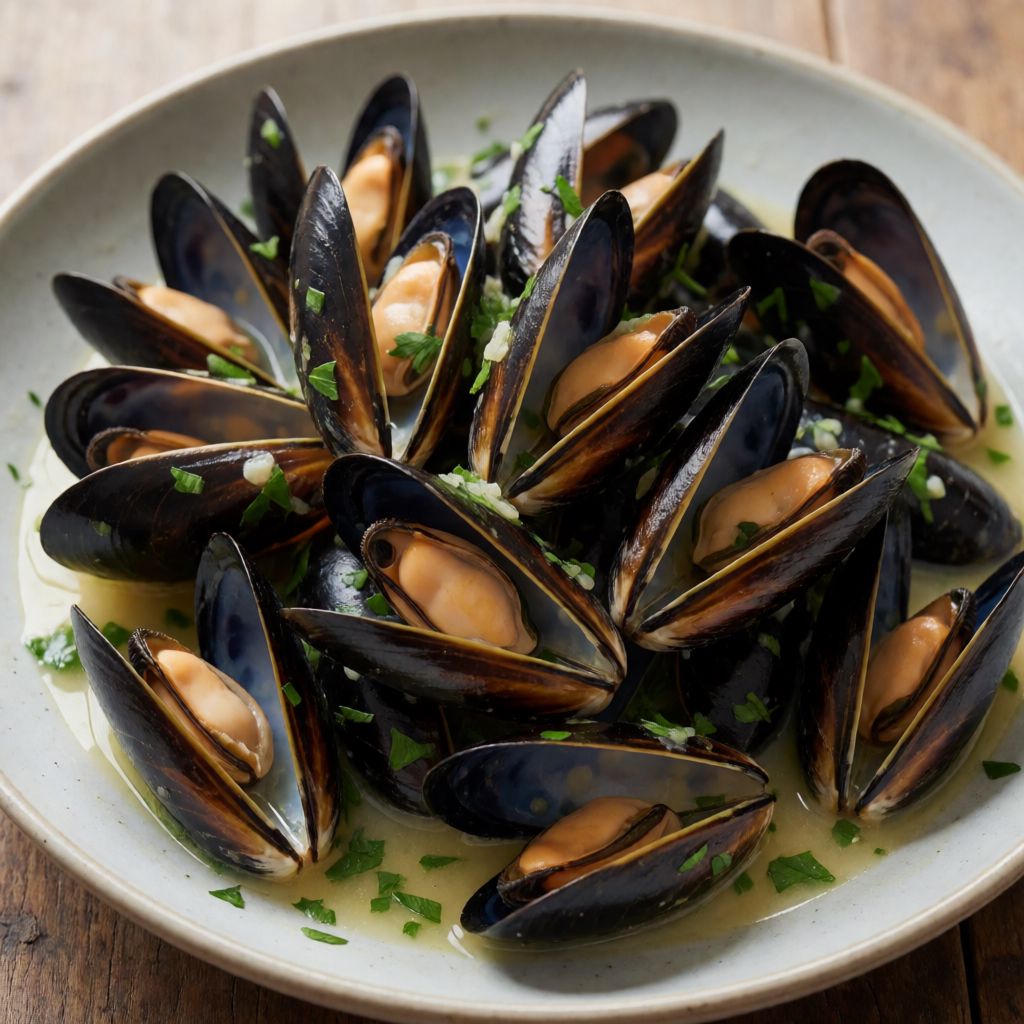
 AI photo
Mussels Marinière
Fresh mussels quickly cooked in white wine with garlic, parsley and lemon.
Labels are worked out automatically from the ingredients and can be wrong. Check the packaging if it matters to you.
Ingredients
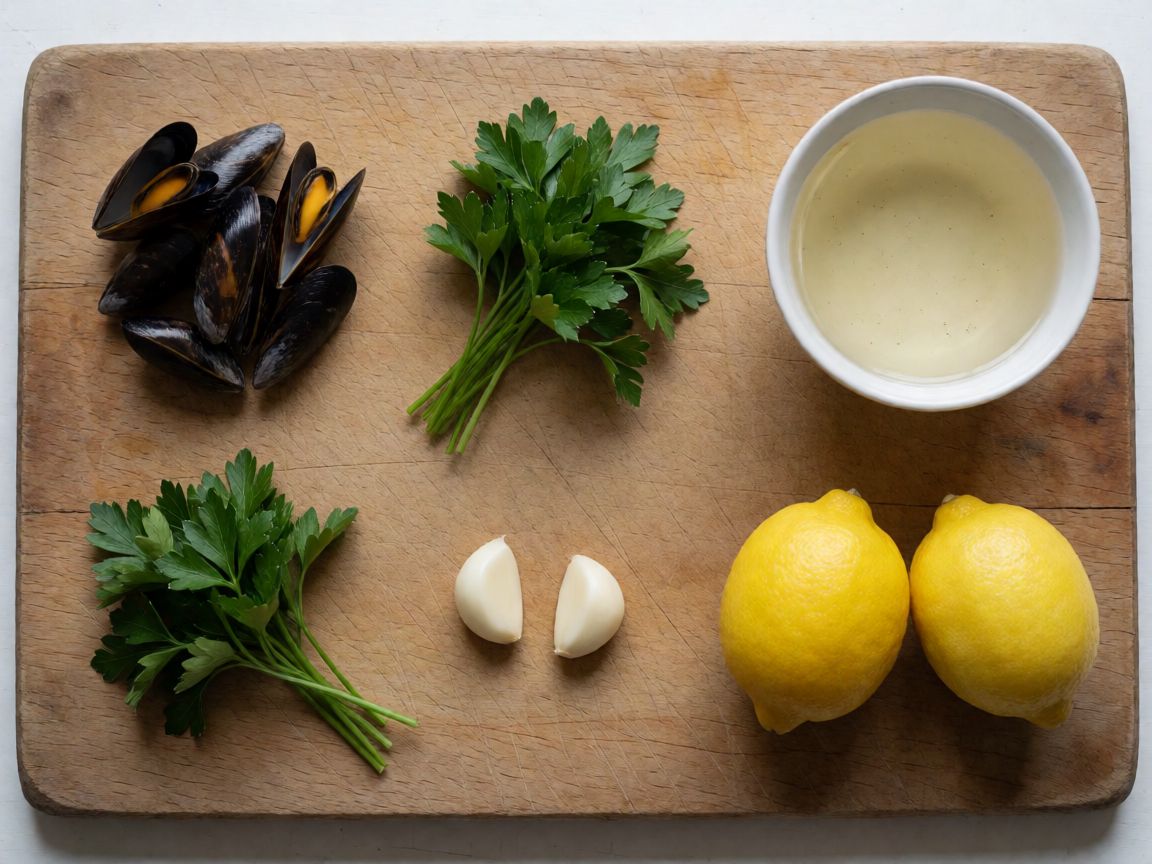
- 2 kg Mussels
- 2 bunch Parsley
- 2 clove Garlic
- 250 ml White wine
- Olive oil for frying
- Salt to taste
- Black pepper to taste
- 2 pcs Lemon








Steps
Rinse the parsley, pat dry with a towel and finely chop; set aside in a bowl.
5 minPeel the garlic cloves, lightly crush them and fry for a few minutes in a pan with olive oil.
3 minWhen the garlic turns golden, remove it and add the pre-cleaned mussels.
1 minFry the mussels for a few minutes until they begin to open slightly.
3 minPour in the white wine and wait until it has completely evaporated.
3 minReduce the heat, add the chopped parsley and stir with a wooden spoon.
1 minCover the pan with a lid and cook for a few more minutes.
3 minWhen the mussels have fully opened, remove the lid and wait a few more minutes.
2 minSeason to taste with salt and freshly ground black pepper.
1 minTransfer the mussels to a serving dish and serve with lemon wedges.
1 min
This is moules marinière — mussels opened by steam over a sauce of garlic, white wine and parsley, nothing more. It belongs to the Atlantic coast of France, where mussels grow wild and free on the rocks and ropes, and fishermen needed something fast between tides, not something fussy. The whole dish is a working lunch dressed up as a restaurant plate.
What decides whether it works is not the sauce — it's the mussel itself, before it ever sees heat. A live mussel is shut tight, or shuts when you tap it, and feels heavy for its size. One that stays gaping and limp, or feels suspiciously light, is dead or empty, and no amount of wine will fix that; throw it out before it goes in the pan, not after. Some say any open mussel is bad — no, because a resting mussel often gapes a little and snaps shut the moment you touch it. That's a live one. It's the ones that don't react that you discard.
The second thing that decides it is restraint with heat once the lid goes on. The mussel's hinge is held shut by a muscle; heat kills that muscle and the shell falls open — that's the whole trick of the dish, not magic, just protein giving up. The moment most of them have sprung open is the moment you're done. Leave them steaming much past that and the small sweet bit of meat inside turns to rubber, because it's almost pure water and protein and both shrink hard once you overcook them. So the lid comes off as soon as the pan looks like a field of open shells, not on a timer.
Mussels, two kilos for four people — that's half a kilo each, roughly a heaping supermarket net bag per person, which sounds like a lot until you remember a third of that weight is shell. Buy them tightly closed, smelling of the sea and nothing else; a strong fishy or ammonia smell means they've been sitting too long, not that they're extra fresh. Scrub and debeard just before cooking, not hours ahead — mussels kept wet and bagged in the fridge can suffocate; keep them loose, covered with a damp cloth, and cook them the day you buy them.
Garlic, crushed rather than minced, and that's not fussiness — a crushed clove has less cut surface, so it colours slowly and evenly in the oil instead of catching and turning bitter the way minced garlic does in seconds. You fry it only until it goes from white to pale gold, then it comes straight back out — its job was to flavour the oil, and a clove left in any longer just turns brown and sour and nobody wants to bite into it anyway.
Olive oil is the frying medium here because this version leans Mediterranean, but the oil's only real criterion is that it shouldn't fight the garlic and wine for attention — any oil with no smell of its own does the job, and if you've got butter in the fridge and don't mind the dairy, that's actually closer to how this dish is cooked on the Norman coast, where cream and butter are what's local, not olive groves.
White wine, about a small glass per batch — dry, not sweet, because the whole point is for the alcohol to cook off in those few minutes and leave behind acid and aromatics, not sugar. You want it to reduce right down, almost gone, not because longer is better but because a wine sauce that hasn't tightened just sits thin and separate from the mussel liquor instead of binding with it. If you're ever out of wine, dry cider is the actual historical neighbour here — mussels cooked in cider is the older, cheaper version from the apple-growing side of Normandy, and it's not a compromise, just a different coastline.
Parsley goes in late, off the worst of the heat, chopped fine and added once the pan's already working — thrown in early over hard heat, its water flashes off fast and it turns grey-green and grassy instead of staying bright. Two bunches sounds generous for a dish this size, but a lot of it is stem you'll strip away, and the leaf wilts down to almost nothing.
Salt needs a light hand and a late decision — mussels are seawater creatures and they carry their own salt into the broth as they open, so taste the liquor before you season it, not the empty pan. Lemon comes at the very end, in wedges at the table, not stirred in — squeezed too early its acid starts working on the meat the way it does in a ceviche, turning it from tender to slightly chalky; squeezed at the last second it just brightens what's already there.
On the lid: a proper kazan-style domed lid isn't standard kit in most flats, and it doesn't need to be. A wide sauté pan with its own lid is fine; if you haven't got one, a large plate set over the pan traps enough steam to force the shells open, as long as it actually covers the rim — a plate too small just lets the steam wander off and you'll have mussels cooking unevenly, some open, some sulking shut at the bottom. And however you cover it, that's where the patience comes in — you're not stirring or peeking every thirty seconds, you're watching for the shells to go from a closed fist to an open hand, and that's the only clock this dish respects.