
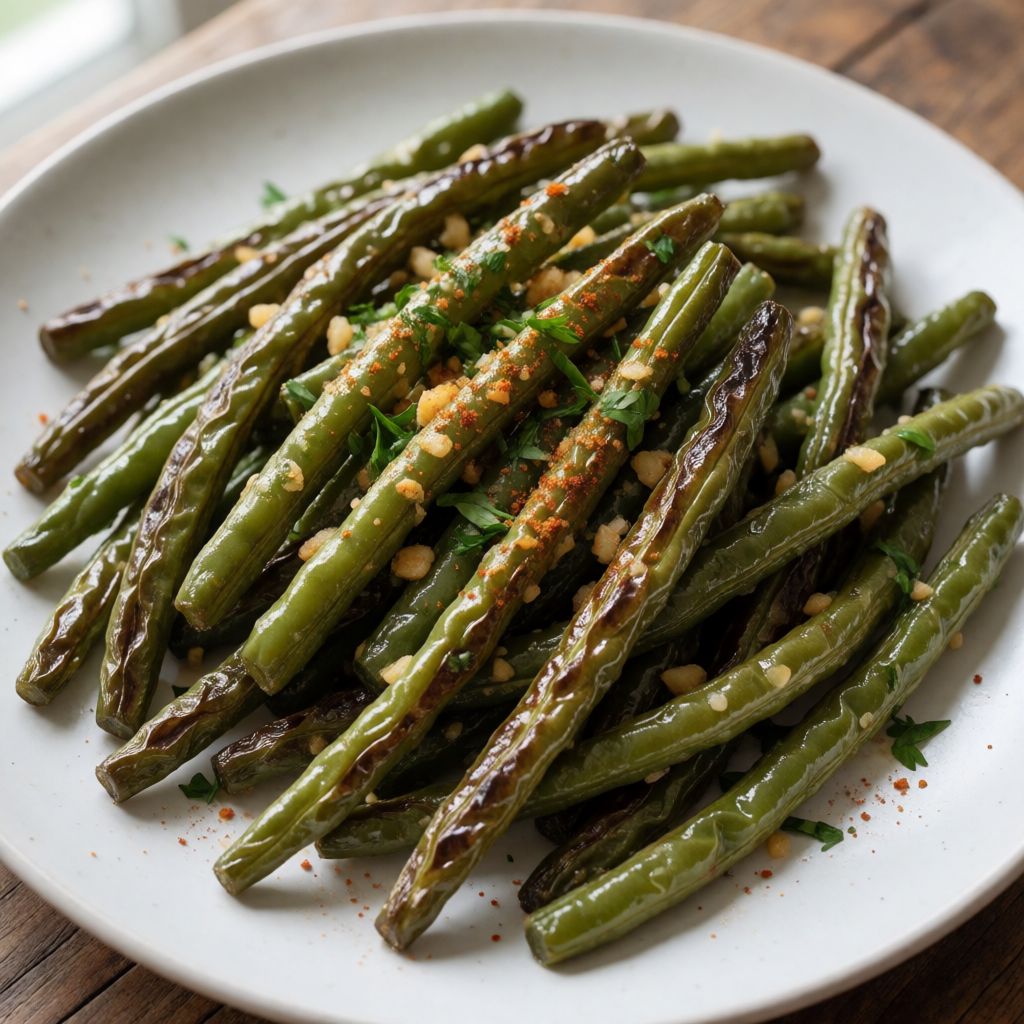
 AI photo
Pan-Fried Green Beans
A quick side dish of blanched green beans sautéed with garlic, olive oil and parsley.
Labels are worked out automatically from the ingredients and can be wrong. Check the packaging if it matters to you.
Ingredients
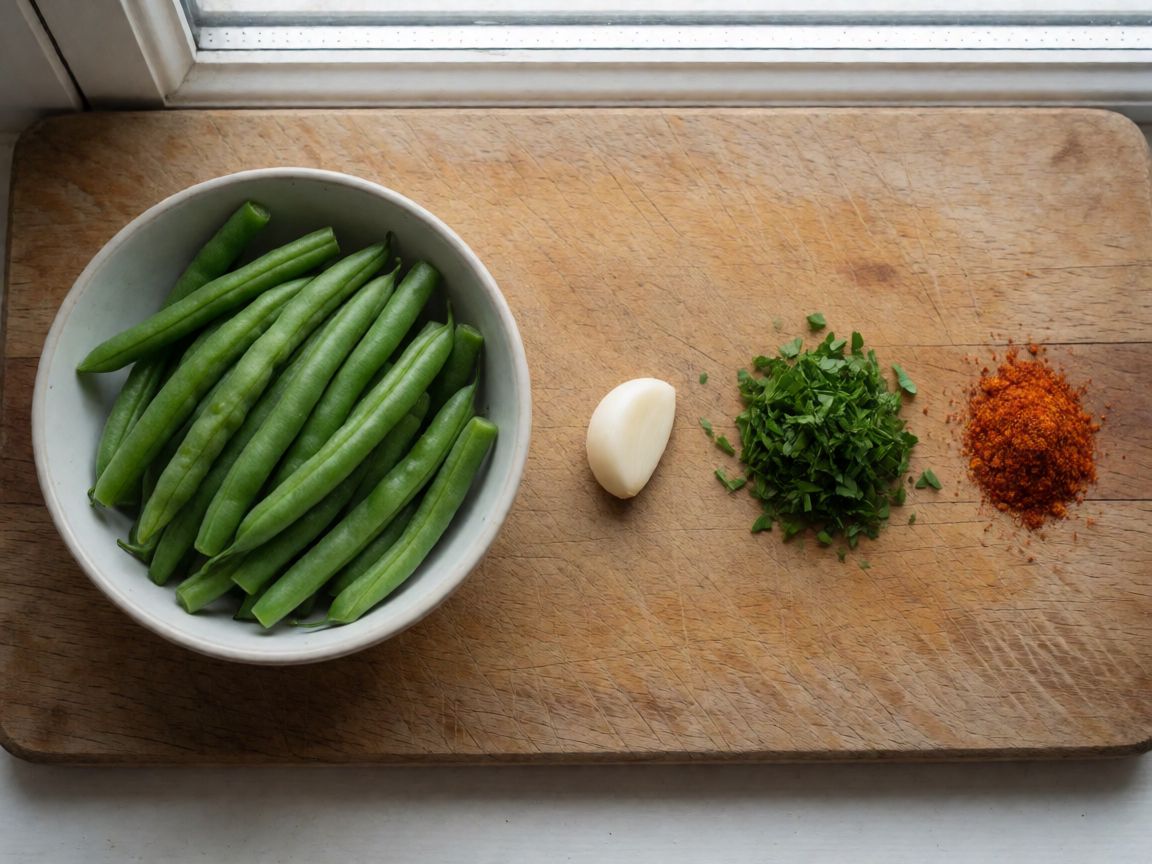
- 500 g Green beans
- 1 clove Garlic
- Olive oil to taste
- Salt to taste
- Parsley to taste
- Chilli powder to taste, optional






Steps
Use fresh or frozen green beans: wash them well, then trim and tidy up the ends.
Bring a large pot of water to the boil and add the green beans.
Boil the beans for 8-10 minutes until just tender but still with some bite.
9 minTransfer the beans to a bowl of iced water to keep their colour.
In a pan, fry the garlic in olive oil, add the beans and cook for a few minutes.
Season with salt to taste, and add chilli powder and chopped parsley if you like.
This is a two-stage dish wearing a one-pan disguise. The beans get cooked twice: once in water, briefly in oil. Understanding why decides whether you end up with bright, snappy beans or a grey, squeaking mess.
Green beans are mostly water held inside a tough, waxy skin. That skin is good at keeping flavour out, which is why frying raw beans from the start either leaves the inside raw while the outside blisters, or cooks the inside through only after the outside has gone brown, wrinkled and bitter. Boiling solves this the honest way: water surrounds the bean completely and cooks it evenly in a few minutes, no waiting for heat to creep through a skillet. The oil stage after that isn't cooking anymore — it's seasoning. Garlic perfume going into the pores, a bit of blister and colour from direct heat, nothing more.
The ice bath is not fussiness, it's physics. A bean pulled hot from the pot keeps cooking from its own residual heat — that's carryover, and it's what turns a good bean khaki and soft a minute after you thought it was done. Cold water stops that dead, and it also stops an enzyme in the bean (chlorophyllase, if you want the name) that dulls green to drab once heat switches it on. Skip the shock and the beans will taste fine but look tired — which matters more than people admit, because we eat with our eyes before the fork arrives.
Green beans, fresh or frozen — and here's a myth worth breaking: some say frozen is the lesser option. No, because commercial frozen veg is usually blanched and frozen within hours of picking, at the peak of its sugar and colour, while the 'fresh' beans in a UK supermarket may have travelled and sat for days, losing both. Frozen beans also come pre-trimmed, which saves you the fiddly job of snapping ends off 500g of them over the sink. If you've got fresh, choose beans that are firm enough to snap cleanly when bent — a bean that just folds is already going soft inside.
Garlic is there for smell, not substance. One clove, sliced thin or lightly crushed, warmed gently in the oil before the beans go in. The real defect to avoid is burnt garlic — it turns bitter in seconds and that bitterness spreads through the whole pan, no rescuing it. So garlic goes in on a gentle heat, just enough that the oil starts to smell of it, and the beans follow before the slices turn more than pale gold.
Olive oil is named because it suits this dish's flavour — but the real criterion for the fat is simpler: anything that pours and doesn't fight the garlic for attention. Olive oil works because its own taste is mild enough here, used raw-ish in a quick toss rather than deep, hot frying. If you're out of it, any light vegetable oil does the same mechanical job — carries heat, carries garlic smell onto the bean skins.
Salt belongs in two places, and most people only use one. Put real salt into the boiling water, not just a pinch at the end in the pan — beans can't absorb much seasoning once they're out of water and into oil, their skin is too waxy for that. Final salt in the pan is just a top-up, for taste on the surface.
Parsley and chilli are the only places where taste, not mechanism, decides anything — chopped parsley in at the end for freshness it would lose if cooked, chilli powder for people who want a bit of a kick with their Sunday roast beans. Neither changes how the dish is cooked, only how it finishes.
And patience, here, is mostly about not rushing the shock-and-dry stage. A bean pulled from ice water still wet will spit and steam rather than fry when it hits the hot oil — pat it reasonably dry first, or you'll get soggy beans instead of beans with a little blister on them. Ten minutes of prep, half an hour total, most of it water doing the work while you get on with the rest of the roast.