
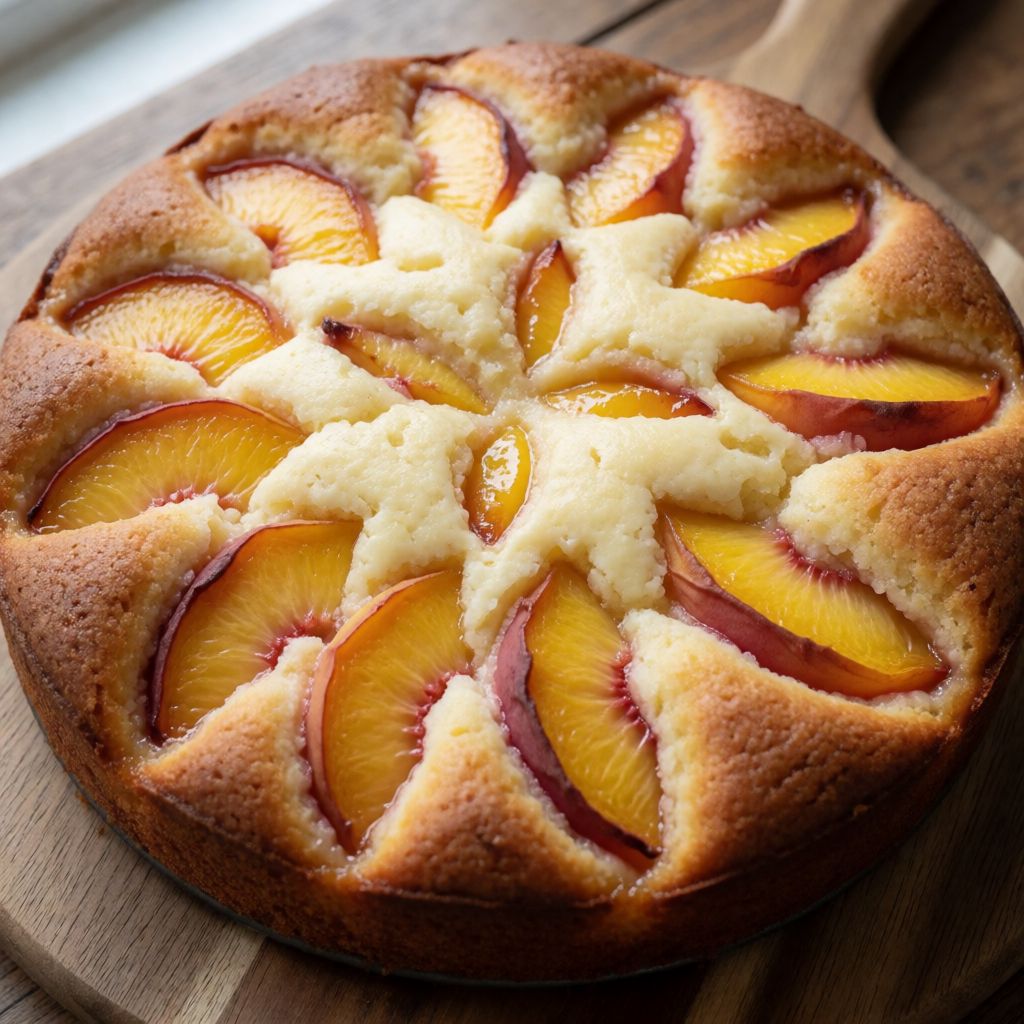
 AI photo
Peach and Ricotta Cake
A soft cake made with ricotta and fresh peaches, finished with a dusting of icing sugar.
Labels are worked out automatically from the ingredients and can be wrong. Check the packaging if it matters to you.
Ingredients
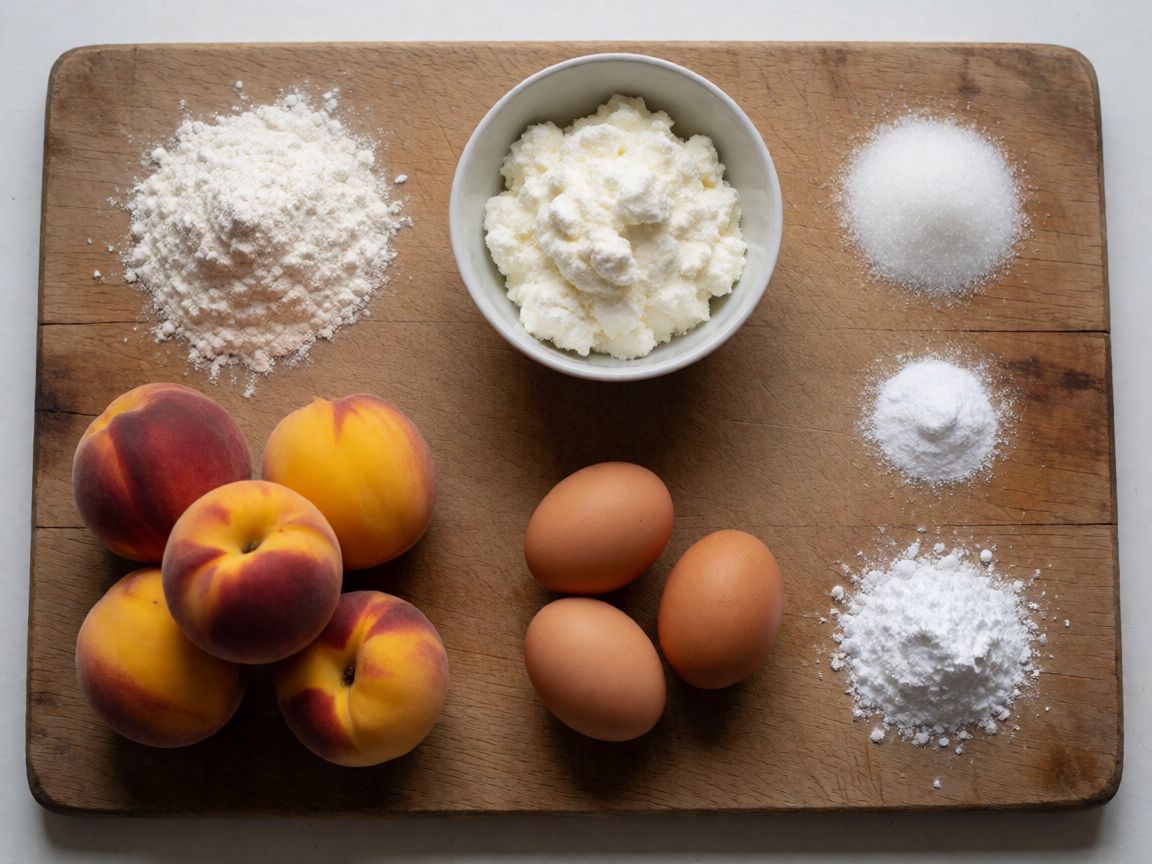
- 250 g Plain flour
- 250 g Ricotta
- 180 g Caster sugar
- 4-5 pcs Peaches
- 3 pcs Eggs
- 16 g Baking powder
- 1 pinch Salt
- Icing sugar for dusting
- 1 tbsp Vegetable oil for greasing the tin








Steps
Beat the eggs with the sugar using an electric mixer until the sugar fully dissolves and the mixture is smooth and even.
5 minSift in the flour and add it to the egg and sugar mixture together with the ricotta, baking powder and a pinch of salt. Mix well.
3 minWash the peaches, peel them and remove the stones. Cut most of them into small cubes, keeping one aside for decoration.
5 minAdd the diced peaches along with their juice to the batter and gently fold them in.
2 minTake a 24 cm baking tin, grease it with butter or oil and dust it with flour.
2 minPour the batter into the tin, spreading it evenly.
1 minDecorate the top of the cake with peach slices.
2 minBake at 180°C for 35-40 minutes.
38 minLeave the cake to cool and serve dusted with icing sugar.
10 min
This is a wet, sagging-in-the-middle cake, and that's the point of it. Ricotta doesn't bring richness the way butter does — it brings water, bound up in curd, that releases slowly as it bakes. So instead of a cake that rises and sets dry, you get something closer to a baked custard with a crumb around it. The peaches lean into that: they're not folded in to be "fruity decoration", they're there because their own juice does the same job as the ricotta — loosens the batter, keeps it from going cakey and tight.
What decides whether it works is not the oven, it's the peaches. Underripe peaches give you watery cubes with no sugar and no scent, and the crumb around them collapses into a soggy patch because there's liquid with nothing for it to carry. Overripe ones are better here than almost anywhere else — this is a cake built to use up fruit that's past its best for eating out of hand, bruised, a bit too soft. Press a thumb into the flesh near the stone: it should give, not crunch.
Some say ricotta cakes are "healthier" because ricotta is a cheese, not a fat. No — ricotta is mostly water and whey protein; it has far less fat than butter, which is exactly why this cake is light and a touch wet rather than rich. Don't expect a pound-cake crumb. That's not a fault, that's the recipe doing what ricotta does.
The one real risk is the centre. A 24 cm tin with this much wet filling takes real patience in the last ten minutes — it will look done at the edges well before the middle sets. Pull it early and you've got peach soup under a lid of cake.
Flour and baking powder are just the scaffold here — 250 g flour to 250 g ricotta is roughly equal weight, which tells you the batter is meant to be soft, almost pourable, not a stiff dough you spoon in. Don't swap in self-raising and also add the 16 g baking powder; you'll get a dome that cracks and then sinks as it cools, because you've given it more lift than the wet ricotta crumb can hold once the steam escapes.
Ricotta: buy the kind sold in a tub, not vacuum-packed smoked ricotta salata — that's a different, dry, salty animal entirely. If you can't get ricotta, cottage cheese blitzed smooth with a stick blender is the nearest thing by texture and fat content; strain it through a sieve for ten minutes first, or you'll add too much extra water on top of what the peaches give you. Mascarpone is not a fair swap — too much fat, and you'll end up with something closer to a cheesecake than this loose, eggy sponge.
Eggs and sugar beaten together first, not just mixed, is the one bit of real technique in the whole recipe. Whisking until the sugar dissolves and the mixture turns pale is what traps air before the flour goes in — flour kills a whisk's ability to hold air almost on contact, so if you add it too early you lose your only source of lift besides the baking powder. Caster sugar matters more than people think: it dissolves fast because the crystals are small; granulated will leave a slight grit if you rush the five minutes.
Peaches, 4-5 of them: skin them properly rather than leaving the skin on for "texture" — peach skin toughens and curls back on itself when baked, and you'll bite into little leathery tags in an otherwise soft cake. A quick dip in just-boiled water loosens the skin in under a minute if you don't want to fight it with a knife. No peaches to hand — nectarines work with no change at all, since they're the same fruit without the fuzz; apricots or plums work too but bring more acid, so taste one raw first and add a touch more sugar if it's sharp.
The oil for greasing is there for one plain mechanical reason: it stops the cake tearing when you turn it out, because the cheese-heavy batter sticks far more stubbornly to metal than a butter-based sponge does. Dust the greased tin with flour too, not just oil — oil alone leaves the base smooth but the sides bare, and that's where ricotta cakes grip and shear.
On the heat: 180°C is a plain domestic oven setting, nothing more mysterious than "hot enough to set egg protein without scorching sugar on top." A UK fan oven runs hotter for the same dial number than the conventional setting this recipe assumes — knock it down by about 20°C if yours is a fan, or you'll get a cake that's dark on top and still raw in the middle, which with this much ricotta is a genuinely unpleasant texture, not just an undercooked one. Icing sugar at the end isn't for sweetness — there's already 180 g in the batter — it's there to dress a cake that, being wet, never develops much colour or shine of its own on top.