
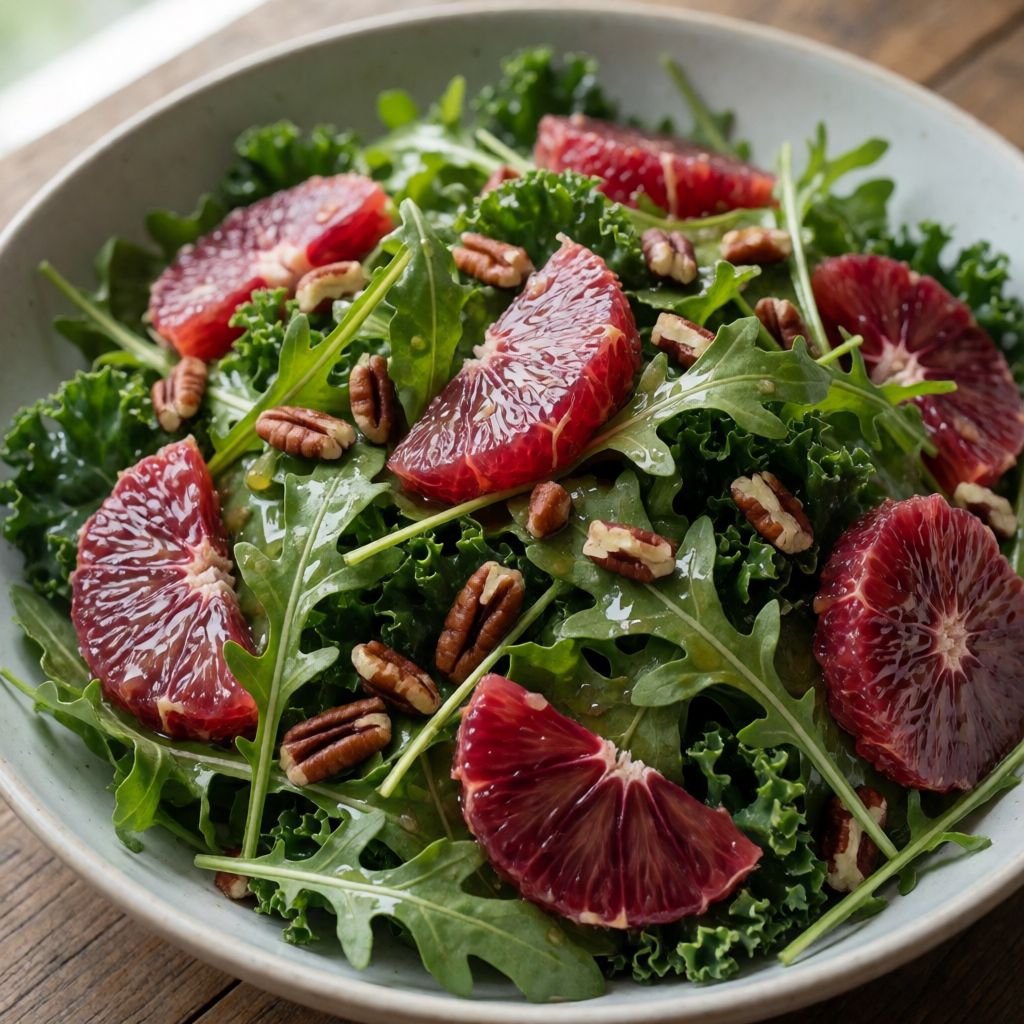
 AI photo
Blood Orange and Rocket Salad
A refreshing salad of blood oranges, peppery rocket and kale, finished with toasted pecans.
Labels are worked out automatically from the ingredients and can be wrong. Check the packaging if it matters to you.
Ingredients
- 3 pcs Blood orange
- 130 g Rocket
- 100 g Kale finely chopped
- 50 g Pecans roughly chopped
- 2 tbsp Olive oil
- 1 tbsp Apple cider vinegar or pomegranate vinegar
- 1 tsp Mustard
- 1 tbsp Honey







Steps
Whisk together the olive oil, apple cider vinegar, mustard and honey to make a dressing, then toss the rocket and kale in it until well coated.
Transfer to a bowl.
Peel and segment the blood oranges, removing the skin and pith.
Add the orange segments to the salad and sprinkle with the roughly chopped pecans.
This is not a cooked dish — nothing here meets heat — so the whole question of whether it works comes down to texture and timing, not temperature. You've got four different textures fighting for attention: tough, slightly bitter kale; peppery, soft rocket; sweet-sharp orange that wants to fall apart; and pecans that want to stay crisp. The recipe works when you let each one do its own thing at its own moment, not when you throw everything into a bowl at once and hope for the best.
The order matters more than any single ingredient. Dress the kale and rocket first, before the orange goes anywhere near them — and give it a minute, not a second. Kale off the stalk is basically grass with ambitions: raw, it's stiff and a bit bitter, held together by cell walls that don't care about your dinner plans. Oil and acid work on those walls the same way a marinade works on meat, just gentler and faster — the leaf goes from glossy and rigid to something you can actually chew without fighting it. Rocket doesn't need this, it's already soft, but it rides along in the same bowl and takes no harm from the wait.
Some say a salad must be dressed at the very last second or it turns to mush — true for butterhead lettuce, which is mostly water and collapses the moment acid touches it. Not true here. Kale is the opposite problem: it needs that few minutes of contact to become edible in the first place. So the rule about last-minute dressing isn't a rule, it's a description of a different, more fragile leaf.
The dressing is small but it's doing real engineering, not just flavour. Oil and vinegar don't want to mix — that's just physics, oil is fat, vinegar is water-based, they separate the second you stop whisking. Mustard is the fix: it contains mucilage, a natural gum that clings to both and holds them together as an emulsion instead of a puddle with a slick on top. Honey does two jobs — it rounds off the sharpness of the vinegar so it reads as bright rather than harsh, and it adds a little body that helps the emulsion hold a bit longer once it's sitting in the bowl. Don't skip the mustard thinking it's just for taste; without it you've got a dressing that splits the moment you turn your back.
For the oil: olive oil here isn't just tradition, it's got its own bitterness that sits well against kale's bitterness and rocket's pepper — like calls to like. If you want a substitute, the test is whether the oil has a flavour of its own that will compete rather than support; a flavourless rapeseed or sunflower oil will carry the dressing fine, but you lose that little bitter echo. Use it if that's what's in the cupboard — this isn't a dish that collapses without olive oil, just one that's quieter without it.
For the acid: cider vinegar and pomegranate vinegar share a criterion — both are fruity acids, not raw-sharp ones like white vinegar or malt vinegar, which would fight the orange instead of framing it. Lemon juice does the same job if you've got citrus already open and no vinegar you trust.
Blood orange itself is a winter guest in this country — it comes in through Sicilian imports roughly December to March, which is exactly when good green salad leaves are thin on the ground and citrus is doing its best work filling that gap. If you can't get blood orange, a normal orange works, but you lose the deep red colour and a slightly more wine-like edge to the sweetness; a few pomegranate seeds scattered in, or a teaspoon of pomegranate molasses stirred into the dressing, brings some of that colour and tang back without pretending to be something it isn't.
Kale: chop it fine, as the recipe says, because the finer the cut the more surface area is exposed to the dressing — more contact, faster softening, less time standing around waiting for stiff leaves to give in. Lacinato or curly kale both work; what you're buying it for is the chew and the slight bitterness, not a specific variety.
Pecans go in last and dry, straight onto the finished salad, because nuts and wet dressing are a short unhappy marriage — give them even a few minutes of contact with liquid and they go from crisp to soft, and crisp is the whole reason they're there. If you want more out of them, warm them briefly in a dry pan until they smell toasted rather than raw — you'll know by nose, not by the clock — then let them cool before they touch the bowl. This feeds four as a side, which in a Sunday roast context means: the thing on the table that cuts through all that fat and gravy, not the thing you're relying on to fill anyone up.