
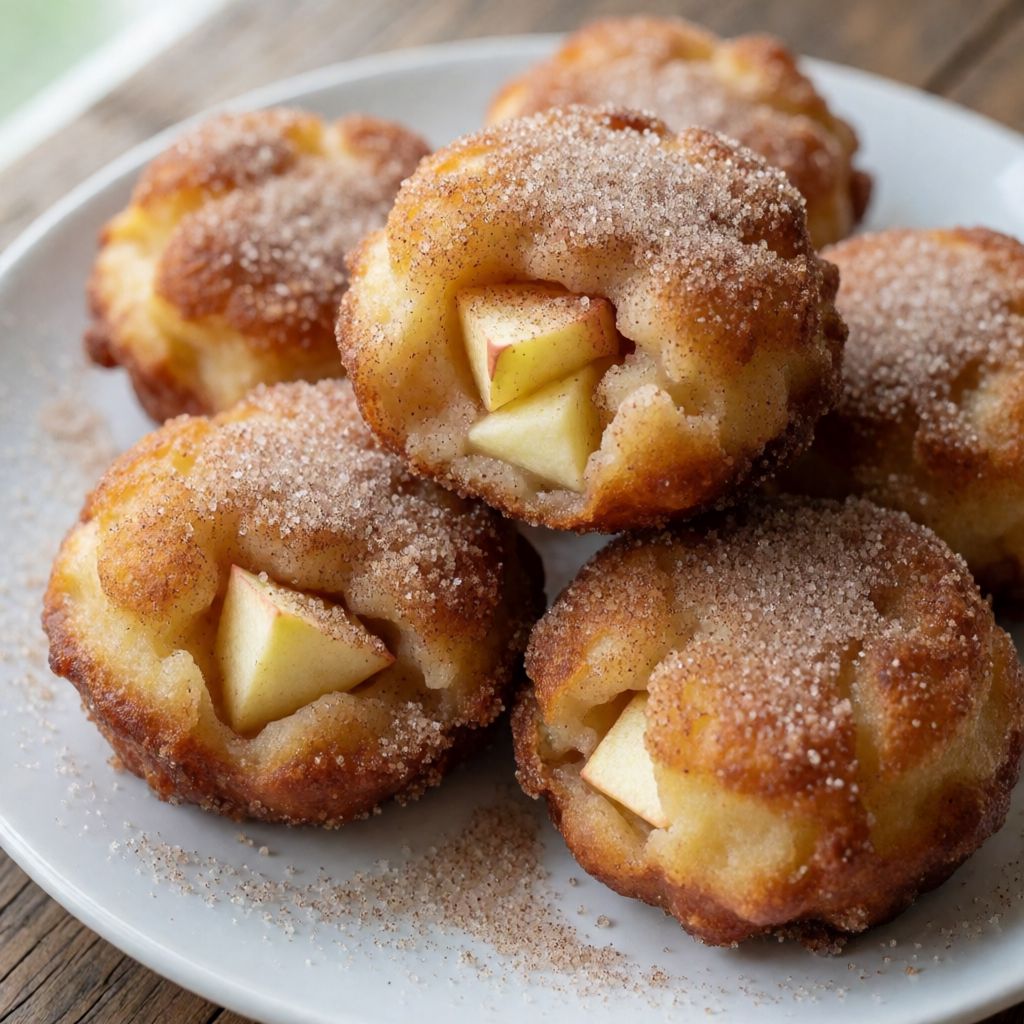
 AI photo
Air Fryer Apple Fritters
Crisp apple slices dipped in a light batter and cooked in the air fryer, then dusted with sugar and cinnamon.
Labels are worked out automatically from the ingredients and can be wrong. Check the packaging if it matters to you.
Ingredients
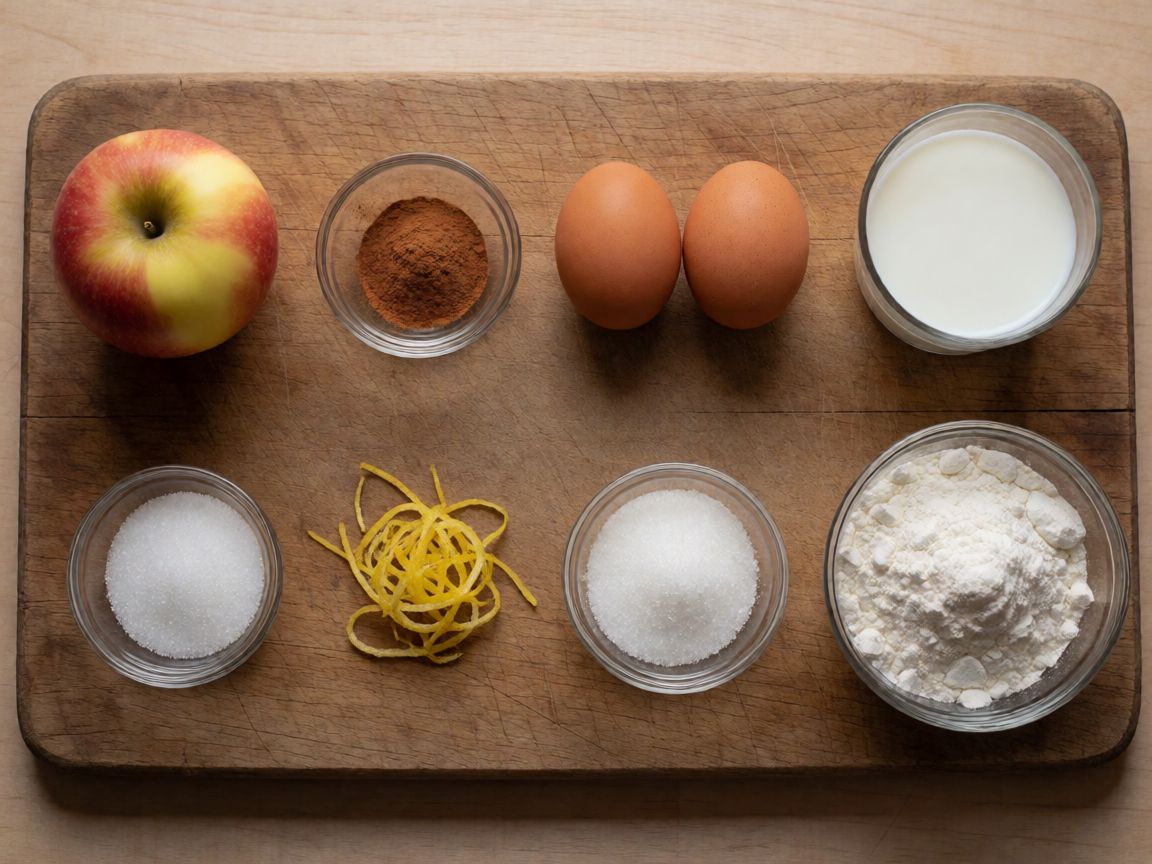
- 2 pcs Apple
- 1 pinch Sugar to taste
- 1 pinch Cinnamon to taste
- 1 pcs Eggs
- 40 g Sugar
- 100 ml Milk
- 1 pcs Lemon zest from half a lemon
- 130 g Rice flour or plain flour
- 8 g Baking powder
- 50 ml Vegetable oil for frying








Steps
In a bowl, mix the eggs with the sugar (40 g), add the milk and flavour with the grated zest of half a lemon.
Sift in the rice flour and baking powder and whisk well.
Chill the batter in the fridge.
30 minWash the apples well and cut them into slices crosswise. Cut out the core with the seeds using a cutter or the tip of a piping bag.
Dip the apple slices in the batter and place them on parchment in the air fryer basket, lightly spritzing with oil.
Cook at 180°C, turning the slices halfway through the time.
10 minBrush the hot fritters with milk, then sprinkle with sugar and cinnamon.
Cool and serve.
What you're making here is an apple fritter that never sees a drop of frying oil in the pan sense — the air fryer does the job hot air does: it crisps a thin batter shell while the apple inside steams in its own juice. That's the whole mechanism. You're not deep-frying, so forget the myth that fritters need a pan of oil three inches deep to "seal properly" — there's no seal to speak of here, there's a coating that sets and browns because hot air moving fast dries a surface the same way a pan of fat does, just without the fat doing the carrying.
What decides success is the ring cut through the apple and the thinness of the batter coat. The apple slice is a wheel with a hole punched out — that hole is there so the centre cooks at the same rate as the edge, because a solid disc of apple left whole would stay raw-crisp in the middle while the rim goes soft and the batter burns waiting for it. Cut the rings even in thickness or you get one ring done and its neighbour still crunching like a radish.
The batter itself has one job: cling thin, not drip. Milk and egg hold it together, rice flour (or ordinary flour if that's what's in the cupboard) gives structure without a strong taste of its own fighting the apple and lemon, and baking powder lifts it just enough to turn "coated apple" into something with a bit of crumb, not a shell of wet paste. Chilling the batter for half an hour isn't decoration — cold batter is thicker and sits on the apple instead of sliding off into a puddle on the parchment.
Eggs and the 40g of sugar are whisked first because sugar dissolving into egg, before any flour goes in, gives you a smoother batter — sugar left to meet flour and liquid all at once tends to sit gritty, especially with rice flour which doesn't dissolve things the way wheat starch can. The milk loosens that egg-sugar base to pouring consistency; lemon zest goes in at this stage, not later, because zest's oils need a fatty, liquid medium to release into — add it dry to flour and most of its scent stays locked in the peel you throw away.
Rice flour over plain flour isn't tradition, it's behaviour: rice flour has no gluten to speak of, so the coating stays short and a little brittle rather than chewy — closer to tempura logic than to a doughnut logic. If you only have plain flour, use it; you'll get a softer, slightly more bread-like crust, not a disaster. The baking powder (8g, which is a proper tablespoon, not a pinch) is there to give the coating some lift as it sets in the heat, so it doesn't bake down into a flat skin stuck to the apple.
Apples: pick ones that hold shape when warm — a Bramley collapses into mush in ten minutes of heat, so go for something firmer, a Braeburn or Gala, anything you'd happily eat raw with a bit of bite left. Core the centre out with a small cutter or the tip of a piping bag nozzle; a knife works too if you're careful, the point is a clean round hole, not a torn one, because torn edges leak juice unevenly and scorch first.
The oil here is 50ml and it's not for frying in the usual sense — it's for spritzing the basket and the tops of the fritters so the air fryer's hot air has something to crisp against. Any neutral oil with no smell of its own does this: sunflower, a light vegetable oil, rapeseed if that's what's under your sink. Olive oil is the wrong tool here, its own flavour and lower smoke point get in the way rather than help.
On the hob reality: an air fryer basket is small and crowded quickly turns into steamed-not-crisped fritters, so don't pack the rings in touching each other — give each one air on all sides, that's the entire point of the appliance. Turning them halfway through the ten minutes isn't fussing, it's because the heating element usually sits above or around, not evenly wrapping, so one side left untouched stays pale and slightly damp.
Brushing the hot fritters with milk the moment they come out, then dusting cinnamon sugar on top, works because warm milk on a hot surface tacks the sugar on instead of letting it bounce off a dry crust — do it cold and most of your sugar ends up on the plate, not the fritter. Patience matters twice here: once in the fridge for the batter to firm, once at the end to let the fritters cool a little before you eat — straight from the basket the apple centre is still finishing its own heat, and a minute's wait is the difference between tasting apple and tasting steam.