
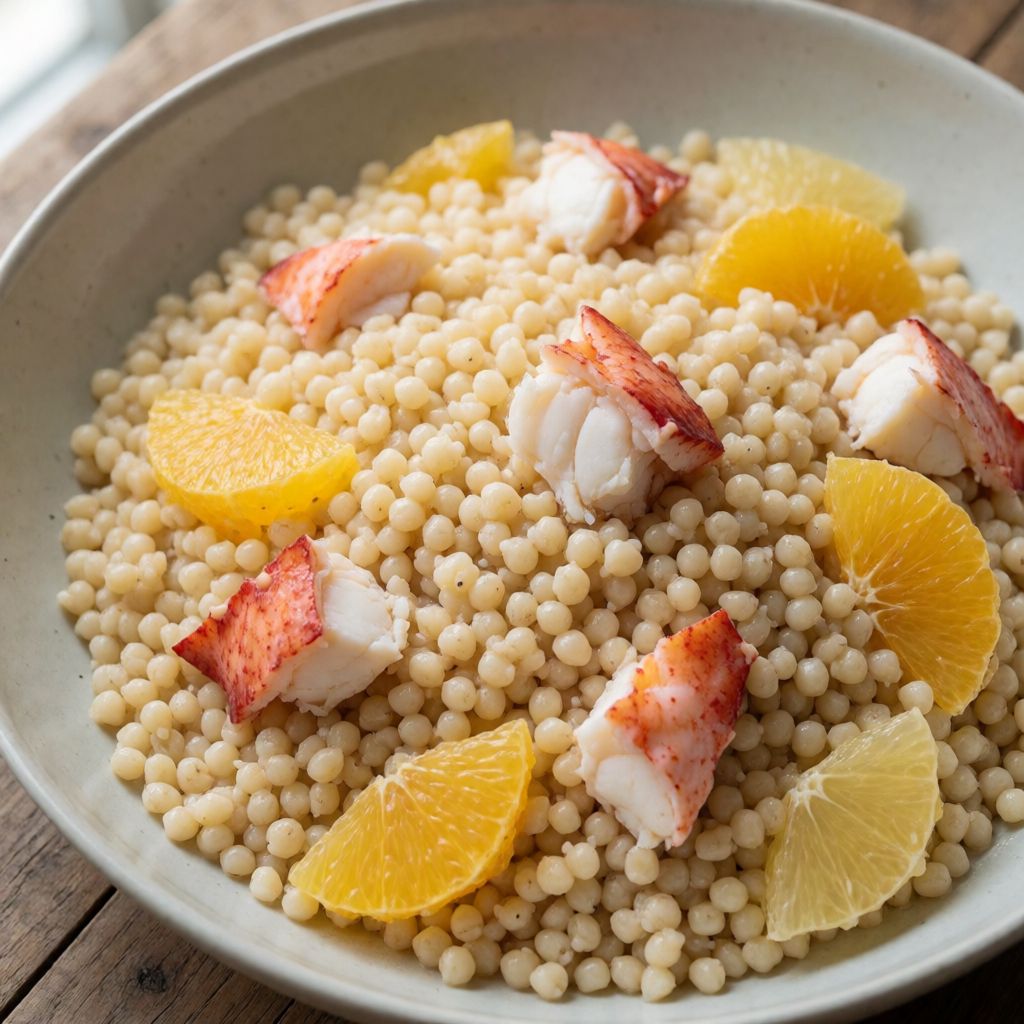
 AI photo
Catalan-Style Fregola Salad
A refreshing fregola salad with lobster, citrus and crisp vegetables, inspired by Catalan flavours.
Labels are worked out automatically from the ingredients and can be wrong. Check the packaging if it matters to you.
Ingredients
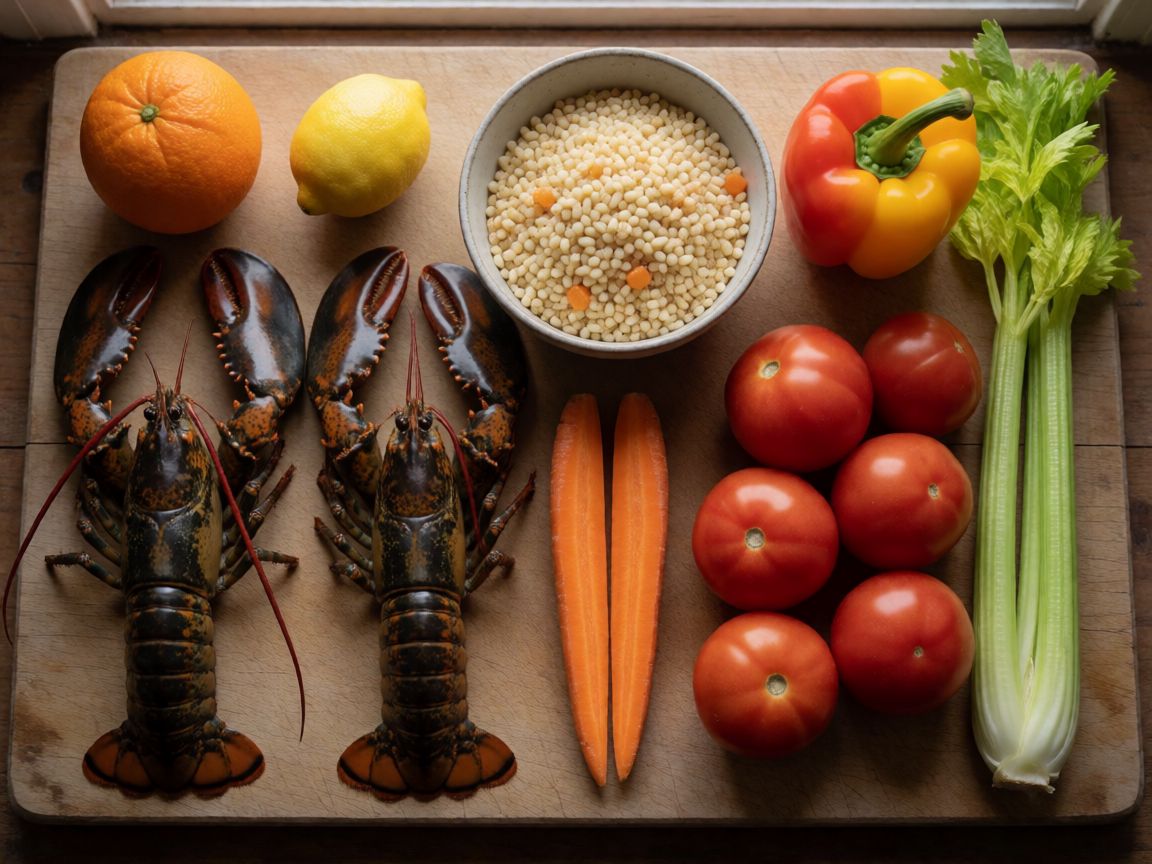
- 100 g Fregola
- 2 pcs Lobster
- Salt to taste
- Black pepper to taste
- 1 pcs Orange
- 1 pcs Lemon
- 1 pcs Yellow bell pepper
- 5-6 pcs Cherry tomatoes
- 1/2 pcs Carrot
- 1/2 pcs Celery stalk
- 1 pcs Onion
- Olive oil a drizzle
- Parsley a sprig









Steps
Dice the yellow bell pepper and carrot into pieces about the size of the fregola.
Dice half a celery stalk and a piece of onion to the same size.
Remove the seeds from the cherry tomatoes and dice them.
Put the vegetables in a bowl, add grated lemon and orange zest, squeeze in the lemon juice, add salt, pepper and olive oil, and mix.
Cook the fregola in salted boiling water.
10 minCool the fregola in a colander.
Blanch the lobsters.
4 minSeparate the lobster tail from the head.
Cut the shell open with scissors and remove the meat.
Crack the claws, chop the meat and add it to the vegetable mixture.
Mix, then add the cooled fregola.
Plate the fregola salad and place the lobster medallion on top.
Finish with a sprig of parsley, lemon zest, a drizzle of olive oil and a pinch of black pepper.
Fregola is Sardinian, lobster is Catalan dressing logic, and the whole dish is really a lesson in not cooking the sea creature to death while everything around it stays raw and bright. It's a composed salad, not a tossed one — vegetables marinate while the pasta cooks, and only at the end do the two worlds meet. What decides whether it works isn't the lobster at all — it's whether you dice the vegetables to the size of the fregola itself. Get that wrong and you've made two separate dishes sharing a plate: big wet lumps of pepper next to tiny dry pearls, no bite ever tasting balanced.
Fregola looks like couscous but isn't made the same way — it's rolled and toasted, which is why it keeps a nutty, almost roasted edge even after boiling, and why it doesn't turn to mush the way couscous can if you blink at it. Some say any small pasta pearl will do — no, because the toasting is the point; swap in plain couscous and you lose the chew and the flavour both, though a small toasted pasta like orzo cooked a touch firmer will get you closer than couscous ever will.
Why marinate the vegetables while the pasta boils, rather than toss everything together cold at the end? Citrus zest and juice are doing actual work here — the acid in the lemon is lightly "cooking" the raw pepper, carrot and onion the way ceviche works on fish, softening the rawness at the edges without heat. Give that ten minutes while the fregola simmers and you're not wasting time, you're using it — patience here isn't virtue for its own sake, it's an ingredient, same as the salt.
On the vegetables: carrot and celery give crunch and a faint sweetness-bitterness balance that's classic in any raw salad base — if you haven't got celery, use the pale inner stalks of a fennel bulb instead, same crisp-watery texture, different perfume but it won't fight the orange. Yellow pepper is chosen for sweetness and colour, not character — red would work, green would turn the whole thing bitter and muddy against the citrus, so skip it. Cherry tomatoes get their seeds out for one plain reason: seeds and their gel carry excess water, and water pooling at the bottom of a composed salad is how you end up with a soggy pile instead of a dressed one.
The orange and lemon together aren't decoration — zest gives fragrance without sourness, juice gives the acid that both marinates the veg and later cuts through the richness of lobster meat, which for all its prestige is quite fatty and benefits from something sharp alongside it. Use a fine grater for the zest and only take the coloured skin, not the white pith underneath — pith is where all the bitterness your nan warned you about actually lives.
Olive oil here wants to taste of something — this is a dish built on fruit and raw veg, so a fruity extra virgin earns its place, unlike in, say, a béchamel where any neutral fat would do. If olive oil isn't to hand, any cold-pressed oil with a clean, pleasant smell of its own will substitute — sunflower won't, because it brings nothing and the salad needs that oil to carry flavour, not just slickness.
On the lobster itself: two whole lobsters for two people sounds generous until you remember how much of a lobster is shell. Blanching, not boiling hard, is the method because a rolling boil agitates the shell against the meat and can toughen the surface before the inside's even set — a gentler simmer-blanch cooks more evenly through. Cracking the claws with the back of a knife or proper crackers rather than brute force matters too: shatter the shell carelessly and you drive splinters into the meat, which nobody wants to find halfway through a mouthful.
One more thing worth saying plainly, since this is a kitchen used to a Sunday roast rather than a kazan or paella pan: you don't need special equipment for any of this, just a pot big enough that the fregola isn't crowded (crowding is what makes starchy water turn pasta gluey) and a colander you can shock the fregola in afterwards to stop it cooking on residual heat. That's the whole secret of a "chilled but not stodgy" grain salad — the cooking doesn't stop just because the pot's off the heat, so get it into cold air or a cool rinse promptly.