
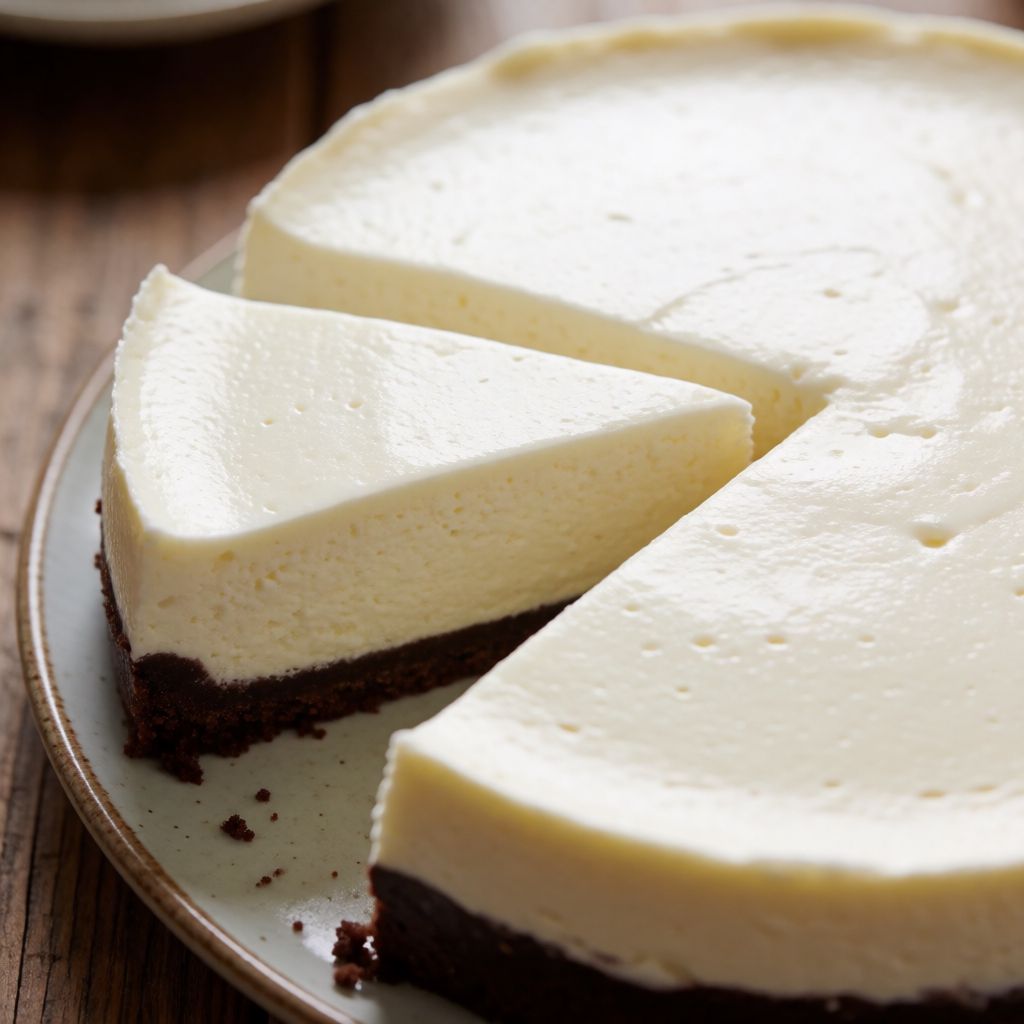
 AI photo
No-Bake Chocolate and Cream Cheesecake
A rich no-bake cheesecake with a chocolate biscuit base, topped with a chocolate cream layer and a cream cheese and mascarpone layer.
Labels are worked out automatically from the ingredients and can be wrong. Check the packaging if it matters to you.
Ingredients
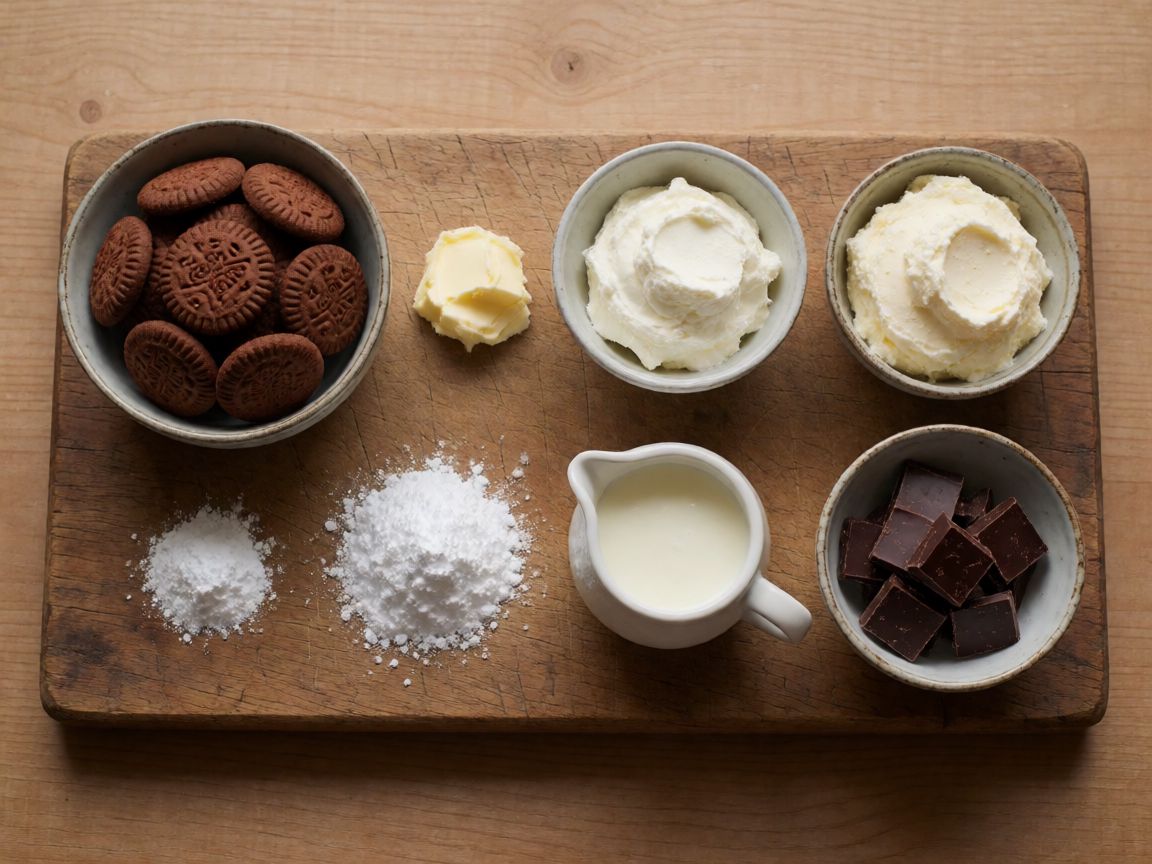
- 300 g Cocoa biscuits
- 150 g Butter melted
- 250 g Cream cheese
- 250 g Mascarpone
- 150 g Icing sugar
- 10 g Gelatine
- 200 ml Double cream
- 250 g Dark chocolate






Steps
Crush the biscuits in a blender to fine crumbs, melt the butter and mix with the crumbs until even.
Press the mixture into the base of the tin and pack firmly to form an even, compact base.
Chill the base in the fridge.
30 minMelt the dark chocolate over a bain-marie or in the microwave and leave to cool.
Soak the gelatine in cold water.
10 minWarm 50 ml of the double cream and dissolve the softened gelatine in it, then leave to cool.
Mix the mascarpone, cream cheese and icing sugar until smooth.
Add the cooled gelatine mixture and gently fold in 150 ml of whipped double cream.
Divide the cream mixture in half. Stir the melted chocolate into one half.
Spread the chocolate cream over the base and chill in the fridge.
30 minSpread the cheese cream on top and smooth the surface.
Chill the cheesecake in the fridge.
180 minDecorate with chocolate shavings before serving.
This is a cheesecake that never sees an oven — it sets by chemistry, not heat. Two layers of cream sit on a biscuit base: one plain, one laced with melted chocolate, each held up by gelatine and a little whipped air from the cream. What decides whether it works isn't flavour, it's structure — whether each layer is firm enough to carry the next one without bleeding into it.
Some say a no-bake cheesecake is "easier" than a baked one. No — it's a different set of risks. A baked cheesecake fails by cracking or overcooking; this one fails by collapsing, by layers merging into a grey-brown smear, by a base that goes soft and sandy underfoot. The oven punishes carelessness with heat; the fridge punishes it with time and patience you didn't spend.
The base is simple mechanics: biscuit crumb plus melted butter is just a binder — the fat coats the crumbs and glues them together when it re-solidifies in the cold. Pack it loosely and the fat pools unevenly, so when you slice, half the base stays on the plate. Press it down — a glass, the back of a spoon, your knuckles — and chill it properly before anything else goes on top. That chill isn't decoration, it's the only thing stopping your first cream layer from soaking straight into loose crumbs.
Each chilling time in this recipe is a lower bound, not a clock to race. Thirty minutes for the base, thirty for the chocolate layer, three hours for the whole thing — those numbers assume a domestic fridge, not a blast chiller, and a London fridge in August behaves differently from one in January. Press a fingertip gently into the chocolate layer before you add the cheese cream: if it leaves a dent and doesn't spring back, it's not ready, however long the clock says you've waited. Patience is the one ingredient on this list you can't buy more of — you just have to give it.
Cocoa biscuits are there for structure and bitterness, not sweetness — any biscuit that's dry and snaps clean will work, chocolate digestives if that's what's in the cupboard, even plain digestives with a spoon of cocoa powder worked in if you want the dark edge back. The butter should be unsalted or nearly so; its job is pure fat-as-glue, and if it's salted, you've just seasoned your base by accident.
Cream cheese and mascarpone do different jobs though they look similar in the tub. Cream cheese brings tang and a slight sourness that stops the whole thing tasting like frosting; mascarpone brings fat and silkiness with almost no tang at all. Use only one and you tip the balance — all cream cheese and it's sharp and slightly thin; all mascarpone and it's rich to the point of dull. If you've only got one, lean toward cream cheese and add an extra splash of cream to soften the edge.
Icing sugar rather than caster matters here because nothing in this dessert gets heated enough to dissolve a coarse crystal — caster sugar in a cold, unheated cream mix will sit there gritty under the tongue. Icing sugar is already fine enough to vanish.
The gelatine: 10g of leaf or powdered both work, but leaf gives a cleaner set and less risk of lumps, which matters more here than in a cooked custard where heat would smooth your mistakes for you. If you can't get gelatine, a vegetarian setting agent like agar needs to be boiled, not just warmed, which changes step 6 — agar won't forgive the gentle warm-and-dissolve treatment gelatine gets.
Double cream is whipped only to soft, floppy peaks — not stiff. Whip it stiff and folding it into the cheese mixture knocks the air back out, and you lose the lightness that's supposed to separate this from a brick of plain cream cheese. The 50ml warmed for the gelatine stays liquid cream; the 150ml whipped is the only part doing aeration. Don't confuse the two jobs or use all the cream for one.
Dark chocolate, melted and cooled before it meets the cream, needs to be properly cooled — warm chocolate straight into cold cheese mixture will seize slightly and streak rather than blend, the same seizing logic as the gelatine. A chocolate with 60–70% cocoa keeps the flavour honest against all that sugar and fat; much higher and it fights the sweetness of the icing sugar rather than balancing it; milk chocolate and you've made something closer to a mousse cake than a cheesecake proper.