
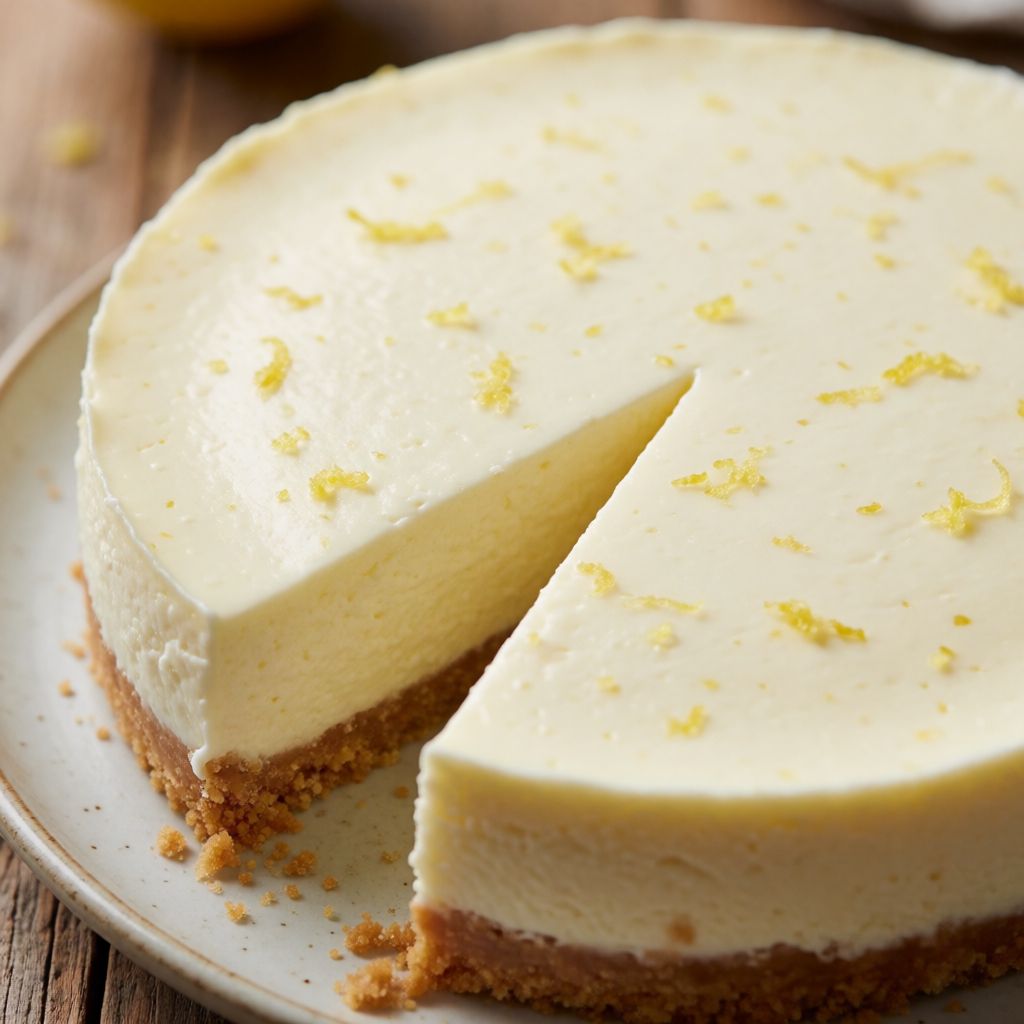
 AI photo
No-Bake Lemon Cheesecake
A creamy no-bake lemon cheesecake with a buttery biscuit base, chilled until set for a light citrus dessert.
Labels are worked out automatically from the ingredients and can be wrong. Check the packaging if it matters to you.
Ingredients
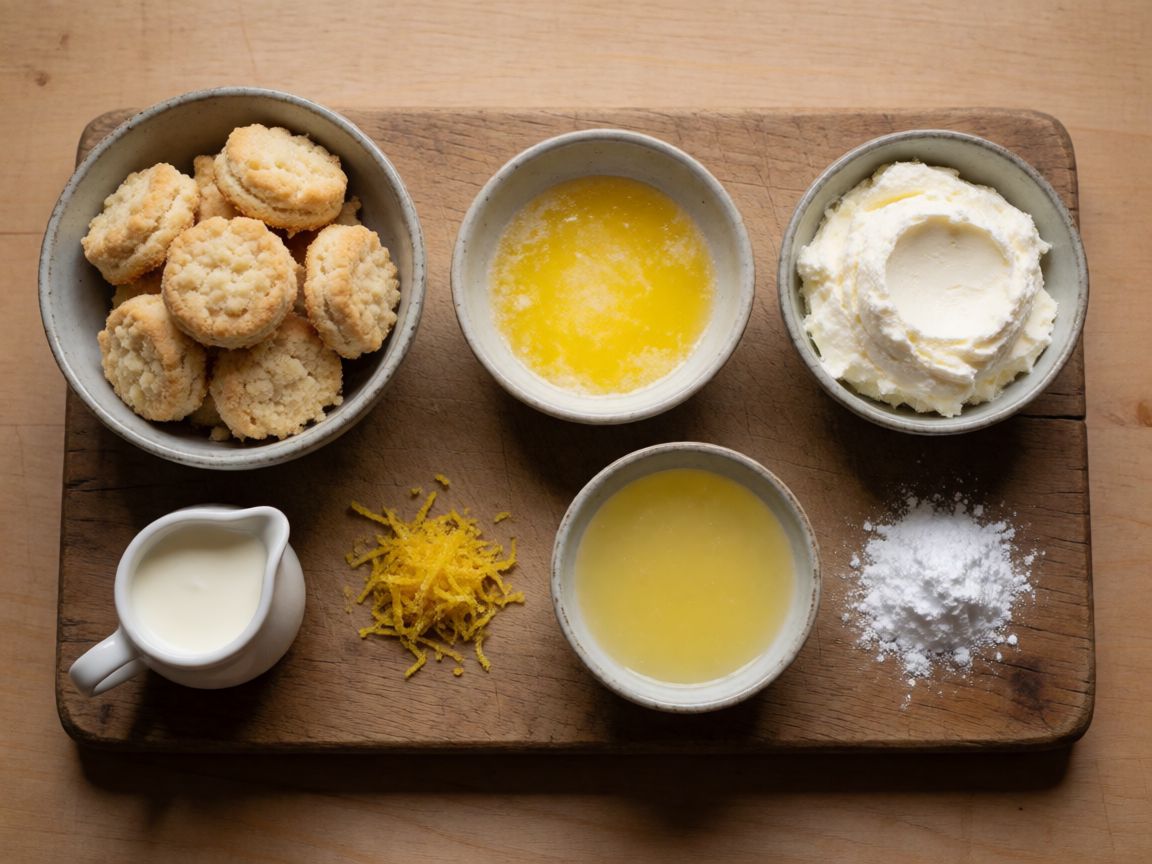
- 360 g Digestive biscuits
- 170 g Butter melted
- 300 g Mascarpone
- 250 ml Double cream
- Lemon zest from 2 lemons
- 30-40 ml Lemon juice
- 130 g Icing sugar







Steps
Blitz the biscuits in a blender until fine crumbs, then stir in the melted butter.
Mix well with a spoon and flavour with the zest of one lemon.
Press about two-thirds of the mixture into a 22cm springform tin lined with baking paper, pressing down firmly and shaping the sides.
Chill the tin in the fridge.
30 minBeat the mascarpone with an electric mixer, then add the lemon juice and zest.
In a separate bowl, whip the cream with the icing sugar until thick.
Gently fold the cream into the mascarpone mixture.
Spoon the filling into the tin, spreading and levelling it.
Cover with the remaining biscuit crumbs and chill in the fridge before serving.
240 min
This is not a cheesecake in the way an oven understands the word. There's no egg here, no slow coagulation of protein that turns liquid into a blancmange you can slice. What holds this together is cold fat — twice. Once in the crust, where melted butter glues biscuit crumbs into a dry mortar as it re-solidifies in the fridge. And once in the filling, where whipped cream traps air inside a lattice of fat crystals, and mascarpone, which is almost all fat and barely any water, thickens around that air instead of weeping out of it. Take away the chill and you have biscuit soup with cream in it. The fridge is doing the job an oven would do elsewhere — it's just slower and gentler about it.
What actually decides whether this works: the butter has to be melted, not boiling, so it coats the crumbs rather than cooking them, and the crumbs have to be fine enough that the butter reaches every piece — a few big chunks left unbuttered and that's where your base will crack when you lift a slice. Then the cream has to be whipped to the point where it holds a shape but still looks like cream, not past it, because cream whipped too far already has little flecks of butter in it, and fold that into acidic lemon juice and mascarpone and you get grain, not silk. Folding, not beating — a wide spoon, slow turns, because the whole point of whipping the cream was to put air into it, and vigorous mixing afterwards just knocks that air straight back out.
Some say you can speed all this up in the freezer. No — because a freezer doesn't just chill, it freezes, and ice crystals forming inside cream and mascarpone rupture the structure you just built by whipping. Thaw it and the filling weeps, goes watery and separates instead of holding its shape. The fridge is slow on purpose. That slowness is what gives you clean slices instead of a collapsing wedge.
The biscuit: digestives are what you'll see in every British version of this, and that's economics as much as taste. They're a plain, not-too-sweet biscuit, dry and a little bran-textured, built originally to be cheap and filling, and that dryness is exactly why they take on butter so well without turning to paste. The criterion, if you want to swap: any plain biscuit that shatters into dry crumbs rather than going soft and chewy — oat biscuits, graham crackers, even ginger nuts if you want a different edge against the lemon. Something soft and already a bit moist, like a shortbread with a high butter content of its own, will leave you with a greasy base that never quite sets hard.
Butter: melted, unsalted. It's not flavour here, it's glue, and the amount matters more than it looks — too little and the crumb stays loose and falls apart on the plate, too much and the base turns slick and won't firm no matter how long it sits. If all you've got is salted butter, don't panic, just taste the crumb mix before you press it in and know the salt is doing a small, pleasant job of cutting the sweetness, not ruining anything.
Mascarpone is the backbone of the filling, and it's chosen for one reason: it's nearly all fat with very little water in it, which is why it thickens and holds shape when beaten instead of turning runny. Cream cheese will substitute at a pinch, but it carries more water and less fat, so the filling will be looser — cut the cream slightly or add a touch more zest to firm up the flavour and distract from the wetter texture. Ricotta is the wrong direction entirely: too much water, too much graininess, and it will never give you that smooth set.
Double cream earns its place for one number: fat content, well above 35%. That's the threshold at which cream will actually whip and hold air rather than just sit there as thickened milk. Anything lighter — single cream, half-fat alternatives — won't whip at all, it'll just slosh. Whip it to soft peaks, no further; this is the one place in the recipe where going too far costs you the whole dessert.
Lemon: zest before you juice, always, because once you've squeezed a lemon it collapses and you've no shape left to grate against. The zest carries the fragrant oils that actually smell of lemon; the white pith underneath tastes only of bitterness, so keep the grater shallow. The juice does two jobs — it's the sharpness that cuts the fat of the cream and biscuit, and it very gently tightens the dairy, the same way a squeeze of lemon firms up a sauce, though don't expect it to curdle anything on its own at this quantity. Icing sugar, not granulated, because it dissolves into cold cream with no heat to help it — granulated sugar in an unheated mixture just sits there as grit.