
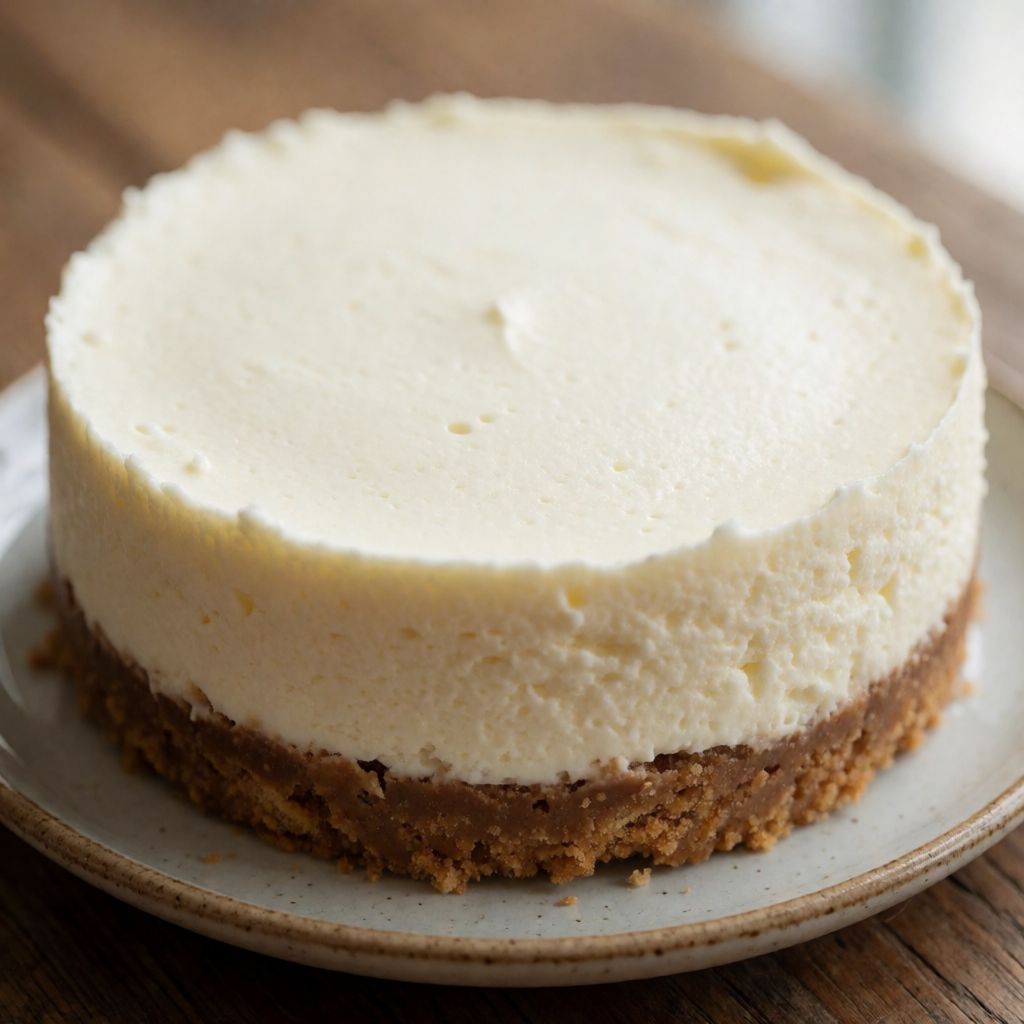
 AI photo
No-Bake Tiramisu Cheesecake
A creamy no-bake cheesecake with the flavours of classic tiramisu.
Labels are worked out automatically from the ingredients and can be wrong. Check the packaging if it matters to you.
Ingredients
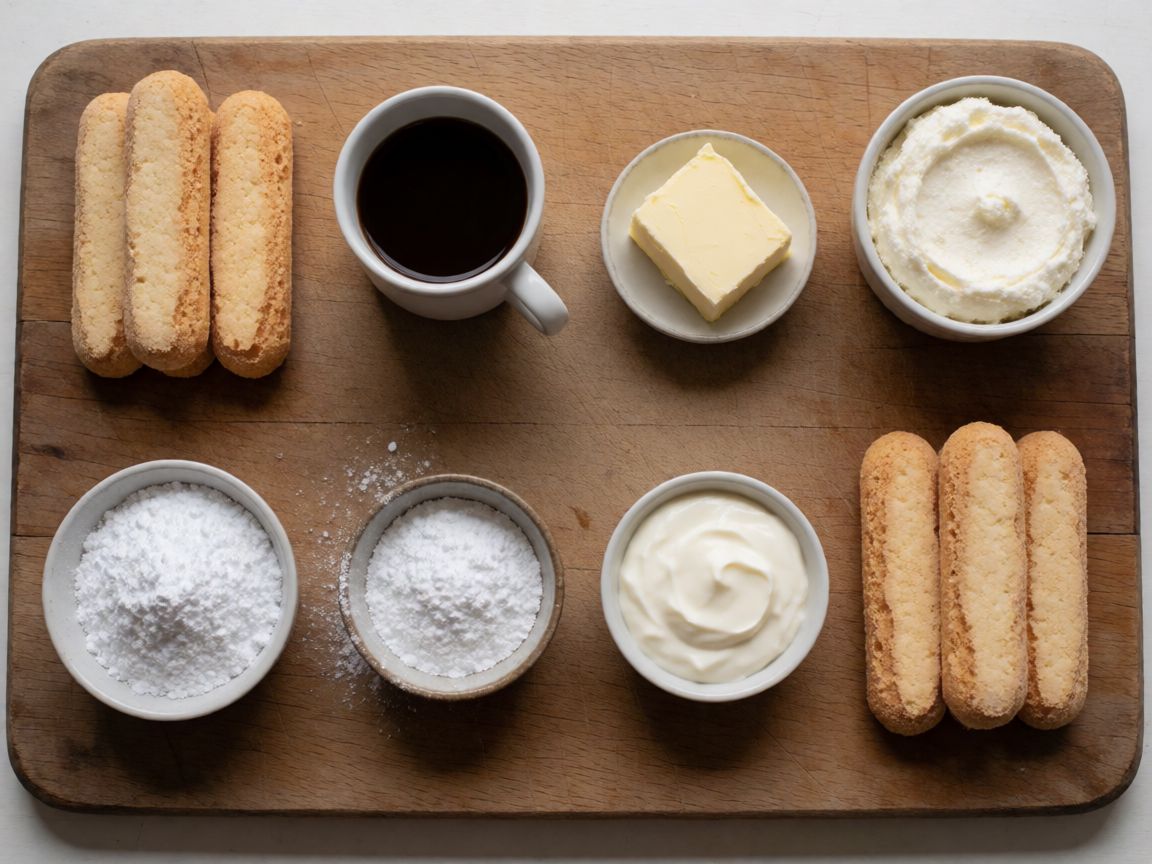
- 200 g Savoiardi (sponge finger) biscuits
- 100 g Butter melted
- 50 ml Coffee brewed, cooled
- 250 g Mascarpone
- 250 ml Double cream
- 25 g Icing sugar
- 8 g Gelatine
- Savoiardi (sponge finger) biscuits for dipping
- Coffee for dipping
- Cocoa powder for dusting





Steps
Crush the savoiardi biscuits by hand or in a blender, combine with the melted butter and add the coffee.
Press the mixture into a baking tin lined with parchment, level the base and chill in the fridge.
30 minSoak the gelatine in cold water, then squeeze it out.
10 minWarm 50 g of the double cream and dissolve the gelatine in it.
Combine the remaining double cream with the icing sugar and whip with a mixer until thick and fluffy.
Soften the mascarpone and fold it into the whipped cream, mixing gently.
Pour in the dissolved gelatine and mix until smooth.
Spread half of the cream over the base.
Dip the savoiardi biscuits in coffee and arrange them over the layer of cream.
Cover with the remaining cream and chill in the fridge.
240 minRemove the cheesecake from the tin and dust with cocoa powder.
This is tiramisu that's given up on eggs and marsala and decided to set itself with gelatine instead, so you can slice it like a cake rather than spoon it from a dish. No oven involved anywhere — the "bake" is really a fridge doing the work over several hours, which is both the whole appeal and the whole discipline of the thing.
Two things decide whether it stands up or slumps on the plate: how firm your base is, and whether your cream actually holds a shape before the gelatine goes in. The biscuit base isn't just a crust — it's the floor of a cake with no walls, so if it's loose crumbs pressed half-heartedly into a tin, the first slice collapses sideways instead of standing. And the cream layer needs to be whipped to a point where it holds a ridge on its own; gelatine stiffens what's already thick, it doesn't rescue what's runny. Add warm dissolved gelatine to soup-like cream and you get streaks of jelly suspended in liquid, not a smooth set.
Some say gelatine desserts are a shortcut, lesser than the "real" baked or egg-set version. No — they're a different mechanism doing the same job: holding water and fat in a network so the thing can be cut. Tiramisu was never precious about method anyway — it's a café dessert built from cheap, available things (stale-ish biscuits, leftover coffee, cheese nobody wanted to eat on its own), reshaped a hundred ways because nobody was guarding a sacred recipe, just making the most of what was on the counter.
Savoiardi are built for this exact job — dry, airy, full of tunnels — which is why they soak up coffee fast without turning to mush the second they're wet. A denser sponge finger or, worse, a soft biscuit, will either refuse the coffee or dissolve into paste. If you can't find savoiardi, look for any dry, open-textured biscuit that's designed to absorb liquid — amaretti work in a pinch for the crust, though they'll shift the flavour toward almond. For the base you're crushing them anyway, so texture matters less there than for the dipped middle layer, where you want biscuit that still has some structure left after its coffee bath, not a brown smear.
Butter melted into the crumbs is doing a mechanical job, not a flavour one: it glues crumb to crumb once it cools and firms, the same way it does under a cheesecake base generally. Any fat that solidifies at fridge temperature will do this — butter is just the one with no smell loud enough to fight the coffee. Don't skip chilling this layer before building on it; a soft base under wet cream is how you get a cheesecake that cracks at the bottom the moment you try to lift a slice.
Mascarpone is the one non-negotiable identity marker of tiramisu — it's a high-fat, barely-tangy cheese, nothing like cream cheese, and it's what gives the filling its particular silky weight rather than a cheesecake tang. If you genuinely can't get it, a mix of full-fat cream cheese loosened with a little extra cream gets you closer than cream cheese alone, but understand you're now making a cousin dish, not tiramisu with a disguise.
The double cream and icing sugar are whipped first and the mascarpone folded in after, gently — this order matters because mascarpone is soft and low-structure on its own; whipped cream is what actually holds air and shape, and the cheese just rides along in that structure. Fold too hard and you knock the air back out, and the whole point of whipping was to get air in. Icing sugar rather than caster dissolves without that grainy catch on the tongue, which matters more here than in a cooked dessert where heat would dissolve coarse sugar anyway.
Gelatine is bloomed in cold water first because dropping it straight into warm liquid clumps the outside into a skin before the inside ever hydrates — you get rubbery lumps instead of an even set. Warming it in a portion of the cream, rather than throwing powder into the main bowl, gives it a liquid carrier so it disperses evenly through the whole mixture instead of setting in pockets. If gelatine troubles you — some diets avoid it, some kitchens never have it in — agar agar is the usual firm-set substitute, though it sets firmer and doesn't melt again in the mouth the way gelatine does, so the texture will read slightly more "jelly," less "cream."
Coffee appears twice doing two different jobs: in the base it's flavour mixed into fat and crumb, barely noticeable as liquid; in the dipping layer it's the main event, meant to be tasted as coffee, not just implied by it. Use something you'd actually drink — if your only coffee is instant granules dissolved in hot water, that's fine, tiramisu was built on café-strength filter coffee, not espresso ceremony, so don't feel you need a machine for this.
Cocoa dusted at the end is bitter contrast against all that sweet fat, nothing more — it's not baked in, so use a cocoa you'd be happy smelling raw, since there's no heat here to mellow a cheap, flat one.