
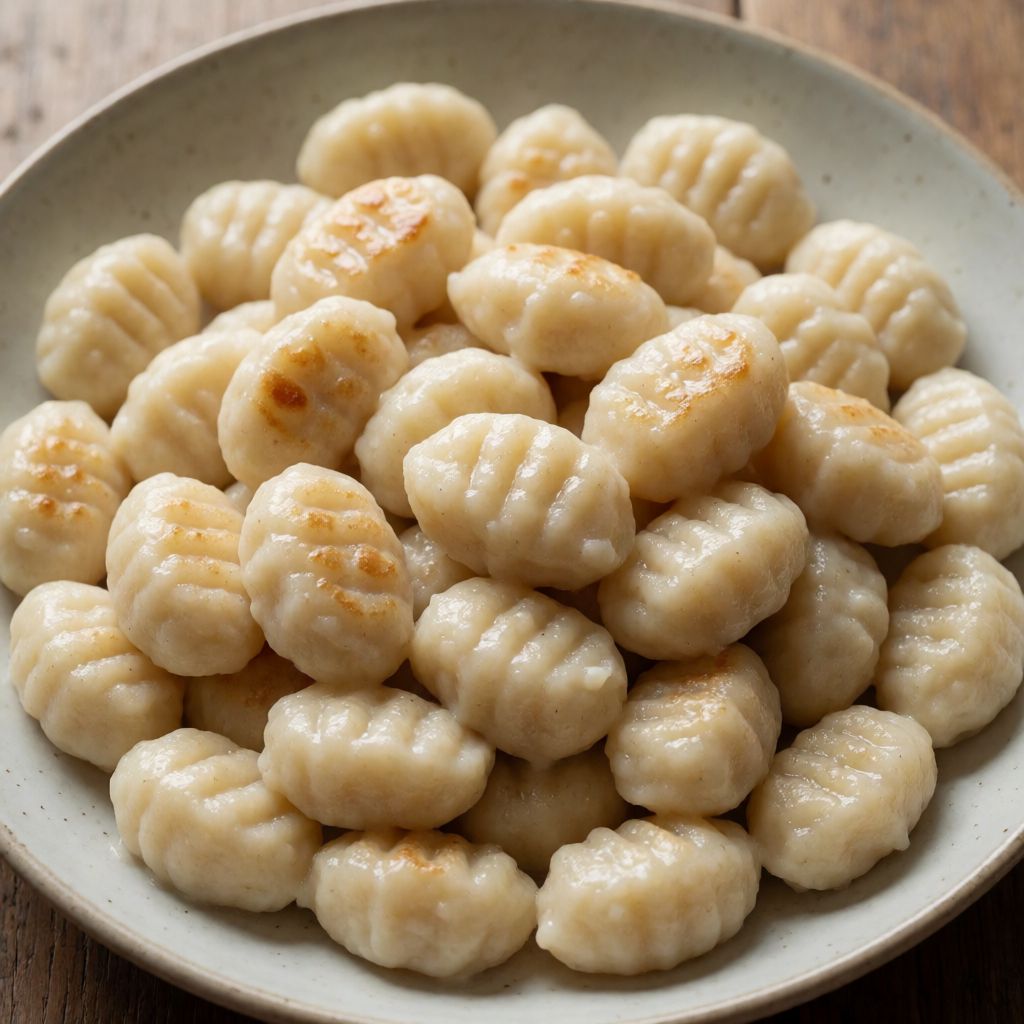
 AI photo
Chickpea Gnocchi
A simple gnocchi made from chickpeas instead of potato, with flour and a little salt.
Labels are worked out automatically from the ingredients and can be wrong. Check the packaging if it matters to you.
Ingredients
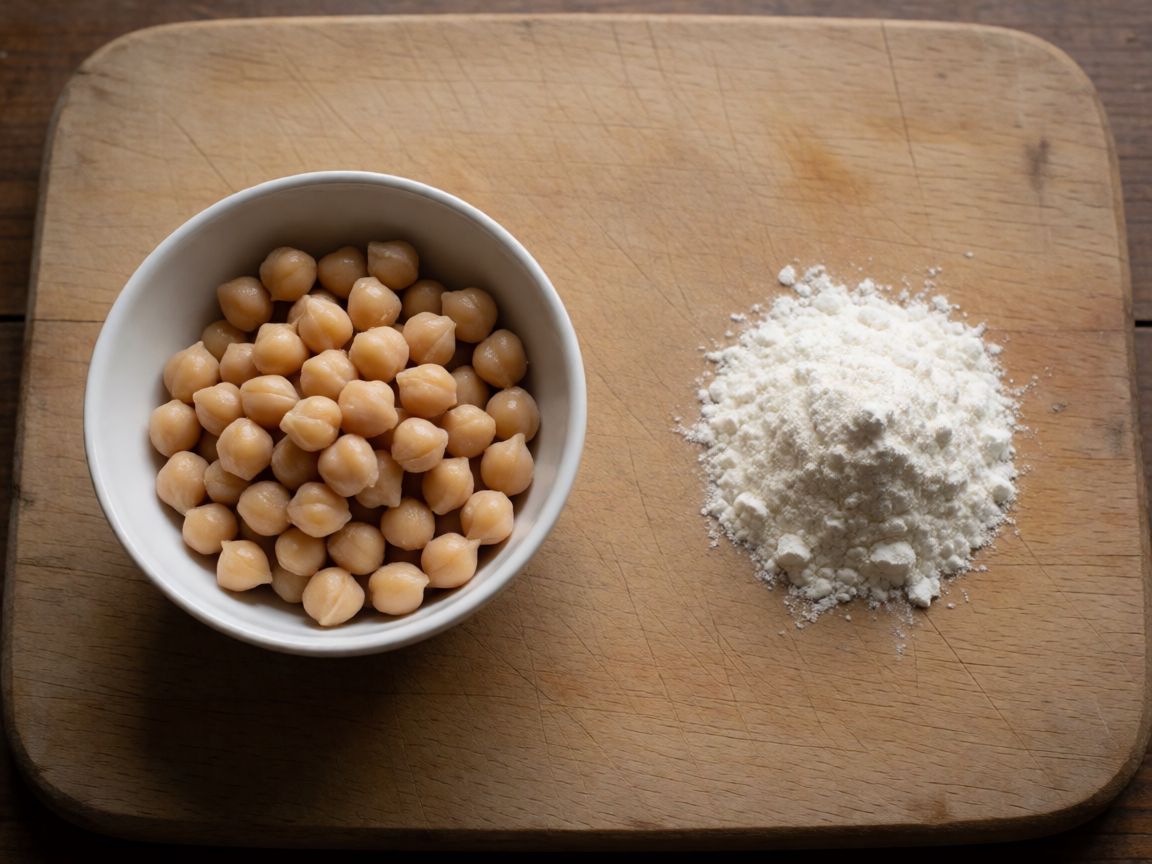
- 500 g Chickpeas
- 100 g Plain flour
- Salt to taste


Steps
Soak the chickpeas in cold water overnight, then boil until tender.
Blend the cooked chickpeas until smooth and creamy.
Add the flour and salt to taste, and mix well until you have a smooth dough.
Divide the dough into small pieces and shape into traditional gnocchi.
Place the gnocchi on a tray dusted with flour and refrigerate to rest.
Bring a large pot of salted water to the boil.
Cook the gnocchi in the boiling water, checking for doneness.
Remove the cooked gnocchi with a slotted spoon.
Serve sprinkled with grated Parmesan or Pecorino.
Chickpea gnocchi: forget for a second that "gnocchi" makes you think of potato. The word just means a small dumpling, pinched or rolled by hand. What decides this dish has nothing to do with potato memory and everything to do with water — chickpeas don't have the starch that potato has, the kind that turns to a soft gel when you mash it hot and needs almost no flour to hold together. Here the purée has to do all the work on its own, and it can only do that if it's dry and smooth.
Some say gnocchi must be potato, no exceptions — no, because the dish is older and poorer than that argument. In the lean months of the Italian south, whatever starchy thing was cheap and kept well got mashed with a little flour and shaped into something to fill a plate. Potato won out because it stayed cheap the longest. Dried chickpeas are the same idea from a different pantry: they cost almost nothing, they store in a sack through winter, no fridge needed. This is not an invented twist, it's the same economics wearing a different legume.
The one defect that ruins this dish every time is a wet purée. Undercook the chickpeas, or blend them without draining properly, and the mix stays loose — so you add more flour to get something that holds its shape, and more flour is exactly what turns a light dumpling into a dense, gluey one. Dry the purée down first. Add flour second, and only as much as the dough asks for, not a spoon more.
Start with the chickpeas themselves, because everything downstream depends on how well these are cooked. Dried, soaked overnight — that overnight is not fussiness, it's patience doing a job no quick method can replace: rehydrating the chickpea all the way to its core so it boils evenly instead of staying chalky in the middle while the outside turns to mush. Boil until a chickpea gives under light pressure from the back of a fork, no resistance, skin split open. If it still has a bit of bite to it, it will refuse to blend smooth, and a purée with grit in it means a dough with weak points — seams that burst open the second they hit boiling water. Tinned chickpeas will save you the overnight wait, but they carry more water with them, so you'll be fighting the same wet-purée problem harder, with more flour needed to compensate. If you use tinned, drain them properly and don't be shy about pressing the water out.
The flour is doing a job potato starch would normally do on its own: giving the dough a net to hold its shape in boiling water. That net is gluten, not starch, which is why kneading matters here in a way it wouldn't with potato gnocchi — mix until it just comes together, no more, or you'll toughen a dough that's supposed to stay tender. Plain flour is fine because you want some gluten, not a lot. If you need this gluten-free, fine rice flour will bind, but expect a more fragile gnocchi that wants a gentler hand and a shorter swim.
Salt has two jobs here, not one: a pinch worked into the dough itself, because a dumpling boiled plain and salted only on the outside tastes hollow in the middle; and a proper amount in the pot of boiling water, seasoning the gnocchi from the outside as it cooks. Treat these as two separate decisions, not one.
The rest in the fridge is the step people skip because it looks like nothing is happening, and it's exactly where the dish is won or lost. A gnocchi shaped and boiled straight away is still soft right through — the flour hasn't finished drinking in the moisture evenly, and a soft gnocchi disintegrates the moment it meets a rolling boil. The cold firms the surface and lets the inside finish absorbing. You're not chilling it for flavour, you're chilling it so it survives the pot.
Parmesan or Pecorino on top is doing one thing: a hard, aged cheese that grates down to a dry, fine powder and carries a hit of salt and umami onto a dumpling that otherwise has no sauce of its own. The criterion is dryness and age, not the name on the wedge — a well-matured Cheddar, which every UK kitchen has a block of somewhere near the Sunday roast leftovers, will do the same job of salt and tang, even if it doesn't melt into quite the same nap.
In an ordinary flat kitchen, nothing here needs special equipment. A wide pan stands in for any pot; a tray in the fridge, which every UK kitchen has room for, is all the resting space you need; lift the gnocchi out with a slotted spoon rather than tipping them into a colander, because piling soft dumplings on top of each other straight from the boil is how the bottom ones get crushed into paste.