
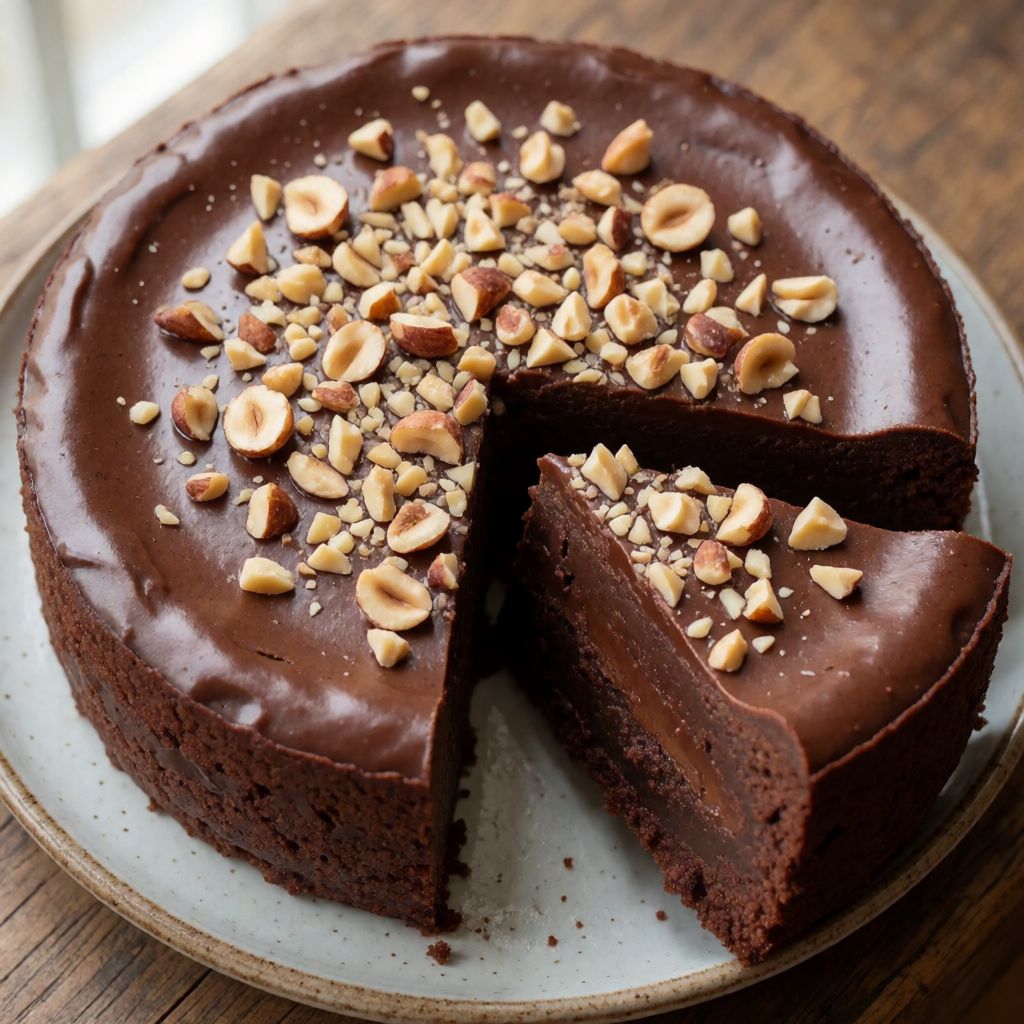
 AI photo
Magic Nutella Cake
A simple cake made by whisking eggs with soft Nutella until tripled in volume, then baking until set.
Labels are worked out automatically from the ingredients and can be wrong. Check the packaging if it matters to you.
Ingredients
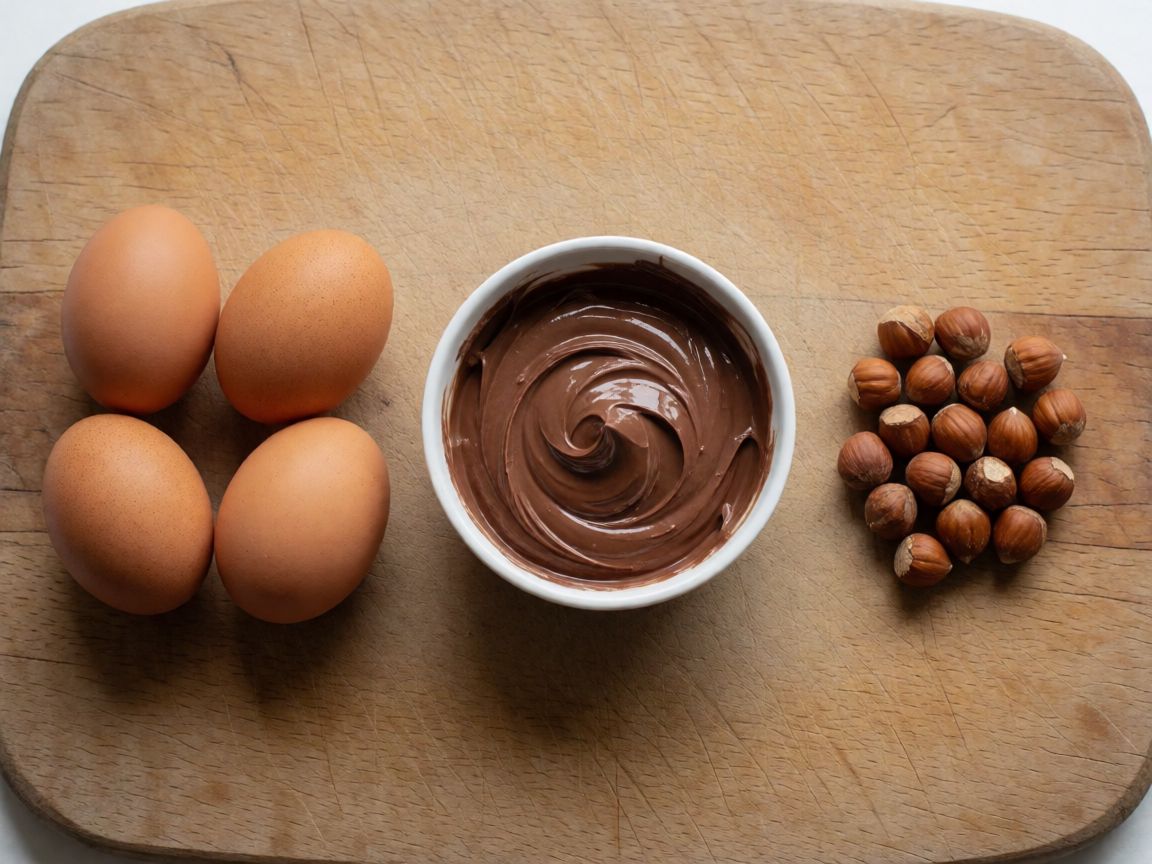
- 4 pcs Eggs
- 300 g Nutella softened
- crushed hazelnuts to taste, optional


Steps
Whisk 4 eggs with an electric mixer for at least 15 minutes until light, smooth and fluffy, tripled in volume.
15 minAdd the softened Nutella in two batches, gently folding with a spatula until smooth.
Pour the batter into a 20cm cake tin lined with baking paper.
Bake at 180°C for 30-35 minutes.
32 minLet the cake cool completely before removing it from the tin.
If you like, decorate the cake with crushed hazelnuts.
Two ingredients, no flour, no raising agent — and yet it rises like a cake, then sinks a little as it cools, like a soufflé remembering it's actually a cake. That's not a flaw, that's the whole trick. The lift here comes entirely from one place: air beaten into whole eggs. No baking powder, no bicarb, nothing chemical lending a hand. If the eggs don't hold air, nothing rises, and nothing here will save you — not the Nutella, not the oven.
So the fifteen minutes of whisking isn't a suggestion, it's the engine. Whole eggs without sugar take their time to foam — sugar normally helps stabilise bubbles and speeds things along, but there's none added separately here (the sugar's all locked inside the Nutella, added later). You're watching for the eggs to triple, go pale, and hold a ribbon — lift the whisk and the trail sits on the surface for a second or two before sinking back in. Stop early and you get a dense, eggy disc, not a cake.
What happens next decides whether that air survives to the oven. Folding, not stirring — a spatula moving in slow turns, not beating. Stir hard to get stubborn cold Nutella mixed in and you knock the bubbles straight back out of the foam you spent fifteen minutes building. That's why the Nutella needs softening first: stiff, cold, straight-from-the-jar Nutella fights the fold and forces you to work it harder than the foam can take.
Eggs: four, and let them come up to room temperature first if you can — cold eggs whip, but slower, because cold egg white is stiffer and resists unfolding into a foam. Fifteen minutes with a stand mixer is a fair ask; fifteen minutes by hand with a balloon whisk is a test of character most people fail, so use an electric mixer, hand-held is fine. Size matters a little — UK medium-to-large eggs, four of them, give you roughly the volume this recipe is built around; go smaller and the foam will be thinner, go very large and it'll be wetter and take longer to set.
Nutella: 300g is the structural partner to the egg foam — it brings fat, sugar, cocoa and ground hazelnut all at once, and crucially it brings the only sweetness in the whole cake. Soften it gently — a bowl set over warm water, or short bursts in the microwave, just until it's pourable and glossy, not hot and runny. Hot Nutella poured into warm egg foam will start cooking the eggs on contact and deflate them before they ever see the oven. Any sweetened hazelnut-cocoa spread of similar thickness works the same way — other brands, a homemade praline-chocolate paste — the only real criterion is that it folds in smoothly without needing force. Swap it for a thin, oily chocolate sauce and you lose the whole point: no backbone, no cake.
The tin: 20cm, lined with baking paper, because there's no flour here to dust the tin with, and a sticky sugar-cocoa batter will bond to bare metal given the chance. A springform tin is worth having for this one — this cake is too delicate to invert onto a plate while still finding its feet; a loose base lets you lift it away without asking it to flip over and hold its own weight.
Oven: 180°C is written for a standard oven. If yours is a fan oven, which most modern British ovens are, knock it down to roughly 160°C fan or watch it closely from the 25-minute mark — fan ovens push heat harder and this cake has no flour structure to protect it from overbaking into something rubbery. Thirty to thirty-five minutes is your lower bound, not your answer; the cake tells you when it's ready, the clock just tells you when to start looking.
Cooling completely before unmoulding isn't fussiness, it's physics: the only thing holding this cake up is egg protein that's been slowly forcing moisture out and tightening as it cools, the same process that makes a soufflé collapse the moment you breathe on it too soon. Rush it warm out of the tin and it folds in on itself. Some say a sunken, cracked top means you've failed — no, that's what a flourless egg-foam cake does, every time, because there's no gluten or starch skeleton here to hold a dome shape once the air inside starts to cool and contract.
Crushed hazelnuts on top are optional, but they're doing a real job if you use them — texture contrast against a cake that is, by design, soft all the way through. Toast them first if you can; raw hazelnuts taste of very little, toasted ones taste of why you bothered.