
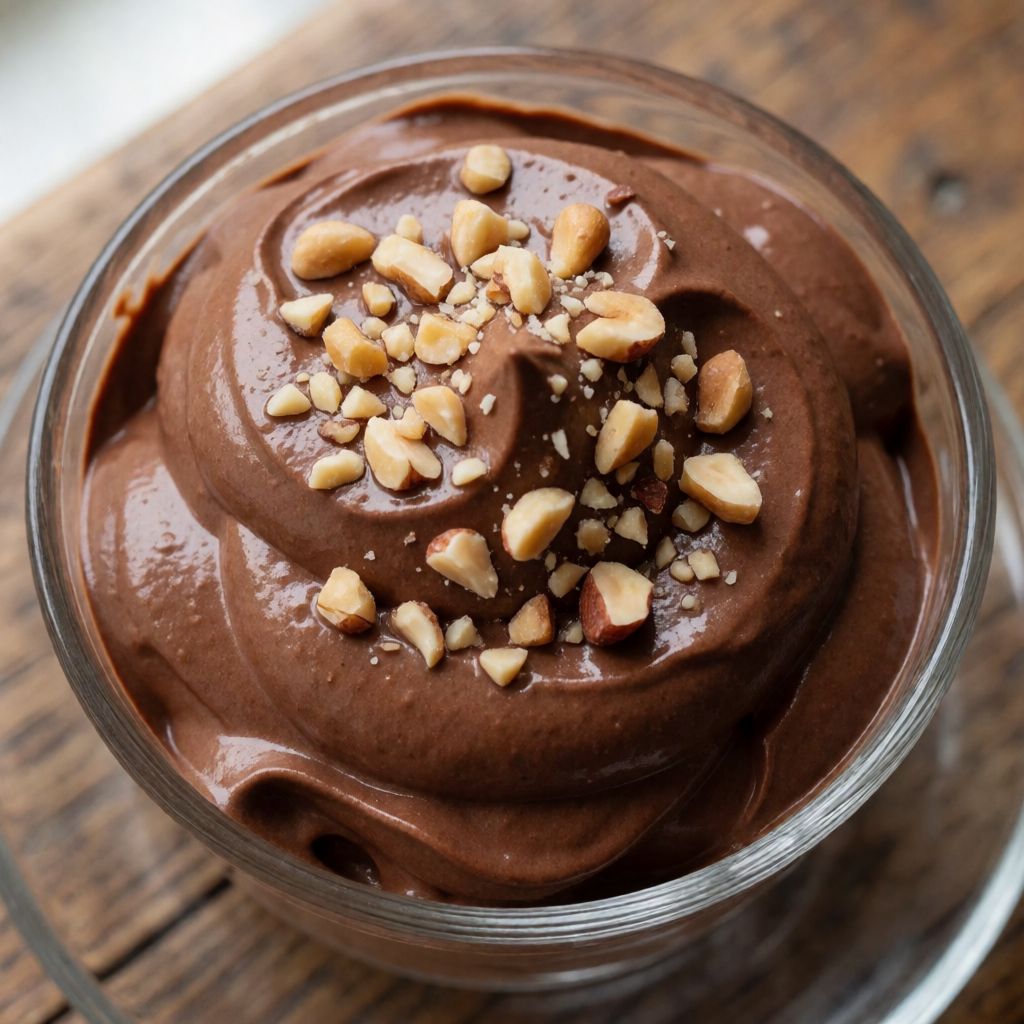
 AI photo
Cold Nutella Cream: No Eggs, No Gelatine, Gluten-Free
A light, no-bake chocolate-hazelnut cream made without eggs or gelatine, and gluten-free.
Labels are worked out automatically from the ingredients and can be wrong. Check the packaging if it matters to you.
Ingredients
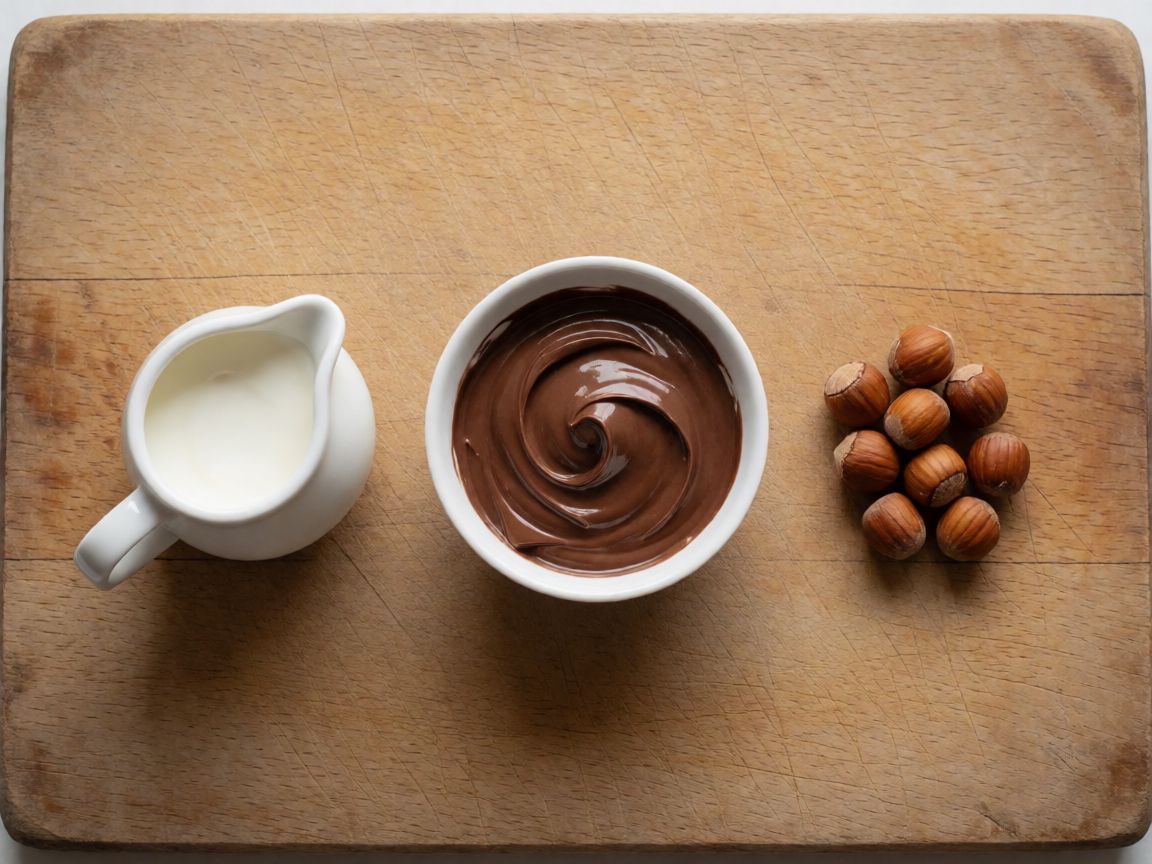
- 300 ml Double Cream
- 200 g Nutella
- Chopped Hazelnuts to taste


Steps
Whip the cream with an electric mixer until thick and firm. If needed, chill the bowl and whisk attachments in the freezer for 15 minutes beforehand.
Put the Nutella in a separate bowl, then fold in the whipped cream a little at a time, gently mixing with a spatula.
Chill the cream in the refrigerator for about 20 minutes.
20 minSpoon the mixture into serving glasses or ramekins.
Decorate with chopped hazelnuts or a little extra Nutella and serve.
This is whipped cream doing all the work. There's no egg to set it, no gelatine to hold it — the whole structure is air trapped in fat, held cold and sweetened by the Nutella. Call it a mousse if you like, but it's really just whipped cream with a flavour and a job to do: trap as much air as it can before the hazelnut spread weighs it down.
What decides whether this works isn't the Nutella — any jar does roughly the same thing — it's the cream. How far you whip it, and how you fold it in afterwards. Those two moments are the whole recipe. Get them right and you have something light that holds a shape in a glass. Get them wrong and you have either a puddle or a grainy paste that's split into butter and water.
Some say a mousse needs eggs, or gelatine, to "set" properly — no, because nothing here is setting in the chemical sense. Nothing gels. What's happening is mechanical: whisking beats air into the fat of the cream, the fat walls stiffen when cold and hold that air in place, and the sugar and cocoa solids in the Nutella thicken the whole thing further once it's folded through. It's a trick of physics, not of chemistry — which is also, by the way, exactly why it's naturally egg-free and gluten-free. Not a substitution. Just how whipped cream behaves.
The listed "cook: 20 min" is misleading — nothing cooks. That's fridge time, and it matters less for safety than for patience: give the fat a chance to firm back up after your hands have warmed it through mixing. Rush that step and you'll spoon out something closer to a sauce than a cream.
Double cream is non-negotiable here, and the reason is fat content, not fashion. Cream whips because its fat globules clump around trapped air bubbles — the higher the fat, the sturdier that scaffolding. Double cream in the UK sits around 48% fat, which is why it holds a peak and stays holding it once you fold in something as heavy as Nutella. Whipping cream (closer to 35%) will fluff up too, but it's a weaker structure — fine on its own, prone to collapse the moment you start stirring in sugar and oil. Single cream won't whip at all; there isn't enough fat to trap anything. If double cream isn't in the fridge, the only honest substitute is another cream that whips to a firm peak on its own — nothing with "single" or "pouring" on the label.
Chilling the bowl and whisk in the freezer for fifteen minutes isn't fussiness, it's working with what a domestic kitchen actually offers. A kazan or a proper cold larder keeps things cold by default; a British kitchen in winter with the heating on, or in summer with none, often doesn't. Warm fat doesn't hold air — it flows round the bubbles instead of gripping them, so the cream takes forever to thicken and never gets properly firm. Cold tools buy you a faster, steadier whip. Stop when the cream holds a soft peak that just barely droops at the tip — not stiff enough to stand a spoon up in. You're whipping it for later folding, not for piping on a trifle, and a slightly softer cream folds into Nutella more evenly, with less risk of the fat splitting into grainy curds.
Nutella's job is flavour and body, and it is, structurally, an odd thing: hazelnut paste, sugar, cocoa, and oil, emulsified together — more praline than chocolate, which is exactly its history. It was invented in post-war Italy during a cocoa shortage, when Ferrero stretched a small amount of chocolate with much cheaper roasted hazelnuts. That's not a side note, it's why the jar tastes the way it does — nutty before chocolatey. Any chocolate-hazelnut spread with a similar oily, smooth consistency will do the same job; the only real criterion is that it's soft enough at room temperature to stir without a fight. A jar straight from a cold fridge will fight you, tear the cream, and leave streaks you then have to beat out — which is exactly how you lose the air you just worked to whip in.
That streaking is worth naming directly, because people usually blame the wrong thing. If your finished cream looks marbled rather than evenly brown, the fault isn't "not enough mixing" — it's the opposite. Folding is meant to be slow and partial: Nutella loosened a spoonful of cream at a time, turned over gently with a spatula, not beaten. Vigorous mixing at this stage knocks the air straight back out, and a deflated mixture is denser and harder to combine evenly, so you end up stirring harder still, which deflates it further. The cure for streaks is patience and gentleness, not more force.
If, after a few hours in the glass, the dessert weeps a thin liquid at the edges, that's the same root cause showing up later — the cream wasn't whipped to enough air and fat structure in the first place to hold the Nutella's oil suspended. It isn't the Nutella going bad or the recipe being wrong; it's a cream that was undersold at the whisking stage.
Chopped hazelnuts on top aren't decoration for the eye so much as for the mouth — a point of actual crunch against a mixture that is, texturally, soft all the way through. Any toasted nut does the same job: almonds, or even a crushed digestive biscuit if that's what's in the cupboard. Six small glasses from this amount is about right — think teacups or ramekins rather than tumblers, since it's rich, and a little goes with a cup of tea rather better than it goes with a spoon-after-spoon approach. It's the sort of pudding that sits quietly in the fridge after a Sunday roast, asking for nothing more from the cook than fifteen minutes and the willingness to wait twenty more.