
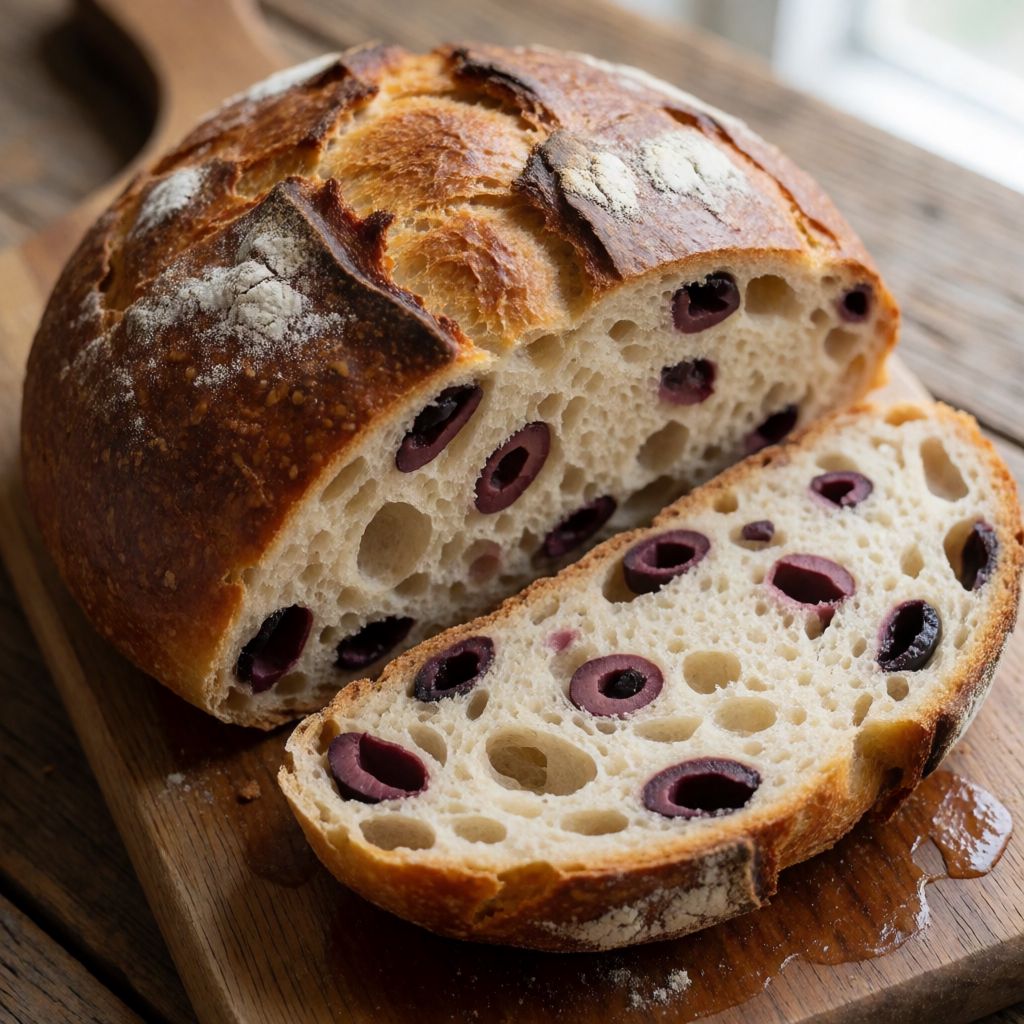
 AI photo
Olive Bread
A simple homemade bread enriched with chopped olives, lovely on its own or alongside a Sunday roast.
Labels are worked out automatically from the ingredients and can be wrong. Check the packaging if it matters to you.
Ingredients
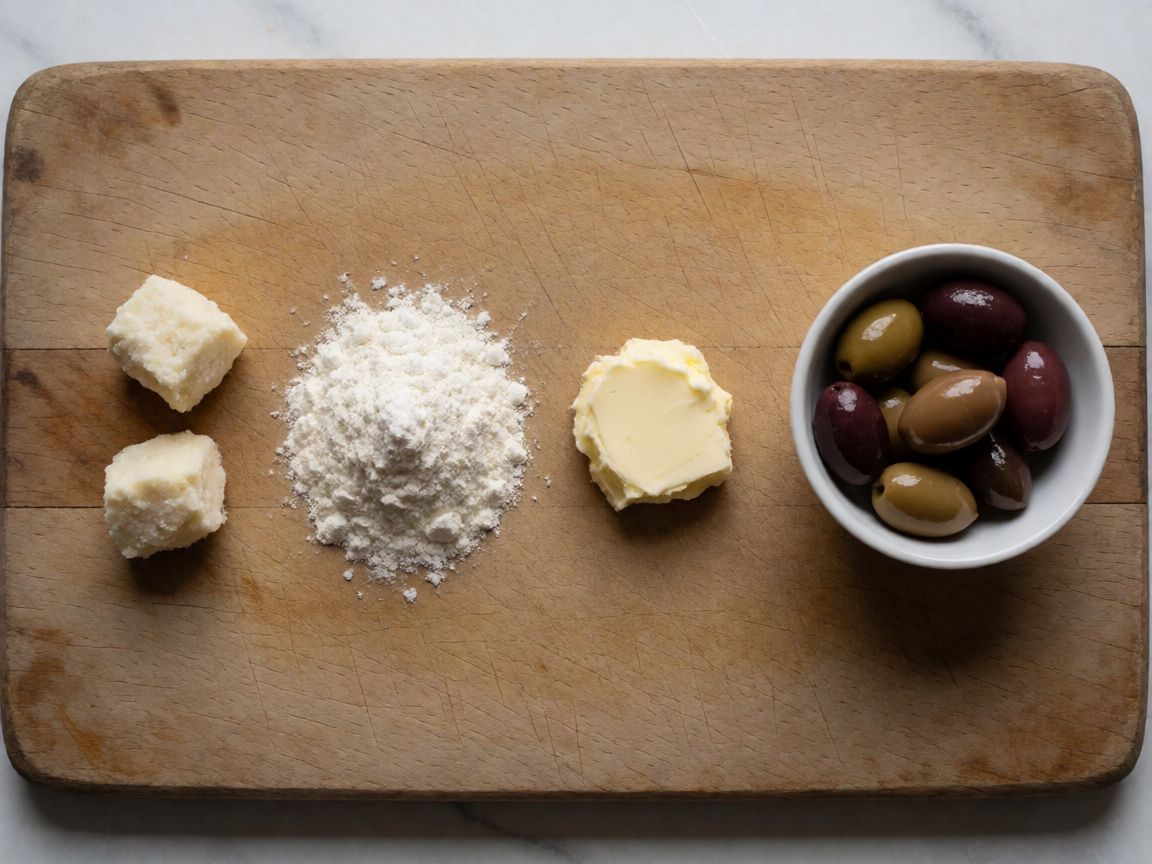
- 2 package Fast-Action Dried Yeast 7 g sachets
- 1 kg Strong White Bread Flour
- 500 ml Water
- 25 g Butter
- 400 g Olives
- 2 tbsp Salt





Steps
Dissolve the yeast in a little room-temperature water, add 4 tbsp of the flour and mix until you have a smooth, soft dough, then shape it into a small ball.
Leave the dough for 10 minutes to rise slightly.
10 minWith the remaining flour, make a mound with a hollow in the centre and place the ball of dough inside.
Dissolve the salt in the water, then melt the butter into it, and pour this liquid into the flour mound, starting to knead the dough.
Knead until the dough is smooth and elastic, shape it into a ball, and leave it to rise in a covered bowl for at least 1 hour 30 minutes.
Rinse the olives and remove the pits, then cut each olive in half and cut each half in half again to make quarters, cutting any larger pieces into smaller pieces as needed.
Spread the olives over the surface of the dough and work them in, dividing the dough into portions if needed.
Leave the dough to rise for another hour so the bread proves together with the olives.
60 minPlace the loaf on a baking tray and bake at 200°C for about 30-35 minutes.
32 min
This is a lean, olive-studded loaf built the old bakery way: a small starter proved on its own, then a big mound of flour with a well in the middle for the liquid — what the French call a fontaine. It's not a fancy trick, it's plumbing. A loose mass of 500ml water poured into a heap of flour all at once gives you a swamp at the bottom and dry powder at the edges. The mound lets you draw flour into the liquid gradually, from the inside out, so the whole kilo hydrates evenly instead of in patches.
What decides whether this loaf works is not the oven, it's the dough's strength at the moment the olives go in. You knead first, rise first, and only then fold in the olives — never knead them into the raw dough. Work olives into dough that hasn't yet built its gluten net and you tear the net before it exists; the oil and brine leak in, the dough turns slack and sticky, and you get a loaf that's dense and wet around every olive instead of a crumb that holds them like currants in a cake.
Some say you need sugar to 'feed' the yeast in a bread like this. No — flour is already full of starch, and amylase enzymes in the flour itself break enough of it into sugars for the yeast to eat. The sugar-feeding habit comes from sweet enriched doughs, not from a plain village loaf. Here the small pre-ferment in step one isn't feeding anything, it's a test: if that little ball puffs in ten minutes, your yeast is alive, and you've found out before committing the whole kilo of flour to it.
Yeast: two 7g sachets of fast-action dried yeast is a lot for 1kg of flour — this isn't a slow, sour village dough, it's meant to move fast enough for a home kitchen in an afternoon, not a day. Dissolve it in plain water first, never straight into the salted water from step four — salt pulls moisture out of yeast cells by osmosis and stuns them before they've started. If you only have fresh (cake) yeast, use roughly double the weight and still give it the same ten-minute test; if you have ordinary dried yeast rather than fast-action, it needs proofing in warm water with a pinch of the flour's own sugar-potential — same ten minutes applies, just trust the puff more than the clock.
Flour: 'strong' white bread flour means high protein, which means more gluten-forming potential — the stretchy net that traps the gas the yeast makes. Plain flour will give you a loaf that spreads rather than rises, because there's not enough protein to hold the structure once olives weigh it down. If strong flour isn't to hand, add a spoonful of vital wheat gluten per few hundred grams, or just accept a flatter, denser loaf and don't blame the recipe.
Water: 500ml for 1kg flour is a fairly firm dough, not a wet ciabatta-style one — firm enough to take the weight of 400g of olives without turning into a puddle. Tap water is fine; there's no mechanism here that needs anything special from it, just room temperature, because water that's too warm will race the yeast into a sprint it can't sustain through a 1.5-hour rise, and water that's cold will stall it.
Butter: 25g melted into the salted water is there for the crumb, not the rise. Fat coats gluten strands and shortens them slightly, which is why an enriched dough is softer and more tender than a pure flour-water-salt one. It's a small amount here precisely because this is closer to a rustic loaf than a brioche — don't be tempted to double it thinking 'richer is better'; too much fat before the gluten is built will grease the strands before they've linked up, and you lose structure instead of gaining softness. Any neutral fat with no flavour of its own — a mild oil, or a flavourless margarine — works as a substitute, though butter also brings a faint dairy note the crust will carry.
Olives: 400g, pitted and quartered, is a ratio that keeps the dough as the main structure and the olives as punctuation, not the other way round. Quartering matters for two reasons — cut too fine and they bleed their oil and salt everywhere, going almost invisible and over-salting the crumb; leave them whole or in halves and their weight tears pockets in the dough as it rises, leaving caves instead of an even crumb. Rinse them first regardless of brine or oil-cured — you're washing off surface salt and any film of preserving liquid that would otherwise sit on the dough's surface and resist being worked in. Any firm-fleshed olive works; very soft or very wet ones (think over-ripe black olives in heavy brine) will still want rinsing and patting dry, or they'll bring too much liquid into a dough that's already at its correct hydration.
Salt: 2 tablespoons sounds like a lot until you remember it's seasoning for an entire kilo of flour plus 400g of already-salty olives, and salt isn't only flavour here — it tightens gluten and slows fermentation slightly, which is exactly why you dissolve it into the water rather than mixing it dry into the flour with the yeast starter sitting nearby. Taste your olives before you trust the 2 tablespoons blindly: very salty brined olives might ask you to pull back a little, since nothing in the oven will balance that out once it's baked in.