
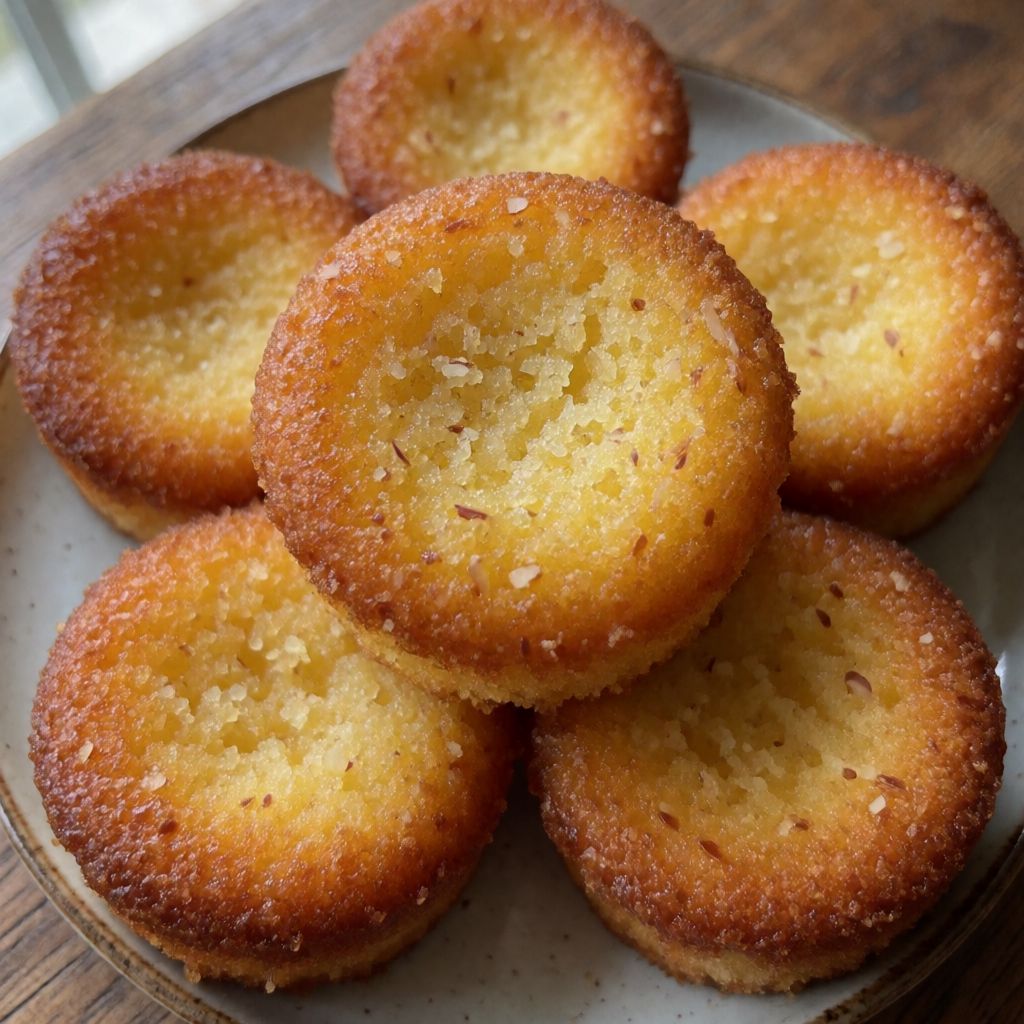
 AI photo
Orange and Almond Cakes
Soft orange and almond cakes, boiled whole oranges blended into the batter, finished with syrup, candied zest and a dusting of cocoa.
Labels are worked out automatically from the ingredients and can be wrong. Check the packaging if it matters to you.
Ingredients
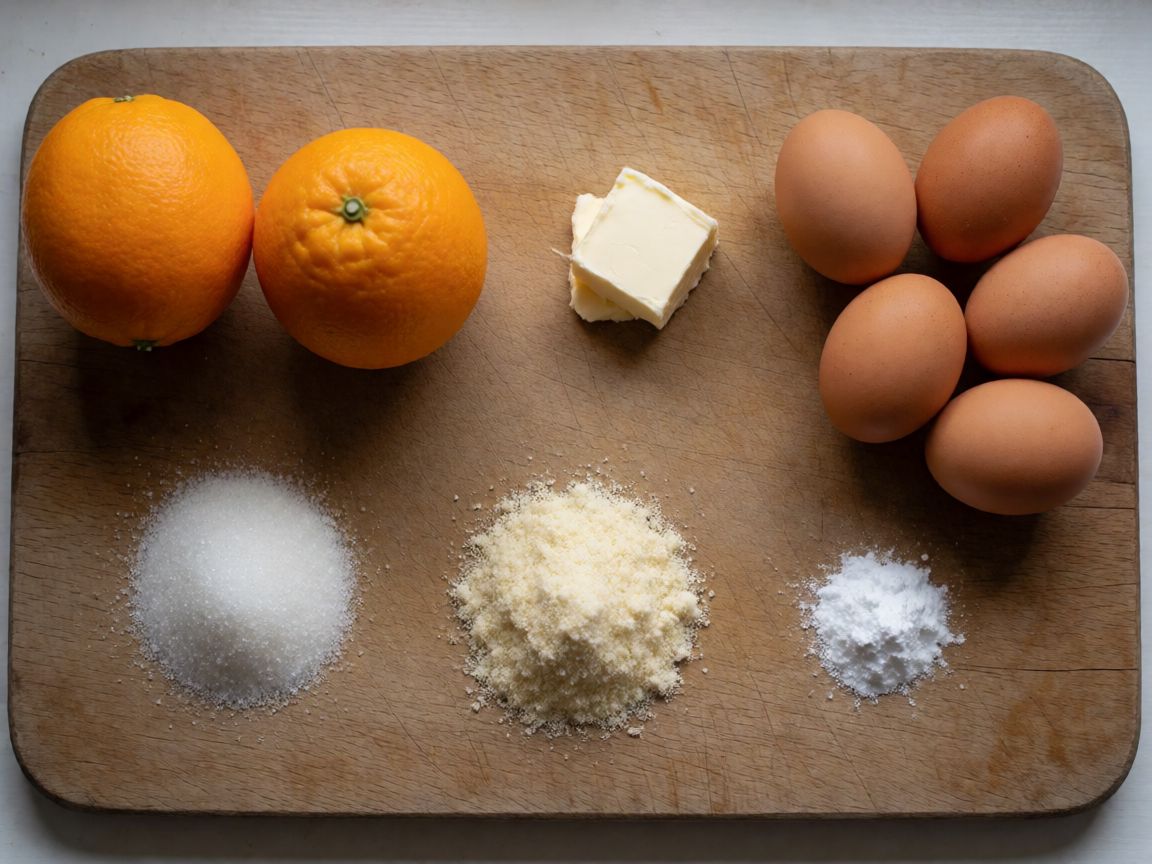
- 2 pcs Orange
- 65 g Butter
- 225 g Caster sugar
- 5 pcs Eggs
- 275 g Ground almonds
- 2 tbsp Baking powder






Steps
Wash the oranges thoroughly and boil them in a little water over medium heat.
Cut the oranges and blend them whole in a blender, skin included, until smooth.
Beat the softened butter with the sugar using a whisk until light and creamy.
Add the eggs one at a time, mixing thoroughly after each addition.
Gradually fold in the ground almonds to avoid lumps.
Add the baking powder and the orange purée, continuing to mix gently to keep the batter light.
Grease the tins with butter, dust with flour and fill two-thirds full with the batter.
Tap the tins lightly on the table to settle the batter — this helps it rise evenly.
Bake at 160°C for about 45 minutes.
45 minOver low heat, make a syrup from water, sugar and orange juice, simmering until thickened.
Cut the orange zest into strips and dip in boiling water for about 30 seconds to remove bitterness.
Remove the finished cakes from the tins, plate them, decorate with the syrup and zest, and dust with cocoa.
This is the cake that cheats flour out of a job it isn't needed for. There's no flour in the recipe at all — ground almonds do the structural work, and the whole orange, skin and all, does the moisture and flavour work. That's the whole trick, and it's why the cake comes out dense, damp, and keeps for days instead of going stale by Tuesday like a sponge would.
What decides whether it works is the orange. You boil two whole oranges — skin, pith, flesh, pips if you missed them — until a knife goes in without resistance, then blitz the lot into a purée. Boiling isn't there to "cook" the orange; it's there to collapse the bitter white pith's structure and drive off the sharpest of the volatile bitter oils, so when you blend the peel into the batter you get orange flavour without orange's fight-back. Skip the boiling and blend a raw orange instead, and you'll taste why people say "always boil it first" — not because tradition says so, but because raw pith is genuinely unpleasant in a mouthful of cake.
Ground almonds replace flour's gluten with fat and protein. There's no gluten to develop, so there's no kneading, no resting, no worrying about overmixing toughening anything — the risk runs the other way, toward a batter that's too heavy and sinks in the middle. That's why eggs go in one at a time: each egg needs to fully emulsify into the butter-sugar base before the next arrives, or the mixture splits and you get a greasy, uneven crumb instead of something that holds air.
Butter and sugar beaten "light and creamy" is doing a specific job: trapping air bubbles in solid fat before any liquid arrives. This cake has no raising power to spare — baking powder alone won't lift something this dense — so the air you whisk in now is air you'll still have at the end. Use real butter, softened at room temperature, not melted; melted butter can't hold a bubble, it just pools. If you're out of butter, a neutral oil won't whisk the same way and the cake will be flatter and oilier instead of light — not a straight swap here.
Caster sugar matters more than people assume. Its fine grain dissolves into the butter during beating instead of sitting there as grit; golden granulated will still work but drags the beating time out and leaves a slightly coarser bite. 225g for two oranges' worth of purée is a reasonable balance — the orange brings its own sugars plus a fair amount of bitterness from the pith, and the batter sugar is partly there to answer that bitterness, not just to sweeten.
Ground almonds are the backbone, not a flavour note. Buy them finely ground — coarse almond meal leaves gritty pockets since there's no flour to smooth the texture out. No nut allergy concerns aside, you can't really substitute flour in 1:1 for almonds and get the same cake; flour brings gluten structure that behaves completely differently when baked, so you'd end up with something closer to an orange sponge than this cake. If almonds are genuinely unavailable, ground hazelnuts are the nearest relative in texture, with their own flavour riding alongside.
Five eggs for 275g of almonds is a lot of eggs relative to a normal cake recipe, and that's deliberate — eggs are supplying the lift and the set that gluten would otherwise provide. Go in one at a time and actually mix each one through; dump them all in together and the fat can't hold that much liquid at once, so it curdles and separates, giving you a cake that bakes dense and slightly rubbery instead of tender.
Two tablespoons of baking powder sounds like a lot, and it is, but remember there's no flour here and much heavier almond meal to lift — standard sponge ratios don't apply. On a British oven, 160°C fan or standard is worth checking against your own dial; ovens vary more than recipes admit, and "about 45 minutes" is the floor, not the answer — the real test is a skewer coming out clean and the top springing back rather than denting when you press it. Domestic tins vary in depth too, so two-thirds full is the actual rule, not a number of millimetres.
The syrup is just water, sugar and the juice squeezed from the oranges you've already zested, reduced low and slow until it coats a spoon rather than running off it — rushing this with high heat just boils off the water before the sugar has thickened properly, and you get a thin, winey syrup instead of a glossy one. The zest strips get a brief blanch in boiling water for the same reason the whole oranges were boiled earlier: to knock the raw bitterness off the oil in the peel without cooking the flavour out entirely. A dusting of cocoa at the end is bitterness working with bitterness — it sits against the orange rather than competing with the sugar, and it's doing far less than you'd think for the eye and nothing structural at all, so if you haven't any, the cake loses nothing but a little drama on the plate.