
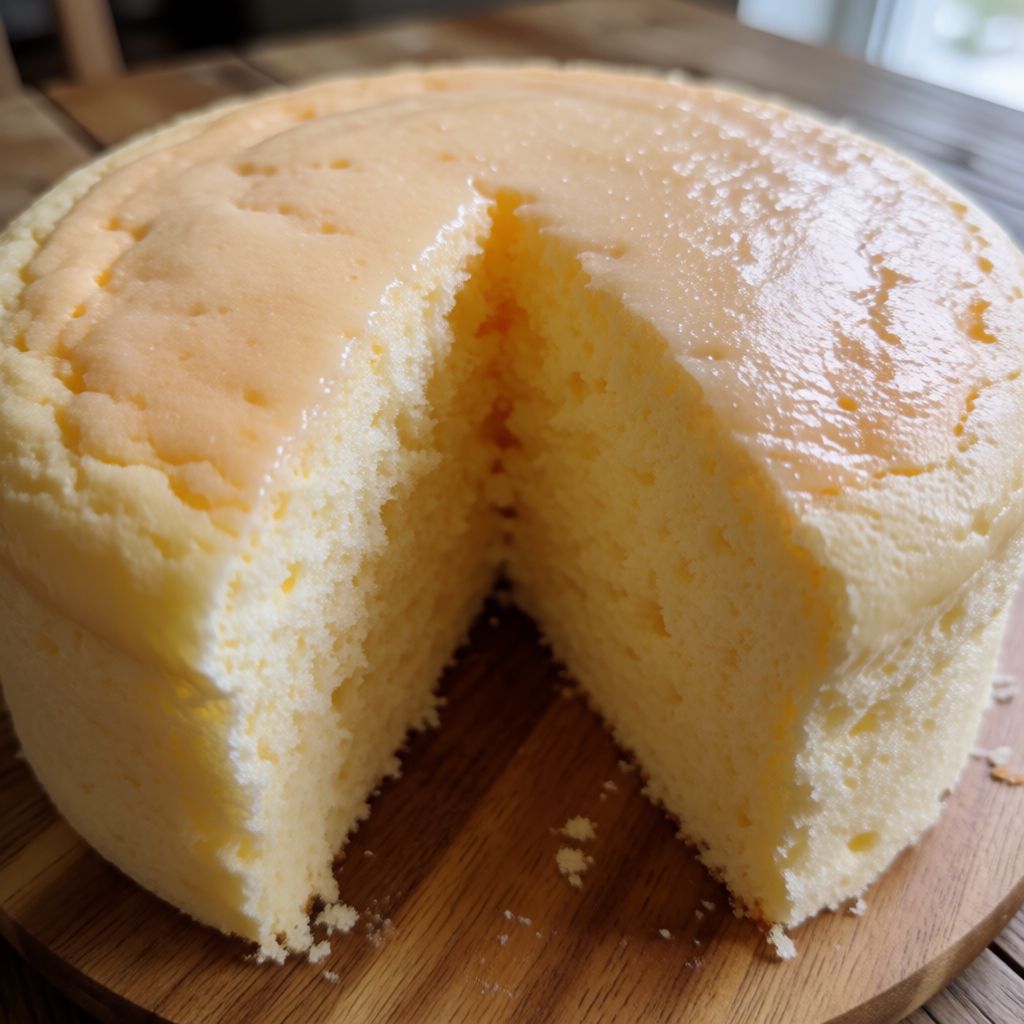
 AI photo
Orange Cake with Egg Whites
A light, airy orange cake made with whisked egg whites and fresh orange juice and zest.
Labels are worked out automatically from the ingredients and can be wrong. Check the packaging if it matters to you.
Ingredients
- 300 g Plain flour
- 120 g Sugar
- 80 ml Vegetable oil
- 50 ml Water
- 4 pcs Egg whites
- Orange juice from 4 oranges
- Orange zest from 2 oranges
- 1 pinch Salt
- 16 g Baking powder
- Icing sugar to taste










Steps
Whisk the egg whites with a mixer or stand mixer until stiff peaks form.
In a separate large bowl, squeeze the orange juice, having first grated the zest from two of the oranges.
Add the oil, water and sugar to the orange juice and mix well until the sugar has fully dissolved.
Gently fold the whisked egg whites into the liquid base, mixing with delicate movements.
Sift in the flour and baking powder, add to the batter, add the orange zest and mix until smooth.
Grease a 22 cm tin with butter and dust with flour, or line with baking paper, then pour in the batter.
Bake the cake in an oven preheated to 180°C on static (conventional) setting.
50 minServe the cake cooled, dusted with icing sugar and decorated with orange slices.
This is a plain-flour sponge that gets its lift mostly from whipped egg whites rather than from butter and sugar beaten together, which is why it comes out lighter and slightly less rich than a Victoria sponge. The whole thing hinges on one thing: how carefully you fold those whites into the orange liquid. Do that badly and you've made a flat, dense disc that happens to taste of orange. Do it well and you get an open, slightly springy crumb.
Whisking whites to stiff peaks is you building a scaffold of air bubbles held in place by unfolded egg protein. That scaffold is fragile. Pour it into a liquid and stir hard, and you knock the air straight back out — which is why step 4 says "gently" and means it. Fold from the bottom up, turning the bowl, not beating. The batter should still look a bit streaky with white rather than perfectly uniform; it evens out in the oven.
Some say egg-white cakes are automatically dry. No — they're dry when the oven runs hot and long after the cake is actually set, because there's no butterfat left to carry moisture once the structure firms up. This batter is wetter than most sponges to begin with (water, oil, and juice from four oranges), which is the built-in defence against that. Trust the quantity of liquid; don't be tempted to add more flour because the batter looks loose.
Flour here is plain, not self-raising, because the lift is being measured separately: 16 g of baking powder plus the air already whisked into the egg whites. Self-raising flour would add an uncontrolled extra dose of rise on top of that and you'd risk the cake climbing fast, then collapsing once it runs out of structure to hold the air. Sift the flour and baking powder together before folding them in — not for ceremony, but to break up any clumps of baking powder so you don't get a bitter pocket in one bite and nothing in the next.
The oil and water together (80 ml and 50 ml) do the job butter normally does in a sponge — carrying moisture and fat through the crumb — but without butter's flavour or its tendency to set solid and firm up the texture as it cools. That's deliberate: this cake is meant to stay soft and slightly damp, closer to a drizzle cake than a Victoria sponge. Use any oil with no smell of its own — a neutral vegetable or sunflower oil does the job; olive oil will fight the orange and win.
Four oranges' worth of juice plus zest from two is doing double duty: the juice is your main liquid and your flavour, the zest is concentrated flavour without the extra liquid, because the oil in orange skin (where the zest comes from) carries aromatic compounds that juice alone doesn't have. Grate the zest before you juice the orange — once it's a juiced, collapsed half, there's no way to get at the skin cleanly. Any wax on shop oranges should be scrubbed off first; it's there to make the fruit look good on the shelf, not to be baked into your cake.
Four egg whites, no yolks, is the other half of this cake's identity. Whites whip to a much more stable foam than whole eggs because yolk fat interferes with protein unfolding — which is exactly why any trace of yolk in your whites will stop them reaching stiff peaks at all. Use a clean, dry bowl and a pinch of salt (already in the recipe) to help the proteins unfold and hold air. If your whites won't stiffen, that's almost always fat contamination, not a weak mixer.
A 22 cm tin greased and floured, or lined, stops the cake tearing when you turn it out — the sugar and juice in this batter make it stickier against bare metal than a plain butter sponge would be. In an ordinary flat kitchen, a cake tin liner or a circle of baking paper on the base plus a strip around the sides does the same job with less fuss than greasing and flouring by hand.
Icing sugar on top and orange slices to finish are decoration, not insurance — don't dust icing sugar on while the cake is still warm, it'll dissolve into a wet sheen instead of sitting as powder. Let the cake cool properly first; patience here is the last ingredient, and it's the one people skip because the kitchen smells too good to wait.