
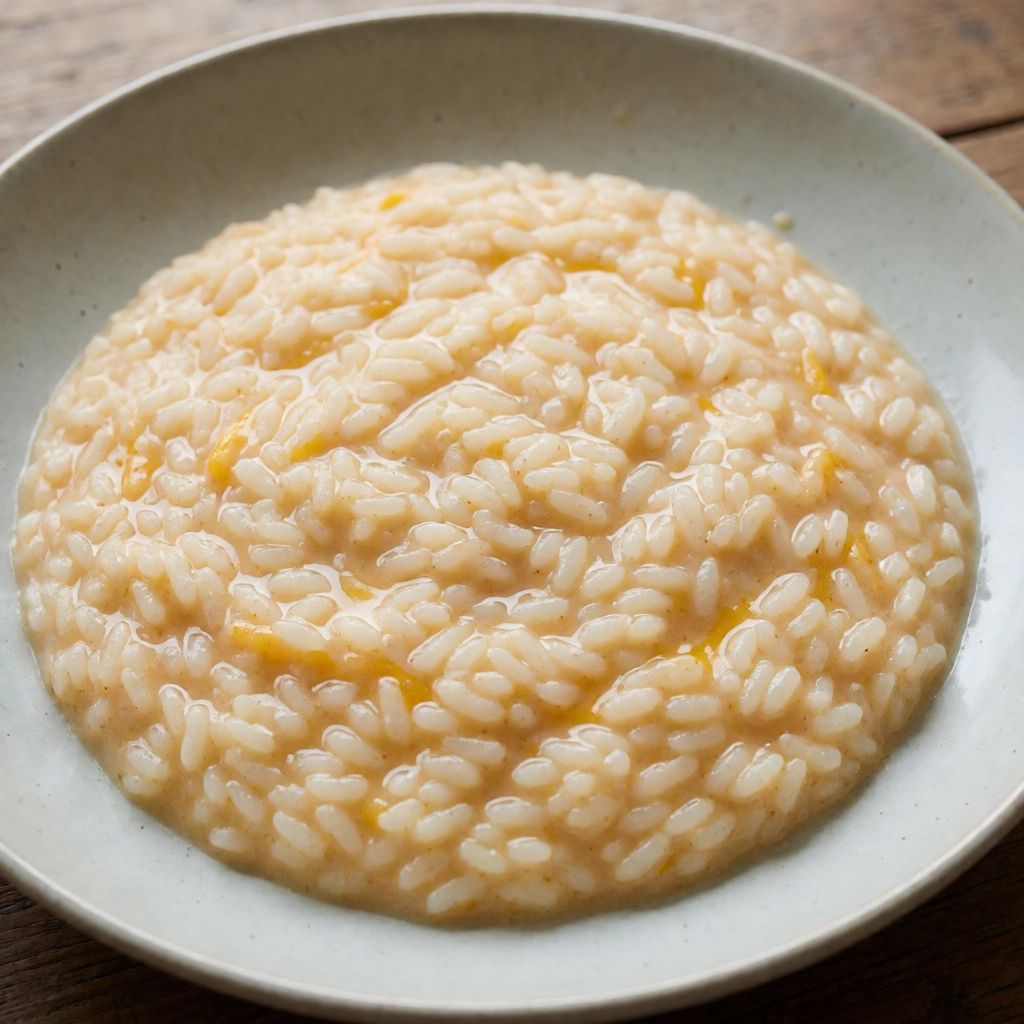
 AI photo
Orange Risotto
A creamy risotto flavoured with orange zest and juice, finished with a splash of white wine and melted Taleggio.
Labels are worked out automatically from the ingredients and can be wrong. Check the packaging if it matters to you.
Ingredients
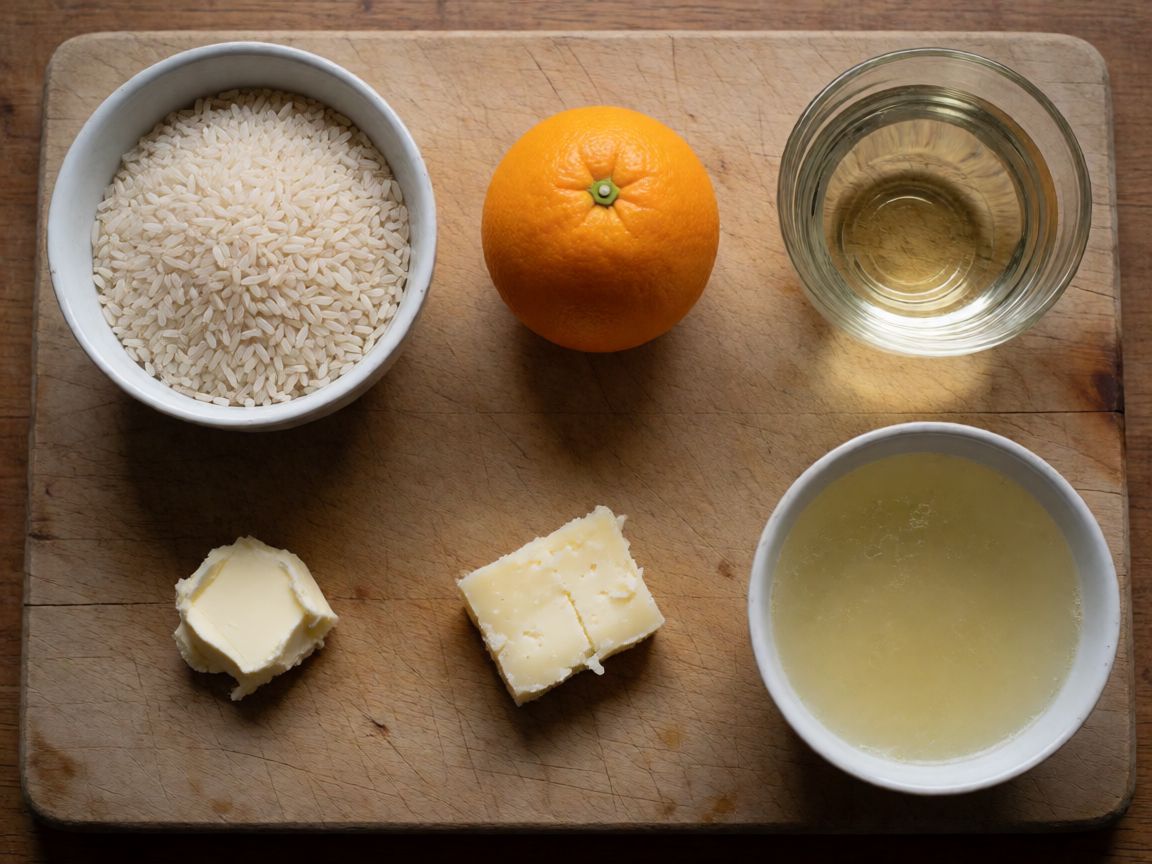
- 200 g Rice
- 25 g Butter a knob
- 1 pcs Orange
- 50 ml White Wine a splash
- 50 g Taleggio to melt in
- 500 ml Stock to taste






Steps
Melt the butter and add the orange zest, cut into thin, fine strips.
Add the rice and toast it until translucent.
Pour in a splash of white wine and the orange juice, and let the wine evaporate.
Gradually add the stock, a ladleful at a time, stirring constantly, until the rice is cooked.
Stir in the Taleggio and mix until melted.
Orange risotto is rice cooked the way all risotto is cooked: not boiled, but coaxed into releasing its own starch into the stock until the liquid turns into a sauce that clings to every grain. The orange stands in for the lemon or saffron you'll see in other versions — it does the same two jobs, acid and perfume, just louder. Taleggio comes in at the end to thicken that sauce with fat instead of more starch, and to round off the orange's sharp edge with something barnyardy and soft.
What decides whether this works has nothing to do with the orange and everything to do with how you add the stock. One ladle, stirred until the rice is nearly dry again, then the next. Flood the pan and you've made orange rice soup — pleasant, maybe, but not risotto, because the grains never get starved enough between additions to pull starch out of themselves and into the liquid. That starvation, repeated ten or twelve times, is the entire mechanism. Patience here isn't a virtue, it's an ingredient you can't skip or buy more of.
Some say you must stir constantly or the risotto will fail — true, but not for luck. You stir because the starch the rice releases wants to glue itself to the bottom of the pan rather than into the liquid; stirring scrapes it back where it belongs. Stop stirring for five minutes and you'll find a crust on the bottom and a thin, separated liquid on top — the sauce never built.
Rice: the name on the bag matters less than what's inside the grain. You want something short or medium, with a chalky, starchy core — Arborio, Carnaroli, Vialone Nano are the usual names, but the criterion is the starch, not the label. Basmati or any long-grain rice has been bred for the opposite job, to stay separate and fluffy, so it will never give you the creaminess this dish depends on. Do not wash this rice before cooking — washing is good advice for pilaf, where you want starch gone, and bad advice here, where starch is the whole point.
Butter: a knob, not a slab — enough fat to carry the orange oil out of the zest and into the rice without drowning either. Zest its flavour lives in orange oil, and oil moves into fat far better than into water, which is why you infuse the butter first rather than just tossing zest in at the end. Take only the coloured skin, not the white pith underneath — the pith is where the bitterness lives, and more zest is not more flavour past that point, it's just more bitter. An unwaxed orange, or one you've scrubbed properly, saves you tasting the wax along with the fruit.
White wine and orange juice: the wine's job is acid and aroma, not alcohol — most of the alcohol cooks off, the flavour compounds it carries do not, which is the actual reason for using it rather than water at this stage. The orange juice does the same acid job with the fruit's own voice added. Any dry white you'd drink works; don't reach for something sweet; a decent dry cider at a pinch does something similar, if stranger.
Taleggio: a semi-soft, washed-rind cheese from Lombardy, chosen because it melts into cream rather than seizing into strings, with enough tang to stand up to the orange without fighting it. If you can't get it, look for the same behaviour rather than the same name — a young Fontina, a mild washed-rind cheese, even a soft Brie with the rind cut away will melt the right way. Avoid anything hard and aged on its own for this job; it clumps instead of dissolving, and you'll end up with gritty risotto instead of a glossy one. Stir the cheese in off the heat — on the heat, the fat splits out instead of binding into the sauce.
Stock: 500 ml is a lower bound, not a target — stop adding when the rice tells you it's done, not when the jug is empty, and keep a little extra hot stock on the next ring in case you need it, because cold stock added straight from the fridge shocks the rice and stalls the cooking rather than feeding it. Chicken or vegetable, homemade or a good cube dissolved properly — the stock just needs to be warm and reasonably clean-tasting, since it's carrying the dish's savoury backbone while the orange carries the top note.
One detail about kitchens with electric rings and no open flame worth saying honestly: you won't get the instant heat changes an Italian trattoria stove gives you, so react to the pan, not the dial — pull it slightly off the heat if the stock is disappearing too fast between stirs, rather than hunting for an exact number on the knob. And if you're feeding more than one, resist the urge to just double everything in the same pan — a wide, shallow pan lets liquid evaporate and concentrate evenly; pile the rice too deep and the bottom layer cooks while the top one steams, which is a different, worse dish.