
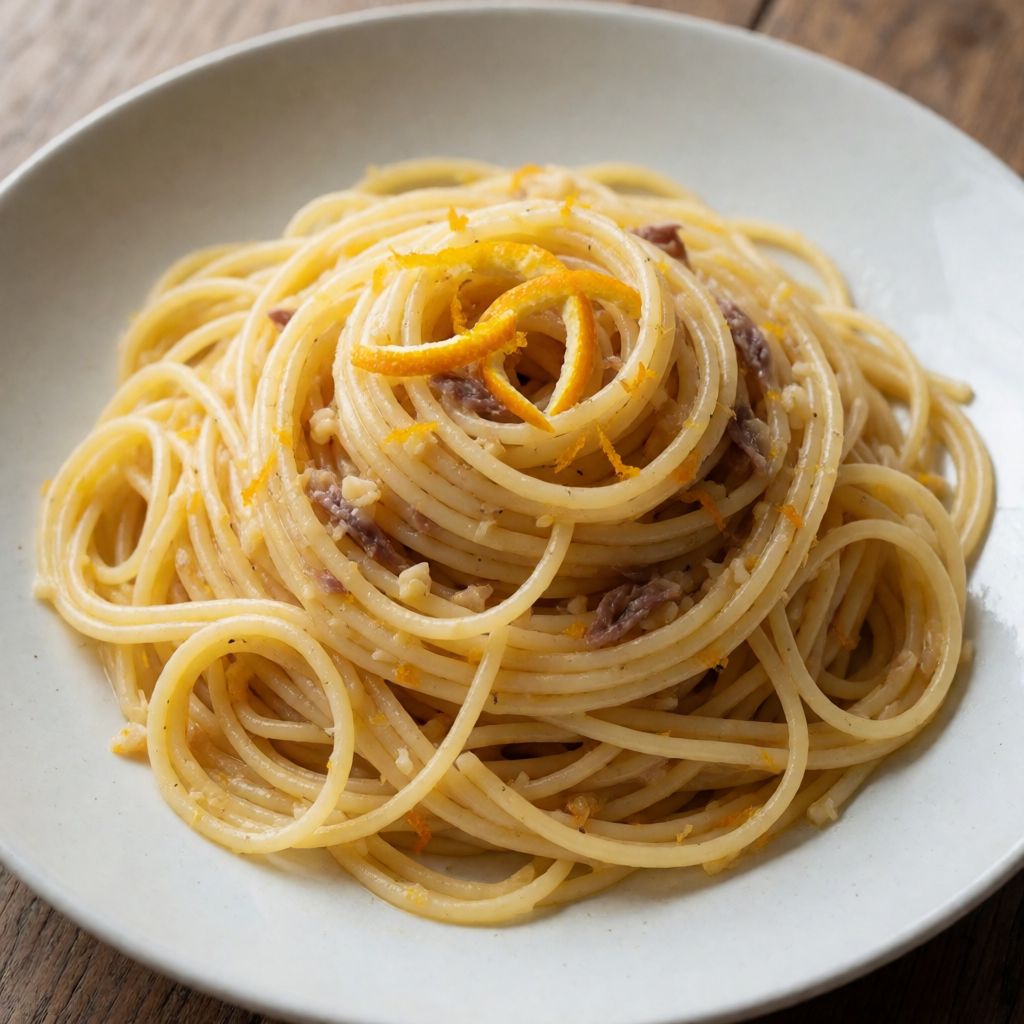
 AI photo
Orange-Scented Spaghetti
A quick pasta tossed in a citrusy anchovy and garlic sauce with a hint of brandy.
Labels are worked out automatically from the ingredients and can be wrong. Check the packaging if it matters to you.
Ingredients
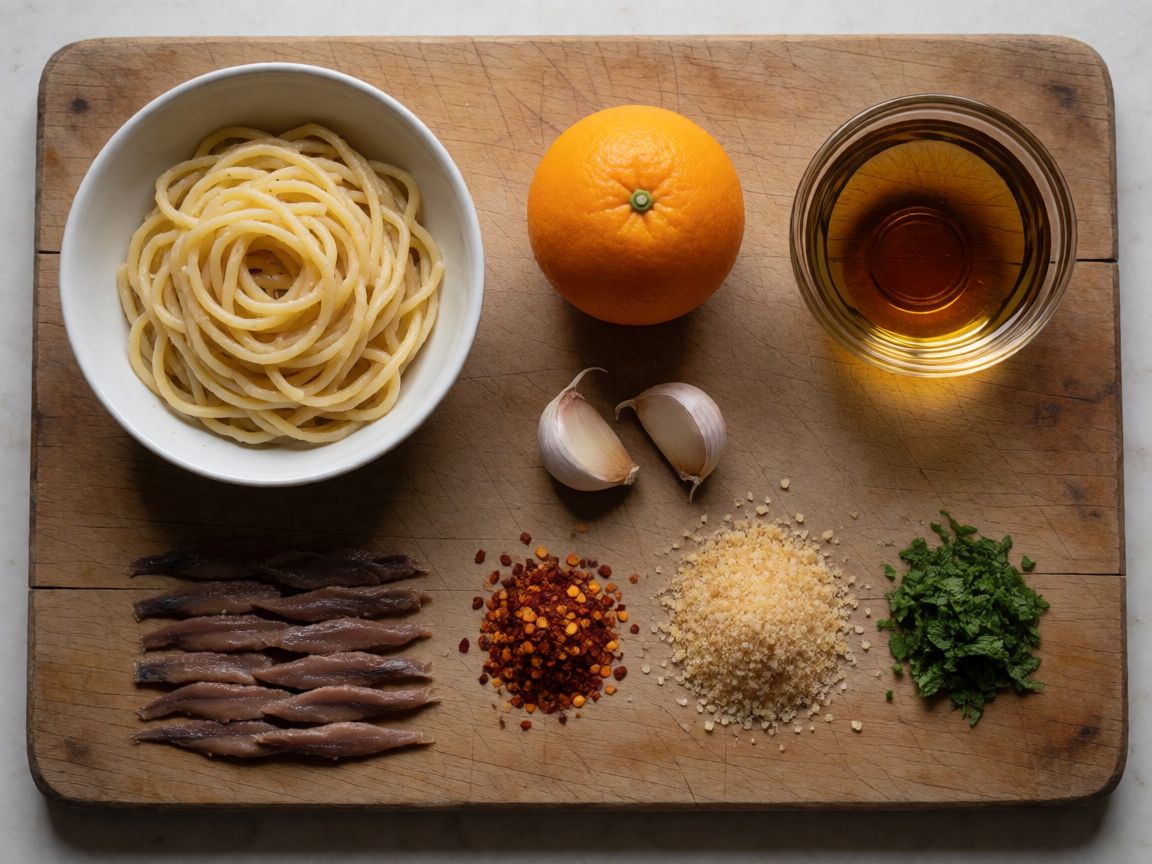
- 400 g Spaghetti
- 1 pcs Orange
- 2 clove Garlic
- 12 pcs Anchovies in oil
- 1 pcs Brandy a shot
- Olive oil to taste
- Chilli flakes to taste
- Breadcrumbs to taste, dried
- Salt to taste
- Mint to taste, or basil










Steps
Toast the breadcrumbs in olive oil until golden in a small frying pan.
3 minHeat olive oil in another pan and sauté finely chopped garlic and chilli flakes.
3 minAdd the anchovies and let them melt over low heat, stirring constantly.
3 minAdd the diced orange, pour in the brandy and let it evaporate over low heat until the sauce turns creamy.
5 minCook the spaghetti until al dente, drain and transfer to the pan with the sauce.
10 minToss the pasta for a few minutes with the crispy breadcrumbs, stirring so the sauce coats the spaghetti evenly.
3 minServe garnished with mint or basil leaves.
This is a poor man's pasta wearing a clever coat - anchovies melted into oil doing the job a knob of butter or a fistful of parmesan does elsewhere, and orange standing in for the tomato, cutting the salt with something bright instead of something acidic. It belongs to the old southern Italian habit of pasta con le briciole, where breadcrumbs replace cheese - not out of some rule about fish and dairy never touching, but because cheese cost money and fishermen's wives didn't have it to spare. Bread, on the other hand, was always going stale on the side.
What decides whether this dish works is heat kept low in two separate moments, and most of the trouble comes from rushing past both. Garlic and chilli go into the oil to perfume it, not to fry - garlic that turns brown has turned bitter, and in a sauce this thin and unmasked, bitterness has nowhere to hide. The anchovies then need to dissolve into that oil, not sizzle in it. Push the heat and they seize into dry little flakes that taste only of salt. Keep it gentle and they melt away into the dark, round savouriness they're actually there for.
The orange is the part that surprises people, and it only behaves if you let the brandy do its job properly. Pour it in and let it bubble down over low heat - too hot, and the alcohol flashes off before it's pulled anything useful out of the orange, leaving you with a thin, raw-tasting puddle. Too timid, and you just get warm orange with a boozy edge. You're watching for the sauce to thicken and go creamy, not counting a clock.
Spaghetti, 400 g for four - any long thin shape works because the sauce is oil-based with nothing chunky in it to need catching; a shaped pasta like penne would just let the sauce run off. Boil it in plenty of water, salted less heavily than habit tells you to, because the anchovies are about to do a lot of the salting for you later.
The orange: one, but choose it by weight, not by looks - a heavy orange for its size is a juicy one. Scrub the skin before you zest or dice, since most oranges on a UK shelf have been waxed for the trip. The zest matters more than people expect - its oil, not the juice, carries the actual scent, which is why just squeezing in some juice at the end (a shortcut some kitchens take) gives you sweetness without the lift. Dice flesh and a little zest together and you get both.
Garlic, two cloves - firm, no green shoot pushing through, which is a sign of age and bitterness already setting in. Slice it thin rather than crushing it to paste, so it releases its flavour slowly into the oil instead of burning the instant it hits the pan.
Anchovies in oil, a dozen - buy them in oil rather than brine; the oil is part of how they melt rather than toughen. If you've only got anchovy paste from a tube, use less of it - it's concentrated, and the texture work (melting, not just dissolving) happens differently. Some say anchovies will make the dish taste fishy - no, that's not their job here. Done right, they vanish; you'd struggle to point at the fish in the finished plate, only at the depth it left behind.
Brandy, a shot - its only job is to grab onto the aromatic oils in the orange zest, which don't dissolve in water, and carry them into the sauce before the alcohol itself cooks away. Any spirit strong enough to do that lifting and willing to burn off works - grappa, a dry cognac, even a splash of dry marsala. Skip anything sweet or liqueur-like; the sugar in it will catch and turn acrid in a pan this hot, however briefly.
Olive oil, to taste - and it has to actually be olive oil, not a neutral oil standing in for it, because here the oil isn't just there to stop things sticking, its own fruitiness is part of the dish. Breadcrumbs, dried, from stale bread with no strong character of its own - the heel of a loaf gone hard on the counter over a day or two does the job better than fresh bread ever could, since fresh bread just turns to paste in hot oil instead of toasting. Chilli flakes to cut the richness, mint or basil at the end for a cold, grassy note against all that warm salt and citrus - and patience throughout, because every stage here depends on low heat doing slow work, not high heat doing it fast.