
 AI photo
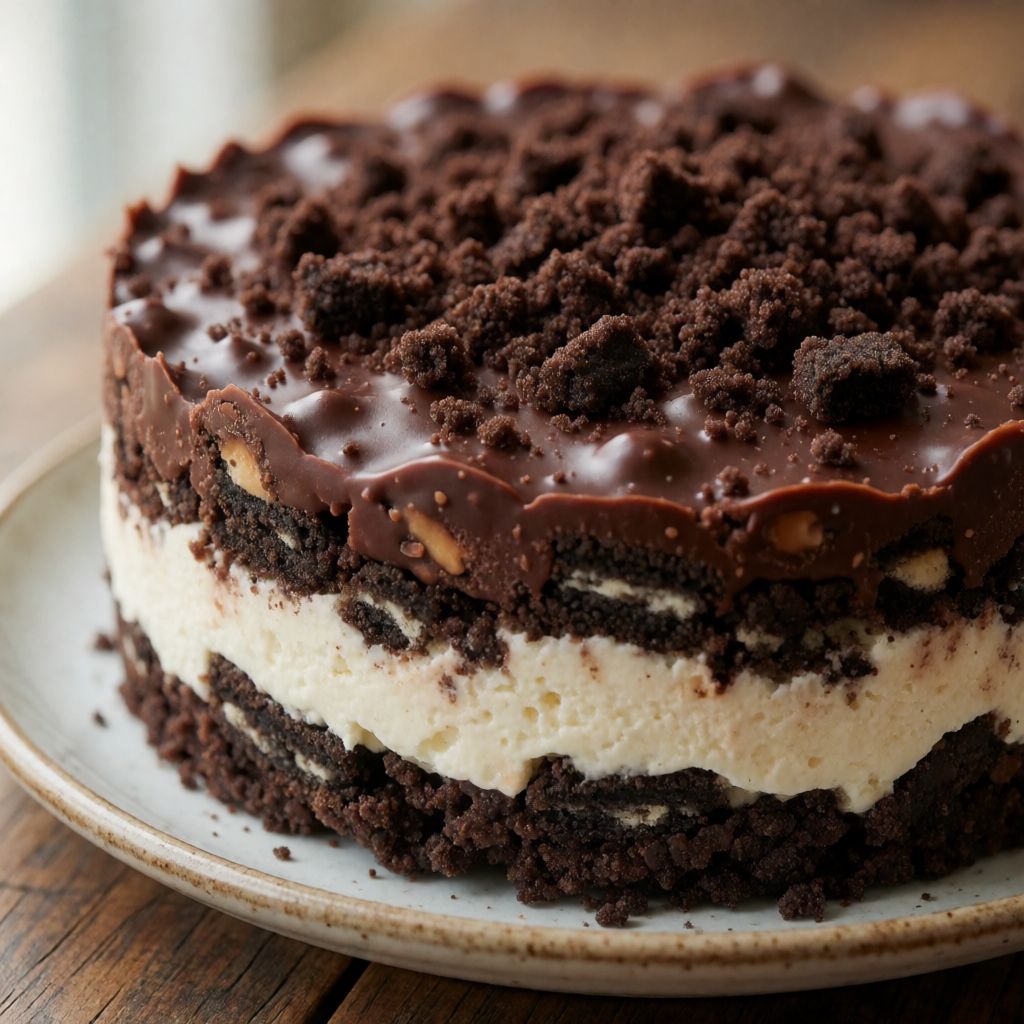
Pan di Stelle Sbricciolata
A no-bake Italian crumble cake layered with Pan di Stelle biscuits, mascarpone and Nutella.
Labels are worked out automatically from the ingredients and can be wrong. Check the packaging if it matters to you.
Ingredients
- 450 g Pan di Stelle biscuits
- 150 g Butter melted
- 250 g Mascarpone
- 40 g Caster sugar
- 180 g Nutella





Steps
Crush the Pan di Stelle biscuits, add the melted butter and mix until you get a crumbly mixture.
Spread half of the crumb mixture into a 20-22 cm springform tin lined with baking paper to form the base.
Beat the mascarpone with the caster sugar for a few minutes, then spread it over the base and smooth with a spatula.
Spread a layer of Nutella over the mascarpone with a spatula.
Cover everything with the remaining crumb mixture.
Chill the dessert in the fridge before serving.
Pan di Stelle Sbricciolata is, in plain English, a crumbled-star-biscuit cake — and it earns that odd name honestly, because nothing in it is baked, only assembled. Crumb on the bottom, mascarpone, a seam of Nutella, crumb on top. It's the Italian home-cook's answer to using up a packet of biscuits without turning the oven on — same impulse that gives the British a trifle out of stale sponge, just with cocoa instead of custard.
What decides whether it holds together when you slice it isn't skill with a knife, it's chemistry: melted butter worked into every crumb, then sent back into the cold to go solid again. That's the actual cooking step, even though the card says "cook time: 0 min". The fridge is doing the job an oven does elsewhere — setting a structure — just slower and without heat.
Some say no-bake means no-wait. No, because the whole cake depends on fat re-crystallising, and that only happens in time, not in a rush before the kettle boils. Patience is the one ingredient not listed on the card, and it's the one that decides if your slice stands up on the plate or falls sideways into a heap.
The two crumb layers aren't there for looks. They're load-bearing: crunchy base to carry the weight, soft mascarpone to cool the palate, a firm chocolate-hazelnut seam to stop everything sliding, crunchy lid to close it. Get any one of those four textures wrong — soggy crumb, warm cream, runny spread — and the cake stops being a cake and becomes a trifle with ambitions.
Pan di Stelle biscuits are a cocoa-and-honey digestive, star-shaped, sold by the packet in every Italian supermarket since the 1980s — a children's teatime biscuit that grew up into a pantry staple for exactly this kind of dessert. You won't find them on a normal UK shelf, so judge the substitute by what the biscuit actually does, not by its name: you need something dry enough to crush into real crumb, not flour, and with a little fat of its own so it doesn't drink the butter dry. Chocolate digestives do the job almost exactly; plain digestives work too, with a spoon of cocoa powder stirred into the crumb if you want the chocolate note back. Crush by hand in a bag with a rolling pin or in a processor in short bursts — stop while the crumb still has some grit and identity, because dust packs down like wet sand and sets rock-hard instead of giving that first crunch.
Melted butter, not softened — that distinction matters more than it looks. Melted butter runs into every crumb evenly; softened butter clumps in patches, and those bare patches are exactly where the slice will crumble apart later. The butter is the glue, and gluing only happens once, in the cold, when the fat goes solid again. Too little butter and the base never binds — it'll be sand on a plate. Too much and it sets greasy, heavy on the tongue, and slips rather than holds. Any fat that's liquid warm and firm cold will do the same trick — salted butter gives a faint edge that actually flatters all this sugar, though the recipe calls for plain. Margarine behaves the same way physically but brings nothing to the flavour, so it's a fallback, not a choice.
Mascarpone is a high-fat, low-moisture cream, no tang to it at all — that's the point, because tang would fight the sweetness of the Nutella rather than sitting underneath it. Beating it with the sugar isn't about whipping air in, it's about loosening it to a spreadable consistency and dissolving the sugar grains while there's still some warmth and motion in the bowl — cold alone won't dissolve sugar, only mixing does. If mascarpone isn't to hand, full-fat cream cheese loosened with a splash of double cream gets you close, though you lose a little of that clean, mild richness and gain a touch of sourness you'll have to live with.
Nutella isn't just flavour here, it's a structural layer. Chilled, it firms from a spread into something closer to a set ganache, and that firmness is what keeps the two halves of the cake from sliding apart when you cut a wedge. Any chocolate-hazelnut spread with a similar fat-to-sugar balance will set the same way; a thin, syrupy chocolate sauce won't — it stays loose in the cold, seeps into the mascarpone, and that's usually the real cause when a slice collapses sideways rather than standing up, not a fault in your cutting.
The springform tin, lined with paper, is doing two unglamorous jobs: letting you unmould without flipping the whole cake upside down, and stopping melted butter leaking out while the base sets. A plain 20cm round tin from the cupboard works exactly as well if that's what you have — this isn't a dessert fussy about its vessel. Six people from this amount is generous rather than tight, so cut it in wedges rather than squares if you want it to feel like a proper slice of cake rather than a bar.
As for how long in the fridge — the card doesn't say, and honestly it depends on your fridge more than the clock. Judge it by feel: a finger pressed gently on the top crumb should meet something firm, not something that still gives like toothpaste underneath. That takes real time — plan for several hours at least, overnight if you can manage the patience, because butterfat doesn't turn solid in the time it takes to put the kettle on for tea. Rushing this step is the one mistake that no amount of good biscuit or good Nutella can fix afterwards.