
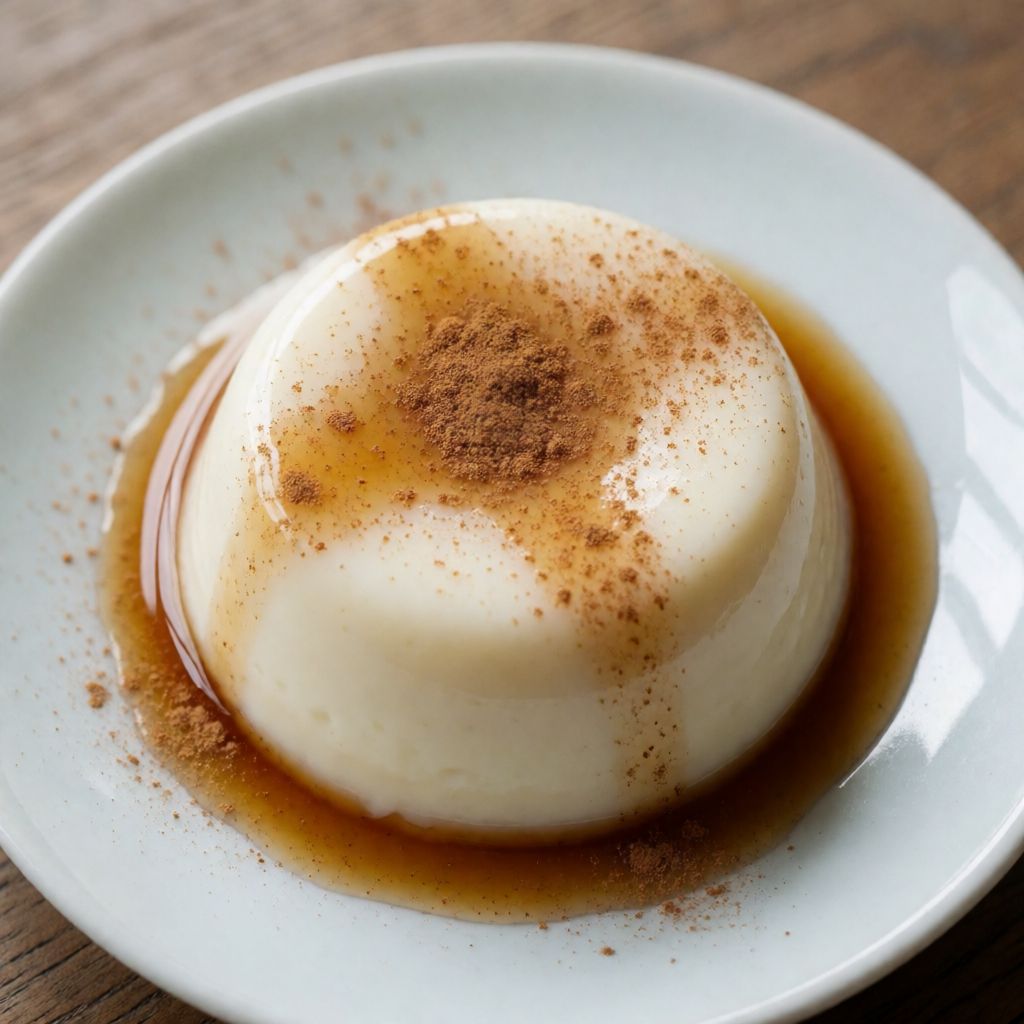
 AI photo
Panna Cotta with Coffee and Spices
A silky coconut-spiced panna cotta flavoured with coffee, cinnamon, star anise and cardamom.
Labels are worked out automatically from the ingredients and can be wrong. Check the packaging if it matters to you.
Ingredients
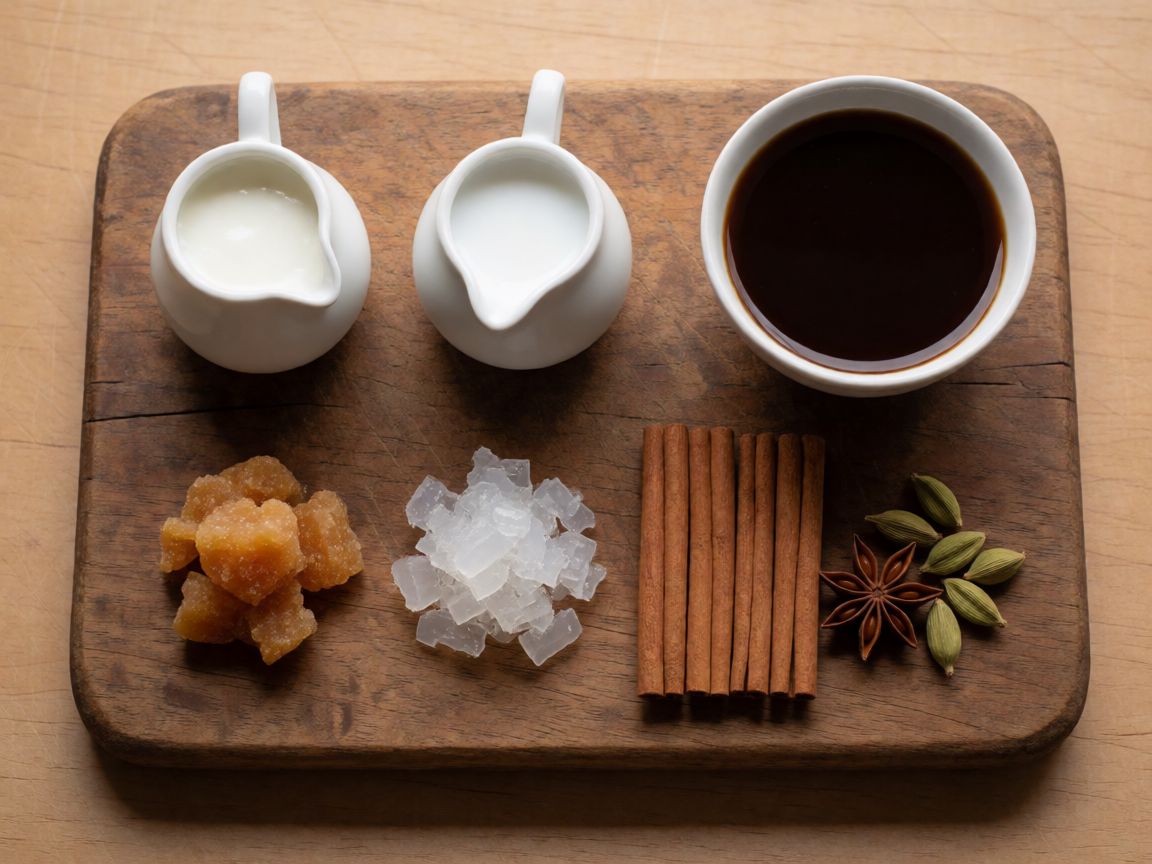
- 350 ml Double cream
- 100 ml Coconut milk
- 80 g Jaggery (palm sugar)
- 50 ml Coffee
- 5 g Gelatin
- 5 pcs Cinnamon sticks
- 1 pcs Star anise
- 5 pcs Cardamom pods








Steps
Soak the gelatin in cold water for 10 minutes.
10 minIn a small saucepan, combine the double cream, coconut milk and coffee, and set over medium heat.
Whisking constantly, add the spices: star anise, cinnamon sticks and cardamom pods.
Add the jaggery and bring almost to a boil.
Remove from the heat, squeeze out the gelatin well and stir it into the hot mixture until completely dissolved.
Strain the cream through a fine sieve into a separate container, then pour into martini glasses.
Chill in the refrigerator for about 5 hours, until the panna cotta sets.
300 minBefore serving, garnish with jaggery and star anise.
Panna cotta means "cooked cream" — but nothing here gets properly cooked. The cream is warmed just enough to dissolve sugar and pull flavour out of whole spices, then gelatin takes over and does the actual work while the fridge does the actual cooking. That's the whole mechanism: heat for flavour, cold for structure. Confuse the two and you either scorch the cream chasing a set that heat can't give, or you under-steep the spices because you pulled the pan off too soon.
Some say panna cotta has to come out of its mould in one smooth dome, trembling on the plate like a jelly on a children's party table. No — because this one lives in a martini glass and stays there. That changes the whole calculation: a panna cotta that needs to stand up unsupported needs more gelatin, more insurance against gravity. One that sits in a glass, held on all sides, needs only enough gelatin to stop being a liquid. Less gelatin means a softer, more custard-like set — closer to what the Italian word actually promises.
Double cream is the frame everything else hangs off. Its high fat is what gives the set body instead of just wobble — a lower-fat cream will set thinner and feel more like a milk jelly than a dessert. If you've only got single cream or whipping cream, you can still make this; expect a softer result and don't panic, it won't be a failure, just a different texture. The rule for substitution isn't "cream," it's "something fat enough to carry flavour and hold a gentle set" — in this country that's any cream labelled 35% fat or higher, no exotic sourcing required.
Coconut milk isn't decoration, it's a second fat with its own personality, and it's what stops the dessert from being just "sweet cream in a glass." It brings a slight sharpness and a tropical register that plays against the jaggery and the warm spices rather than agreeing with them — contrast, not harmony, is the point. If you leave it out and use all cream, you'll lose that edge and the dish will read flatter, more one-note sweet. Use tinned coconut milk, stirred well since it separates in the tin; the thin stuff in a carton meant for drinking won't carry enough fat to do the job.
Jaggery is unrefined palm or cane sugar that still carries its molasses — it's sugar that never had the character boiled out of it, which is exactly why it reads as "spiced" even before the spices arrive. Refined white sugar would sweeten but add nothing; soft dark brown sugar is the honest substitute, because it still has molasses in it, just in smaller amount — expect a slightly less resinous flavour, not a disaster.
The coffee is there to argue with the sugar, not to make this a coffee dessert. Its bitterness is what keeps a dish built on cream, coconut fat and palm sugar from turning into something you can only manage two spoonfuls of. Use something you'd actually drink — a shot of espresso or strong filter coffee, not instant granules stirred into hot water, which bring bitterness without the aromatic oils that balance it.
The spices stay whole and get strained out, and that's not fussiness — it's the difference between a dessert that tastes of cardamom and one that's gritty with it. Ground spice disperses its flavour fast but also its texture, and you'd be chewing fragments of star anise husk in a chilled cream, which nobody enjoys. Whole pods and sticks give their oils up slowly to warm fat, the same logic as a chai or a pilaf, and then you lift them out, leaving the memory of them behind without the material itself.
Gelatin needs its ten minutes in cold water for one reason: hydrated gelatin dissolves smoothly into hot liquid, dry gelatin thrown in straight seizes into little rubbery threads that never fully let go, and you get streaks of toughness through an otherwise silky dessert. Squeeze it before it goes in — excess water dilutes your careful ratio of liquid to setting agent and you'll end up with a glass that weeps rather than holds.
And the five hours in the fridge aren't a suggestion with some flexibility built in — they're the recipe finishing itself after you've stepped away. Gelatin sets by slowly knitting into a three-dimensional net as it cools, and that takes the time it takes; rushing it in the freezer risks ice crystals breaking the structure you were patient enough to build everything else for. This is the one ingredient on the list that costs nothing and that people most often try to skip.