
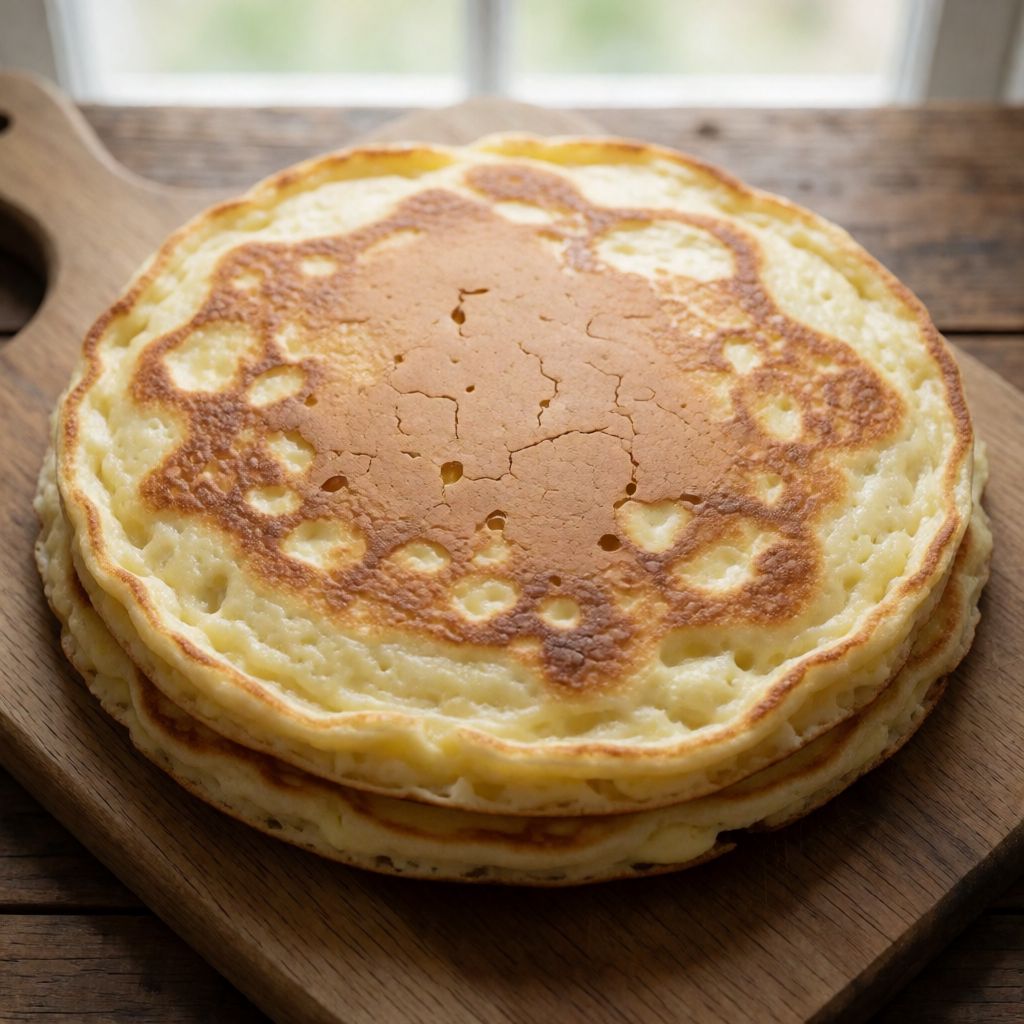
 AI photo
Pancakes in a Bottle: A 5-Minute Rescue Dinner
Quick pancakes mixed right in a bottle for an easy five-minute batter, ready to fry in minutes.
Labels are worked out automatically from the ingredients and can be wrong. Check the packaging if it matters to you.
Ingredients
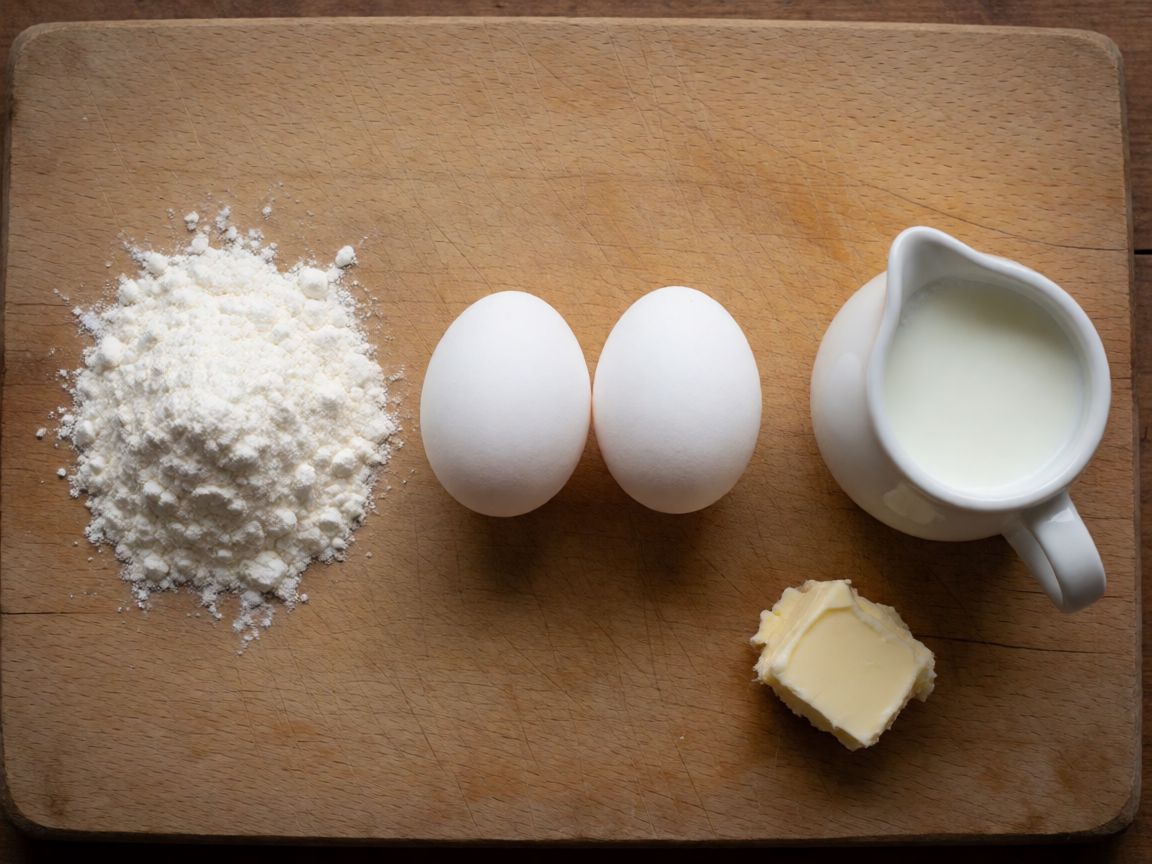
- 125 g Gluten-free flour or plain flour
- 2 pcs Eggs
- 1 pinch Salt
- 250 ml Milk
- Butter for greasing the pan, to taste





Steps
Prepare a bottle (plastic or glass) and a funnel.
Using the funnel, pour the sifted flour into the bottle, add the milk, crack in the eggs, and add a pinch of salt.
Seal the bottle tightly with its cap and shake vigorously for about 5 minutes, until the batter is smooth.
5 minHeat a wide non-stick pan or a special pancake pan, then grease it with butter.
Pour the batter straight from the bottle in small amounts into the centre of the pan, tilting it or spreading with a wooden spatula to form an even, round pancake.
Fry for a few seconds, then flip the pancake with the spatula and cook the other side.
Repeat until all the batter is used.
This is a crêpe, not a thick breakfast pancake — thin enough to see through at the edges, cooked fast on both sides so it holds its shape but stays soft. The trick that gives the dish its name isn't a trick at all, it's physics: a bottle with a narrow neck mixes better than most people expect, because the liquid has nowhere to go but through that choke point, over and over, as you shake. That's more shear force than a hand with a whisk in an open bowl gives you — ask any bartender why a shaker emulsifies a dressing a spoon never could.
So the batter's smoothness isn't about technique, it's about enclosure. No lumps survive five minutes of being forced back and forth through a two-centimetre opening. Some say you need a blender or at least a proper whisk for a lump-free batter — no, because the lump problem is dry flour meeting wet liquid in clumps before it's dispersed, and a bottle disperses it more violently than either tool.
What actually decides whether this works is heat and timing on the pan, and neither is a number. Grease the pan, let the butter go quiet — past the foaming, before it browns and smells of nothing but smoke — and that's your window. Pour a thin pool, swirl it thin with the spatula or by tilting the pan, and watch the surface: wet and glossy first, then matte, then the edges lift on their own without a fight. That's the only signal you need to flip. Pull it too soon and it tears because the egg hasn't set enough to hold itself together; leave it too long and it dries at the edges while the middle's still pale.
Flour here is doing starch work, not gluten work — which is exactly why gluten-free flour slots in without drama. A bread dough needs gluten to trap gas and hold a rise; this batter is never going to rise, it's just going to set flat and thin the second it hits heat. What holds it together is starch swelling and egg protein coagulating, neither of which cares whether the flour came with gluten or without. So the substitution criterion is simple: any flour that thickens when wet and cooked will do — plain, gluten-free, even a fine rice flour in a pinch, though that one drinks liquid differently and you may need a splash more milk to keep it pourable.
Eggs are the structural ingredient, not a flavour one. Protein that was loose and runny in the bottle turns solid in the pan within seconds, and that's what lets you flip a sheet this thin without it falling apart in the spatula. Two eggs to 125g flour and 250ml milk is a lean ratio — this batter should run off a spoon in a thin stream, not plop. If it sits thick and reluctant in the bottle, it's not going to spread thin in the pan, it's going to sit there like a sulky blini.
Milk does two jobs: it thins the batter to pouring consistency, and its sugar and protein brown under heat, giving you colour instead of a pale, sad disc. Water would thin the batter just as well and tells you nothing by taste, but you'd lose that light gold freckling on the underside — fine for a rescue dinner, worth knowing if you're choosing. Any milk with fat and a little sugar in it does the browning job; a plant milk with added sugar will brown, an unsweetened one browns less and slower.
Salt is not working any magic here — one pinch, and its only job is to stop the whole thing tasting like flour and water, which eggs and milk alone can edge toward. Don't skip it thinking it's decorative.
Butter for the pan is a flavour choice, not a neutral one — and that's worth saying plainly against the usual rule that any oil without a smell of its own will do the technical job. It will, here too: a flavourless oil greases the pan and stops sticking just as well. But butter on a batter this plain is doing double duty, lending its own taste to a dish that otherwise has none beyond egg and milk. If you use butter, watch it — it goes from foaming to burnt fast on a domestic hob, and a burnt scrap under your first pancake will mark every one after it dark and bitter until you wipe the pan and start the grease again.
The one thing worth having, even in a five-minute dinner, is a little patience after the shaking — let the batter sit two or three minutes before the first pancake goes in. It doesn't need to rest for gluten, there's barely any to relax, but the flour finishes drinking in the liquid and the bubbles you just beat into it have time to settle, so your first pancake comes out as smooth as your fourth instead of looking like it's had a rough morning.